Cutting Torch Tips for Propane: Choosing the Right Size
Cutting torch tips for propane come in sizes matched to metal thickness, and the right size depends on the thickness listed for the tip and the torch series it fits.

On this page
Top picks at a glance
As an Amazon Associate I earn from qualifying purchases.
- 1
 RTTOOA Propane Torch Head9.7/10View on Amazon
- 2
 Flame King FK4500CGA High Intensity Propane Torch Head for9.7/10View on Amazon
- 3
 Propane Torch Head9.6/10View on Amazon
Plate on the bench, torch in hand, and the cut needs to start clean. The wrong tip makes the work harder than it has to be, with a ragged edge and a slow cut. Cutting torch tips for propane are sized to the metal they cut, and the size stamped on the tip, the torch series it fits, and the pressures listed for it decide whether the cut runs right. This guide explains how to read those sizes, match a tip to a torch, and set the gas to the figures the listing states.
This guide links to our product roundups, where WeldGearLab gets a commission on purchases made through links on this page, and your price stays the same. Read our affiliate disclosure.
Cutting torch tips for propane: how the sizes work
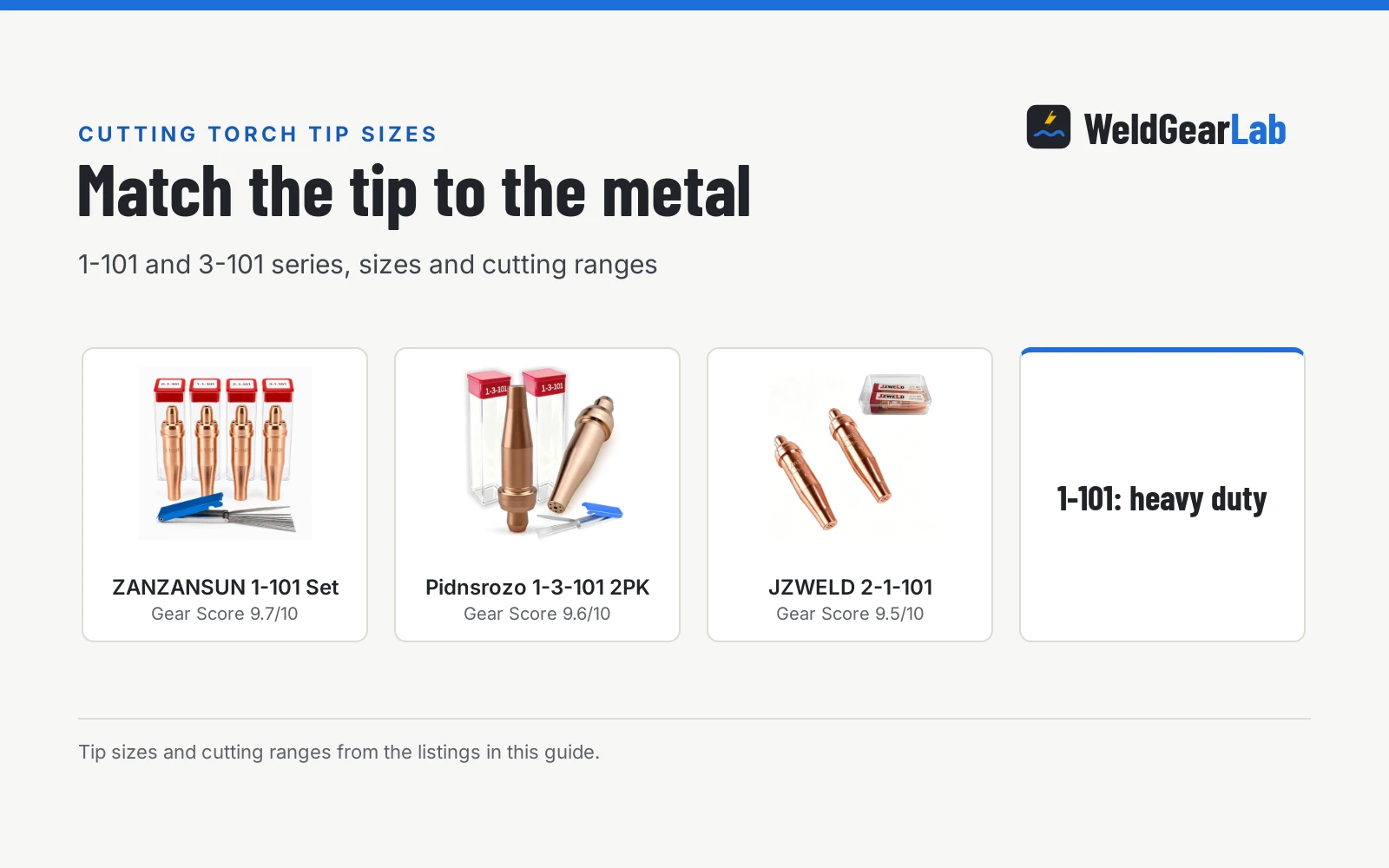
A propane cutting tip is a copper nozzle with a hole sized for a thickness range. The size number grows within a series as the metal gets thicker, and each size in these listings states a thickness range and an orifice, while only the RIVERWELD 3-GPN listings state gas pressures. RIVERWELD lists its 3-GPN size 2 for thickness 20-40, with cutting oxygen 35-40, fuel 4-8, preheat 0.6 and orifice 1.5, while its size 3 covers thickness 40-60, with cutting oxygen 40-50, fuel 5-9, preheat 0.6 and orifice 1.8. Tealover lists its 6290NX size 00 for thickness 5-10 with orifice 0.9, and its size 0 for thickness 10-15 with orifice 1.0. Read the thickness range on the listing before ordering, and match it to the metal on the bench. The cutting torch tips sizes charts guide walks through the full size range.
Side by side
| Size 00 (6290NX) | Size 0 (6290NX) | Size 2 (3-GPN) | Size 3 (3-GPN) | |
|---|---|---|---|---|
| Thickness listed | 5-10 | 10-15 | 20-40 | 40-60 |
| Orifice | 0.9 | 1.0 | 1.5 | 1.8 |
| Cutting oxygen | Not stated | Not stated | 35-40 | 40-50 |
| Fuel | Not stated | Not stated | 4-8 | 5-9 |
| Preheat | Not stated | Not stated | 0.6 | 0.6 |
The table pulls the listed figures together, with each size taken from the listing that states it. Where a listing states no figure, the table says so rather than guessing. Check the torch series as well as the size, since the GPN tips listed here fit Victor-style torches and the 6290NX tips listed here fit Harris-style torches.
When a small tip is the better choice
Thin stock calls for a small tip. Tealover lists its 6290NX size 00 for thickness 5-10 and its size 0 for thickness 10-15, and each size comes in a pack of 2. Generic lists its 6290NX tips in size 00 and size 0, each in a pack of 3, and its GPN pack holds sizes 000, 00 and 0 in a pack of 3. For thin work, start with the smallest size whose listed range covers the metal, and check the cut before moving up a size.
When a large tip is the better choice
Thick plate calls for a large tip. RIVERWELD lists its 3-GPN size 2 for thickness 20-40 and its size 3 for thickness 40-60, each in a pack of 2, with preheat 0.6 listed for each size. For these two RIVERWELD sizes, the larger orifice is listed with higher cutting oxygen and fuel figures. Set the pressures to the figures on the listing for the size in hand, and check them against the torch manual before lighting up.
How to tell what a torch takes
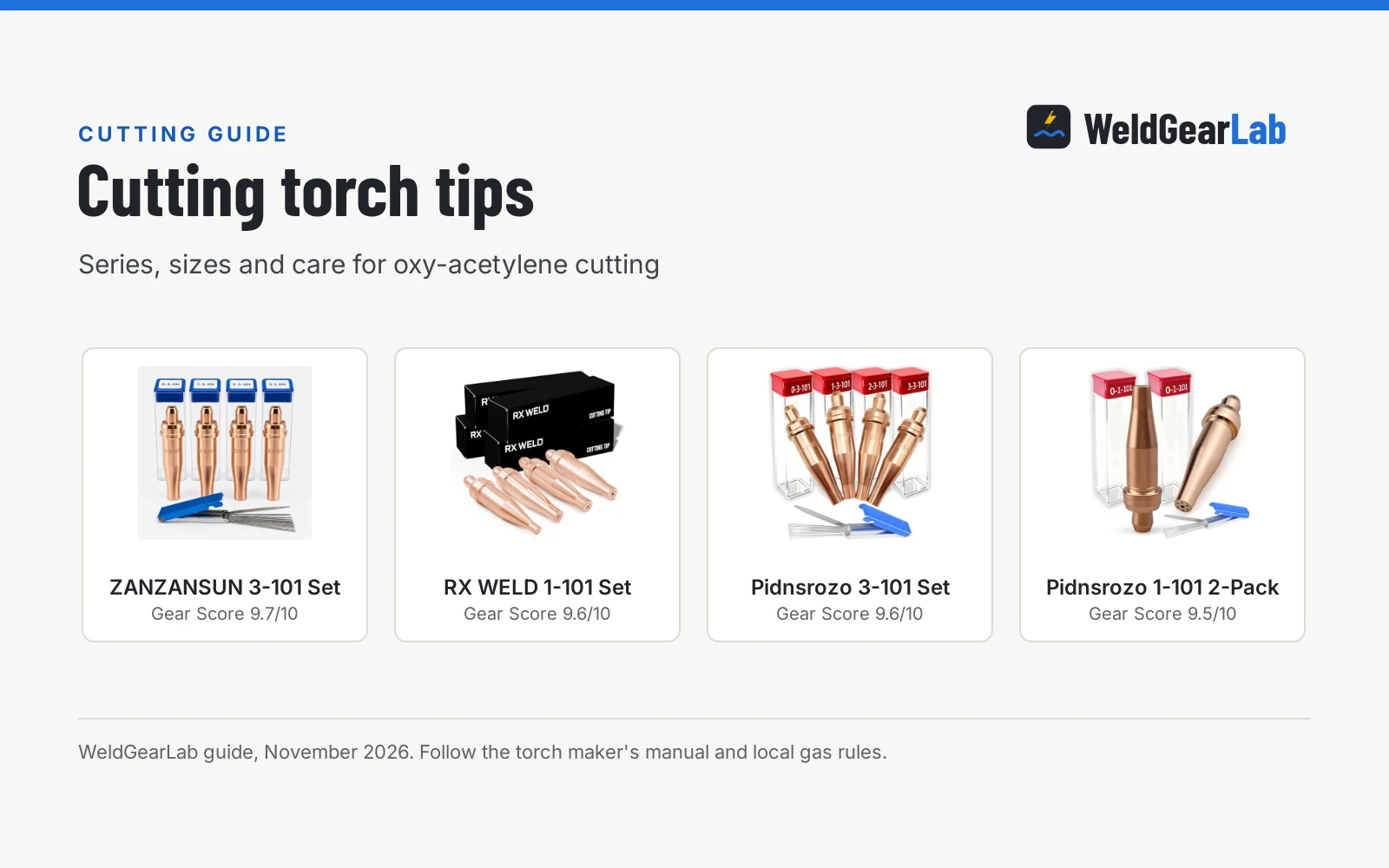
Tips are not universal. The GPN series fits Victor-style torches, and the 6290NX series fits Harris-style torches, so the series matters as much as the size. Flame Tech lists its lot of 3 Victor-style tips in sizes 0, 1 and 2, with a two-piece tip design for propane and natural gas only, and states they fit Victor torches CA1260, CA1350, CA25, CA2250, CA270, CA27, CA1450 and SST800. Tealover lists its GPN lot of 3 in sizes 0, 1 and 2 for Victor cutting attachment series CA2460, CA1060, ST, SST and 1400C. Before ordering, read the series on the listing and compare it with the series stamped on the torch. A tip from the wrong series may not seat correctly, so do not force it.
Propane or natural gas
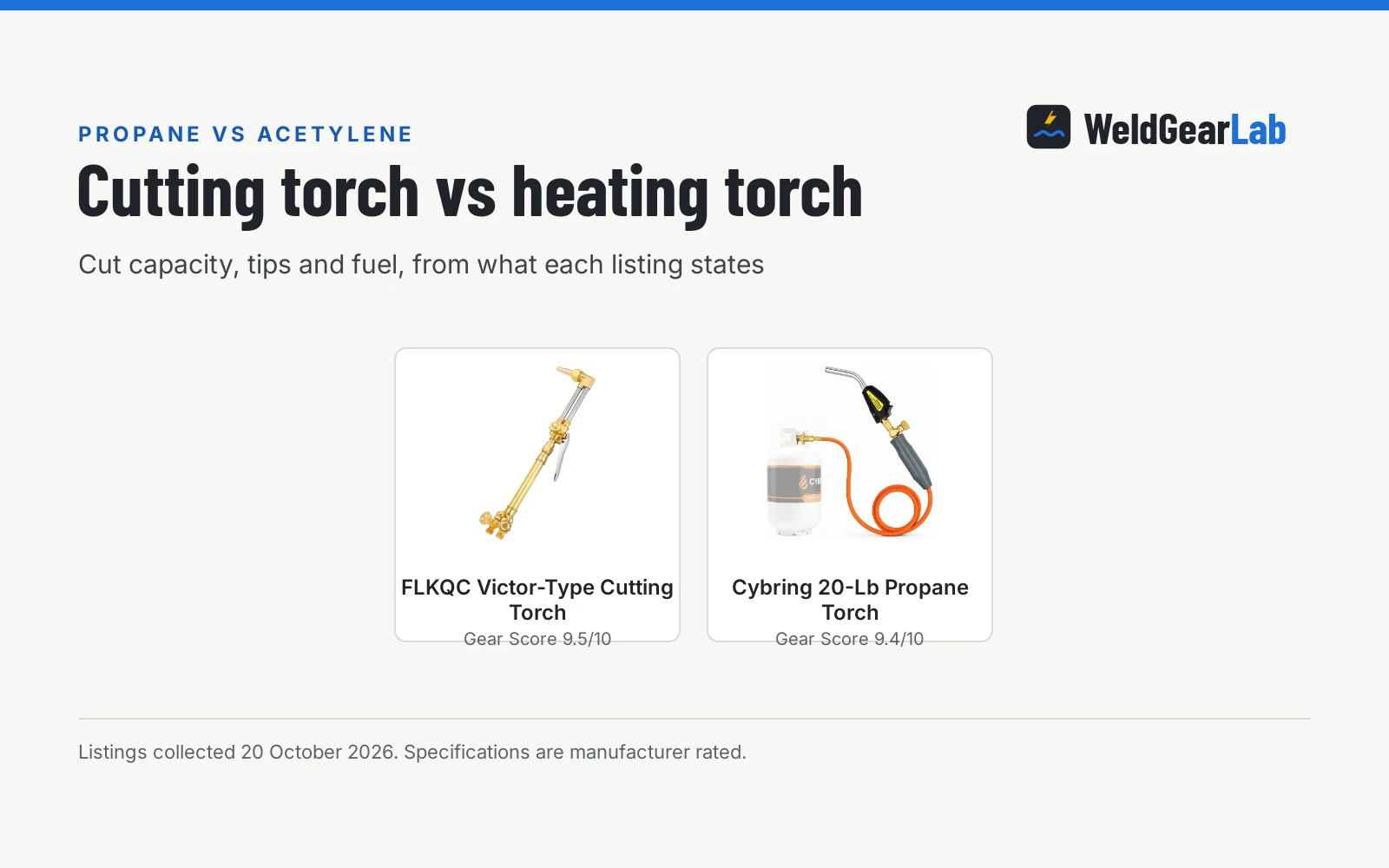
The GPN listings cited here are listed for propane and natural gas. Flame Tech states its tips are for use with propane and natural gas only, and RIVERWELD lists its 3-GPN tips for propane and natural gas cutting. That does not make them acetylene tips, so keep the fuel matched to the tip. See the propane vs acetylene cutting torch comparison for the wider differences between the fuels.
For more options, see our welding consumables guides.
FAQ for welders
What size cutting torch tip for propane do I need?
Match the tip to the thickness of the metal. Tealover lists its 6290NX size 00 for thickness 5-10 and its size 0 for thickness 10-15, while RIVERWELD lists its 3-GPN size 2 for thickness 20-40 and its size 3 for thickness 40-60. Pick the size whose listed range covers the metal on the bench, and check the orifice and pressures on the listing for that size.
Can propane cutting torch tips run on natural gas?
Yes, where the listing says so. RIVERWELD lists its 3-GPN tips for propane and natural gas cutting, and Flame Tech states its Victor-style tips are for use with propane and natural gas only. Check the listing for the tip in hand, since a tip listed for propane only may not suit natural gas.
Do propane cutting tips fit any torch?
No. GPN tips fit Victor-style torches, and 6290NX tips fit Harris-style torches, and the listings name the torch models each tip suits. Read the series on the listing and compare it with the torch in the shop before ordering.
What is the difference between GPN and 6290NX tips?
The series and the torch they fit. GPN tips are made for Victor-style torches, while 6290NX tips are made for Harris-style torches. Each series comes in sizes for thin and thick metal, so the choice starts with the torch series and then the size.
Why is my propane cut slow or rough?
A tip listed for thinner metal than the work may cut slowly or leave a rough edge, and a tip listed for thicker metal may leave a wider kerf. Check that the size matches the listed thickness range for the metal, that the fuel and cutting oxygen are set to the figures on the listing, and that the tip orifice is clear of slag. If the cut stays rough after those checks, look at the torch manual for the settings it calls for.
Related: cutting torch tips sizes charts, propane vs acetylene cutting torch, gas cutting torch vs gas welding torch, and the welding consumables hub.