Cutting Oil vs Tapping Fluid: Which One Should You Buy?
Cutting oil vs tapping fluid: which fluid for drilling, milling and thread cutting, with four cutting oils compared on uses, viscosity and size.

On this page
Top picks at a glance
As an Amazon Associate I earn from qualifying purchases.
- 1
 CRC Truetap HD Cutting Fluid 034009.7/10View on Amazon
- 2
 Cutting Fluid 1 Gallon Metal Cutting Oil Made in USA CuttingView on Amazon
- 3
 RIDGID 70830 Dark Thread Cutting OilView on Amazon
- 4
 Metal Cutting Oil Cutting Fluid for Machine ShopsView on Amazon
- 5
 Drilling and Tapping GelView on Amazon
- 6
 RIDGID 70835 Nu-Clear Thread Cutting OilView on Amazon
- 7
 Hougen 11742 RotaMagic Metal Cutting Oil 10:1 mix SuperView on Amazon
Cutting oil vs tapping fluid comes down to the job: cutting oil is the general shop lubricant for drilling, milling and sawing metal, while tapping fluid is formulated for the higher friction of cutting threads. In practice, the cutting oils in the listings below state tapping among their uses, so one bottle often covers both. Compare the stated uses and the metals each listing names for the job you have.
Other welders and gear to compare
 Cutting Fluid 1 Gallon Metal Cutting Oil Made in USA CuttingCheck price on Amazon
 RIDGID 70830 Dark Thread Cutting OilCheck price on Amazon
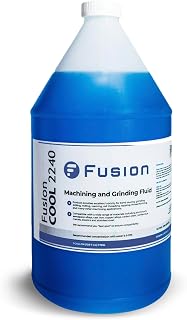 Metal Cutting Oil Cutting Fluid for Machine ShopsCheck price on Amazon
 Drilling and Tapping GelCheck price on Amazon
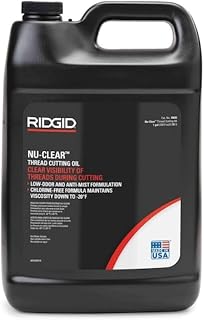 RIDGID 70835 Nu-Clear Thread Cutting OilCheck price on Amazon
 Hougen 11742 RotaMagic Metal Cutting Oil 10:1 mix SuperCheck price on Amazon
This guide links to our product roundups, where WeldGearLab gets a commission on purchases made through links on this page, and your price stays the same. Read our affiliate disclosure.
The difference in one paragraph
Cutting oil reduces heat and friction between the tool and the workpiece during drilling, milling and sawing. Tapping fluid does the same job but is blended for the sliding, high-pressure contact of cutting threads with a tap, where the tool stays engaged with the metal longer. The listings here are all sold as cutting oil or cutting fluid, and two of the four explicitly list tapping among their uses, so the line between them is about formulation, not a hard boundary.
Cutting oil vs tapping fluid: side by side
| Cutting oil | Tapping fluid | Listing note | |
|---|---|---|---|
| Main job | Drilling, milling, sawing metal | Cutting threads with a tap | Forney lists cutting; Tap Magic lists tapping |
| Formulation | General metal-cutting lubricant | For high-pressure thread cutting | EP-Xtra names extreme pressure agent |
Viscosity grades and flash points are as stated on each listing; always follow the fluid maker’s guidance for the metal you are cutting.
When cutting oil is the better choice
- Drilling and milling. The Forney 2-pack lists cutting and notching for industrial use, and the Tap Magic 3-pack lists drilling, tapping and milling on all metals.
- General shop use. If you want one bottle for the drill press and the mill, a cutting oil that lists tapping covers both.
- Larger volumes. The Evo Dyne title states 1 gallon for heavy-duty machining, which suits a shop that goes through fluid.
When tapping fluid is the better choice
- Thread cutting. The Tap Magic EP-Xtra listings name tapping explicitly, with an extreme pressure agent for the high friction of threads.
- Stainless and hard metals. The Tap Magic 3-pack lists stainless steel, titanium, nickel and inconel, where thread cutting needs the most help.
- Small, precise work. The 16 oz TapMagic bottle with a precision tip suits careful application on taps.
Viscosity and flash point: reading the numbers
The listings state two viscosity grades: 10W for the Tap Magic 3-pack and 30 for the TapMagic 16 oz can, both to the SAE J300 grade. The listings do not say which grade suits which job, so use the grade to tell the two Tap Magic options apart rather than as a buying rule. Flash points are stated in different units, 302 degrees F for the 3-pack and 150 degrees C for the 16 oz can; compare each against the fluid maker’s guidance rather than against each other. The Forney and Evo Dyne listings state neither a viscosity grade nor a flash point, which is a gap, not a disqualification.
Match the fluid to the metal
The broadest metal coverage here comes from Tap Magic. The 3-pack lists all steels, aluminum, titanium, nickel, cast iron, brass and inconel; the 16 oz can adds mild steel, HSS and AHSS and calls itself the fluid to have when you do not know what cut or metal tomorrow brings. The Evo Dyne lists all metals including stainless steel and titanium, and describes its formula as mineral-based synthetic. The Forney 2-pack keeps it industrial, cutting and notching metal, with no metal list at all. If your work is mostly stainless or titanium, pick a listing that names the metal; for general shop work the stated uses of any of the four cover drilling.
How the fluid gets to the work
Packaging differs more than you would expect. The Tap Magic 3-pack comes as three 16 oz squeeze bottles with Yorker caps; the single 16 oz TapMagic has a precision tip for placing fluid exactly on a tap; the Forney is a non-spray 2-pack of 4 oz bottles. The Evo Dyne listing gives the clearest application guidance: apply the cutting oil between the cutting tool and workpiece as needed through the duration of work, and reapply as needed, calling the fluid safe for cutting operations that need a high level of tolerance, precision, fit and finish. The Tap Magic name has been on cutting fluid since 1953, per both Tap Magic listings, which is the longest track record here.
Gear to consider
Four cutting oils from the listings, ranked by how well each covers the cutting oil vs tapping fluid question. The Tap Magic EP-Xtra 3-pack leads: three 16 oz bottles (48 fl oz total), 10W viscosity, 302°F flash point, and stated uses on drilling, tapping and milling across all steels, aluminum, titanium, nickel, cast iron, brass and inconel. The TapMagic 16 oz can is the same EP-Xtra line in a single bottle with a precision tip, 30 viscosity grade and 150°C flash point, for trying it or for the toolbox.
The Forney 2-pack is the simple industrial pick: two 4 oz bottles for cutting and notching metal. The Evo Dyne is the bulk option, though the listing is inconsistent: the title states 1 gallon while the bullets state 8 fl oz and the spec table lists both 8 and 128 fluid ounces. Use the title’s 1 gallon figure, and confirm the size before ordering. It lists a mineral-based synthetic formula for heavy-duty machining and states it is made in the USA.
FAQ for welders
Can I use cutting oil for tapping?
Yes, if the listing states tapping among its uses. The Tap Magic EP-Xtra listings here explicitly list tapping, drilling and milling, so one bottle covers both jobs.
What viscosity do I need?
The listings state 10W for the Tap Magic 3-pack and 30 for the TapMagic 16 oz can. Match the viscosity to the fluid maker’s guidance for your metal and operation.
Does tapping fluid work on stainless steel?
The Tap Magic 3-pack lists stainless steel among the metals it covers, along with titanium, nickel and inconel. Check the listing for the specific alloy you are cutting.
How much should I buy?
The listings range from two 4 oz bottles (Forney) to three 16 oz bottles (Tap Magic 3-pack) to a stated 1 gallon (Evo Dyne). Buy for the volume of work; a small shop goes through less than a production mill.
What is the difference between the two Tap Magic options here?
The 3-pack is three 16 oz bottles, 48 fl oz total, of EP-Xtra at 10W viscosity with a 302 degree F flash point; the single is one 16 oz bottle with a precision tip at 30 viscosity with a 150 degree C flash point. Both list drilling, tapping and milling on the same broad metal list. Buy the 3-pack for the shop shelf and the single for the toolbox.
How do I apply cutting fluid?
The Evo Dyne listing says to apply the fluid between the cutting tool and workpiece as needed through the duration of work, and to reapply as needed. The Tap Magic single bottle’s precision tip suits placing fluid on a tap, while the squeeze bottles suit reapplying during a cut.
Related: black oxide vs cobalt drill bits, drill press vs hand drill, and the metal fab tools hub.