Cut Off Tool vs Angle Grinder: Which One Should You Buy?
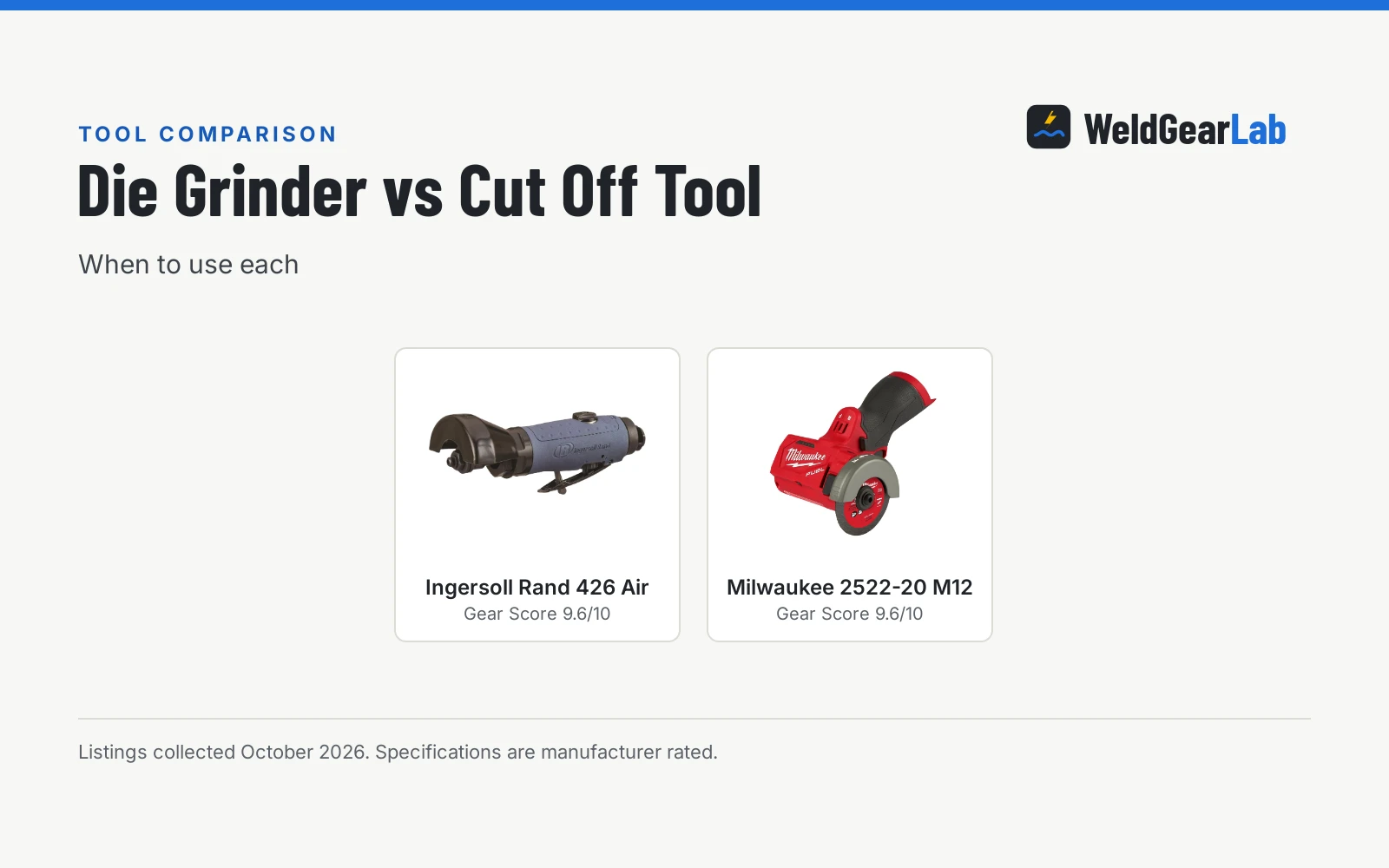
Cut off tool vs angle grinder: which cuts and which does both? Disc sizes, RPM, power and duty figures from the listings.

On this page
Top picks at a glance
As an Amazon Associate I earn from qualifying purchases.
- 1
 Milwaukee 2522-20 Cut-Off Tool9.6/10View on Amazon
- 2
 DEWALT Angle Grinder Tool9.7/10View on Amazon
- 3
 Ingersoll Rand 426 Air Reversible Cutoff Tool Features 209.6/10View on Amazon
- 4
 DEWALT 20V MAX XR Cut Off ToolView on Amazon
- 5
 Genesis GCOT335 3.5-Amp 3-In. High-Speed Cutoff Tool Cut-OffView on Amazon
- 6
 Campbell Hausfeld XT200000 3-Inch Pneumatic Cut-Off ToolView on Amazon
- 7
 CRAFTSMAN V20 3 Inch Cordless Cut-Off Tool with Forward andView on Amazon
- 8
 Astro Tools 408 ONYX Flex Head Reversible HD Cut Off ToolView on Amazon
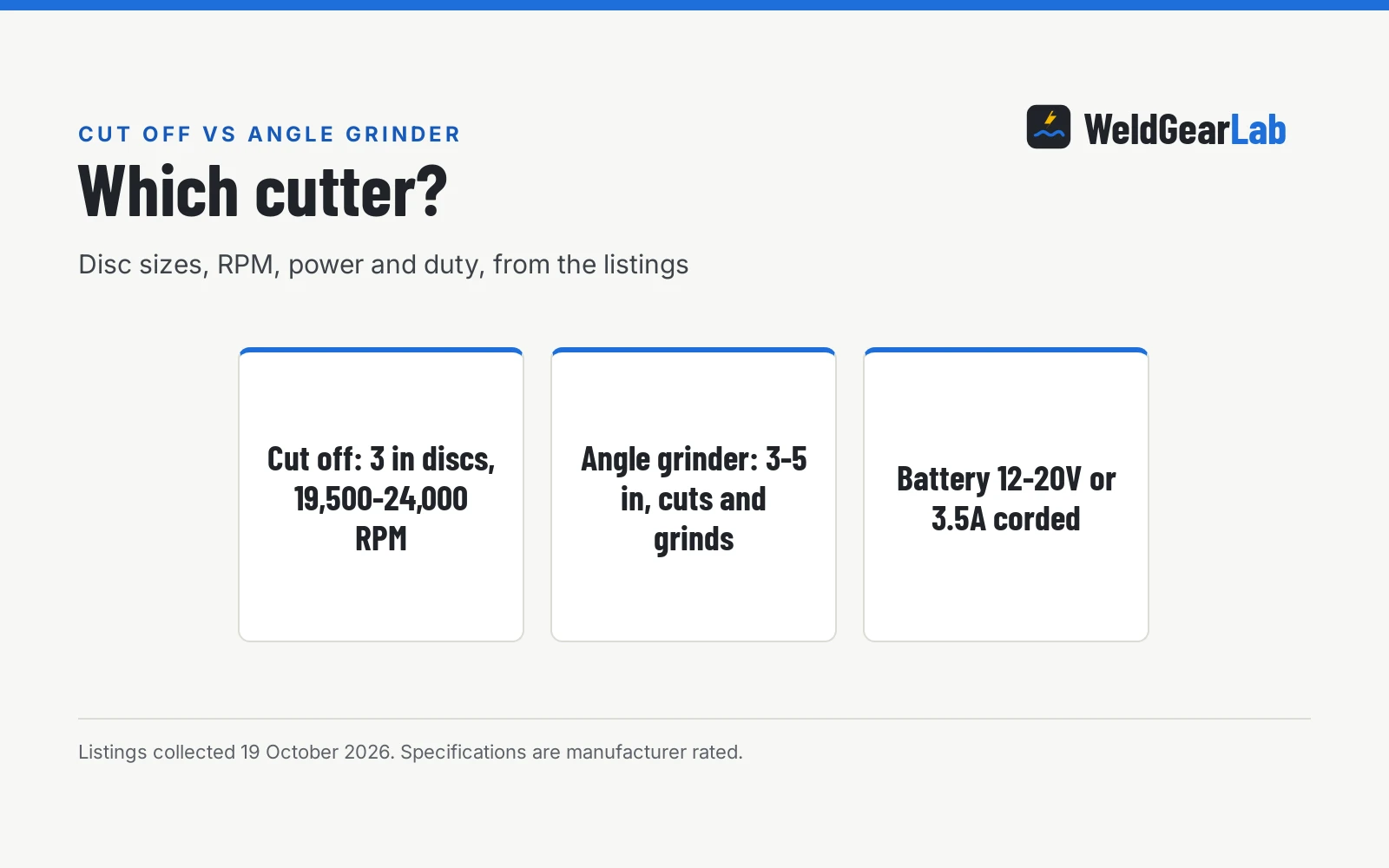
In the cut off tool vs angle grinder question, the difference is purpose. A cut off tool is a small, one-hand tool built for straight cuts: it runs a 3 in disc at 19,500 to 24,000 RPM for slicing sheet metal, pipe and exhaust. An angle grinder is the two-job tool: it cuts and grinds, with discs from 3 to 5 in. If you cut stock to length, get the cut off tool. If you also grind welds and bevel edges, get the angle grinder. The rest of this guide explains the differences with concrete figures from the listings we reviewed.
Other welders and gear to compare
 DEWALT 20V MAX XR Cut Off ToolCheck price on Amazon
 Milwaukee 2522-20 Cut-Off ToolCheck price on Amazon
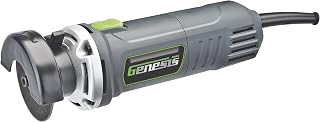 Genesis GCOT335 3.5-Amp 3-In. High-Speed Cutoff Tool Cut-OffCheck price on Amazon
 Campbell Hausfeld XT200000 3-Inch Pneumatic Cut-Off ToolCheck price on Amazon
 CRAFTSMAN V20 3 Inch Cordless Cut-Off Tool with Forward andCheck price on Amazon
 Astro Tools 408 ONYX Flex Head Reversible HD Cut Off ToolCheck price on Amazon
WeldGearLab gets a commission on purchases made through links on this page, and your price stays the same. Read our affiliate disclosure.
The difference in one paragraph
A cut off tool is a compact cutter: the DEWALT listing runs a 20V brushless motor at 20,000 rpm and 550 MWO with bonded abrasive, diamond multi-material and diamond tile wheels in the box; the Genesis listing is a 3.5-amp corded tool at 24,000 RPM with a 1 in max cutting depth; the Milwaukee 2522-20 listing is a 12V tool at 20,000 rpm with reversible blade rotation. An angle grinder in these listings is the TEENO 16.8V mini at 19,500 RPM with 2 batteries and 6 discs, or the Milwaukee M18 4-1/2/5 in cut-off grinder at 11,000 RPM with a paddle switch and electronic clutch. The cut off tool is for cutting; the angle grinder is for cutting and grinding.
Cut off tool vs angle grinder: side by side
| Factor | Cut off tool | Angle grinder | Difference |
|---|---|---|---|
| Typical disc | 3 in (listed) | 3 to 5 in (listed) | Cut off uses the smaller disc |
| Speed | 19,500 to 24,000 RPM (listed) | 11,000 to 19,500 RPM (listed) | Cut off runs faster |
| Power | 12V to 20V battery; 3.5A corded (listed) | 16.8V to 18V battery (listed) | Cut off adds a corded option |
| Cutting depth | 1 in (listed) | Not stated | Only cut off states a depth |
| Duty note | Rest 15 min after 15 min (listed) | Not stated | Only cut off states a rest note |
| Safety features | Reversible blade; overload protection (listed) | Paddle switch; electronic clutch; overheat protection (listed) | Both list safety features |
Figures are from the listings reviewed, collected 19 October 2026; a figure from one listing describes that listing only.
When a cut off tool is the better choice
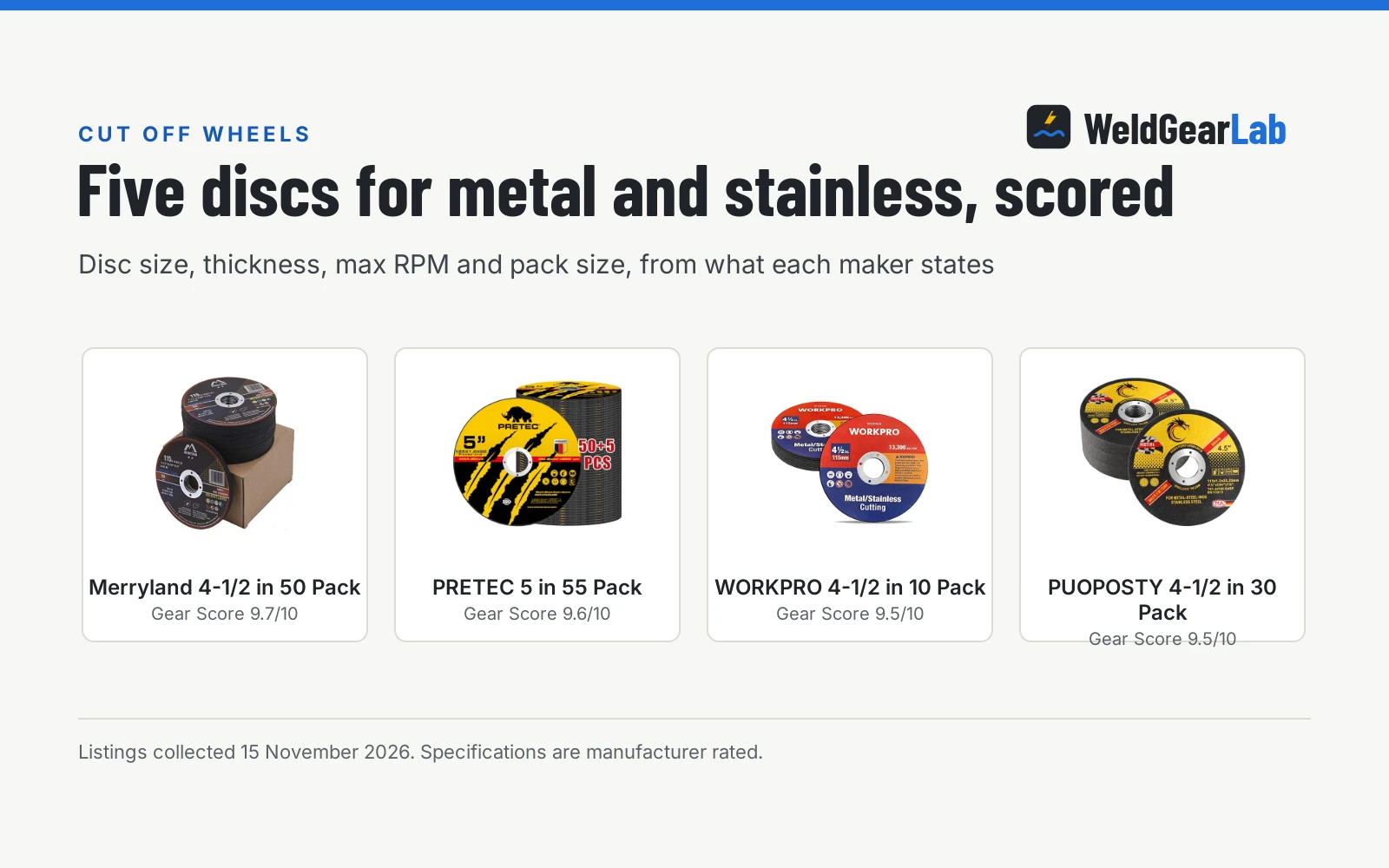
Cut off tools are for straight cuts in thin stock. The Genesis listing names the work: straps, hangers, exhaust systems, sheet metal and pipes, with a 360-degree swiveling head to reach them. The RYOBI listing cuts metal, pipe, wire shelving, PVC and more at 19,500 RPM in a body only 8.5 inches long. If your day is cutting stock to length, the smaller disc and higher RPM of a cut off tool make it the handier choice for straight cuts in thin stock. See the cut off wheel picks.
When an angle grinder is the better choice
Angle grinders earn their keep doing two jobs. The TEENO listing is a mini angle grinder that both cuts and grinds, with overheat protection and a hard case. The Milwaukee M18 listing adds the safety features a bigger tool needs: a paddle switch, tool-free guard adjustment, overload protection and an electronic clutch. If your work mixes cutting with weld cleanup, beveling and surface prep, one angle grinder replaces two tools. See the angle grinder picks and angle grinders for beveling.
What the numbers mean
RPM is the headline and it is misleading on its own: the cut off tools list 19,500 to 24,000 RPM while the angle grinders list 11,000 to 19,500 RPM, but a smaller disc spins faster by nature. Disc size decides the cut: 3 in on the cut off tools, up to 5 in on the Milwaukee M18, with the Genesis listing a 1 in max cutting depth. Power comes as 12V, 16.8V, 18V or 20V battery, or 3.5-amp corded on the Genesis and SHALL. The SHALL listing even states a duty note: rest 15 minutes after 15 minutes of work. Match the tool to the cut, not the RPM.
Buying advice: matching the tool to the cut
Start with what is in the box, because two of these listings are bare tools. The DEWALT DCS438B and the Milwaukee 2522-20 ship without batteries, so they only make sense if you already own 20V MAX or M12 packs. The TEENO goes the other way: 2 2.0Ah batteries, a charger, 6 discs and a hard case in one box. Price the tool and the power source together before you decide.
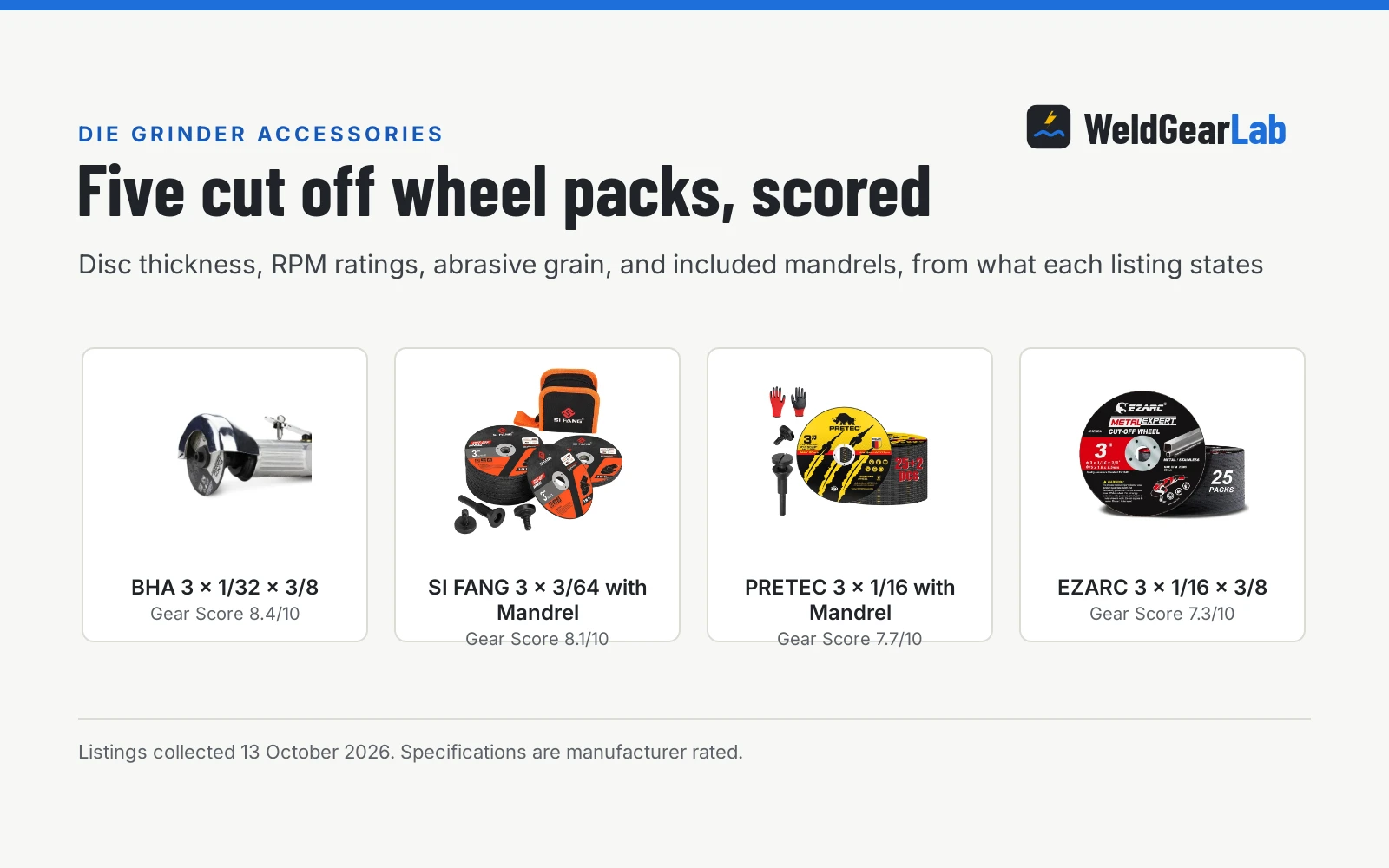
Next, match the wheels to the work. The DEWALT includes three: a bonded abrasive wheel, a diamond multi-material wheel and a diamond tile wheel, which covers metal, tile and masonry-style cuts in one box. The SHALL includes 3 cutting wheels sized 3 by 3/64 by 3/8 in for ferrous metals, non-ferrous metals and stainless. The TEENO includes 6 discs. If your work is one material, one wheel type is enough; if it varies, the multi-wheel kits save a second purchase.
For precision, look at depth control and guards. The Genesis lists a 1 in max cutting depth, the RYOBI an adjustable depth guide up to 0.62 in, and the DEWALT a dust shroud with tool-free depth adjustment marked in mm and inches. On guards, the TEENO adjusts to 90 degrees, the SHALL rotates 360 degrees, and the Milwaukee M18 offers tool-free guard adjustment. Pair that with the safety features that matter to you: the M18’s paddle switch and electronic clutch, the 2522-20’s Redlink Plus overload protection, the TEENO’s overheat protection, or the RYOBI’s electric brake and dual LEDs.
Finally, respect the duty limits the listings state. The SHALL listing is explicit: rest 15 minutes after 15 minutes of work. The Genesis runs on 120V and the SHALL is corded too, so bench work means managing a cord.
FAQ for welders
Can an angle grinder replace a cut off tool?
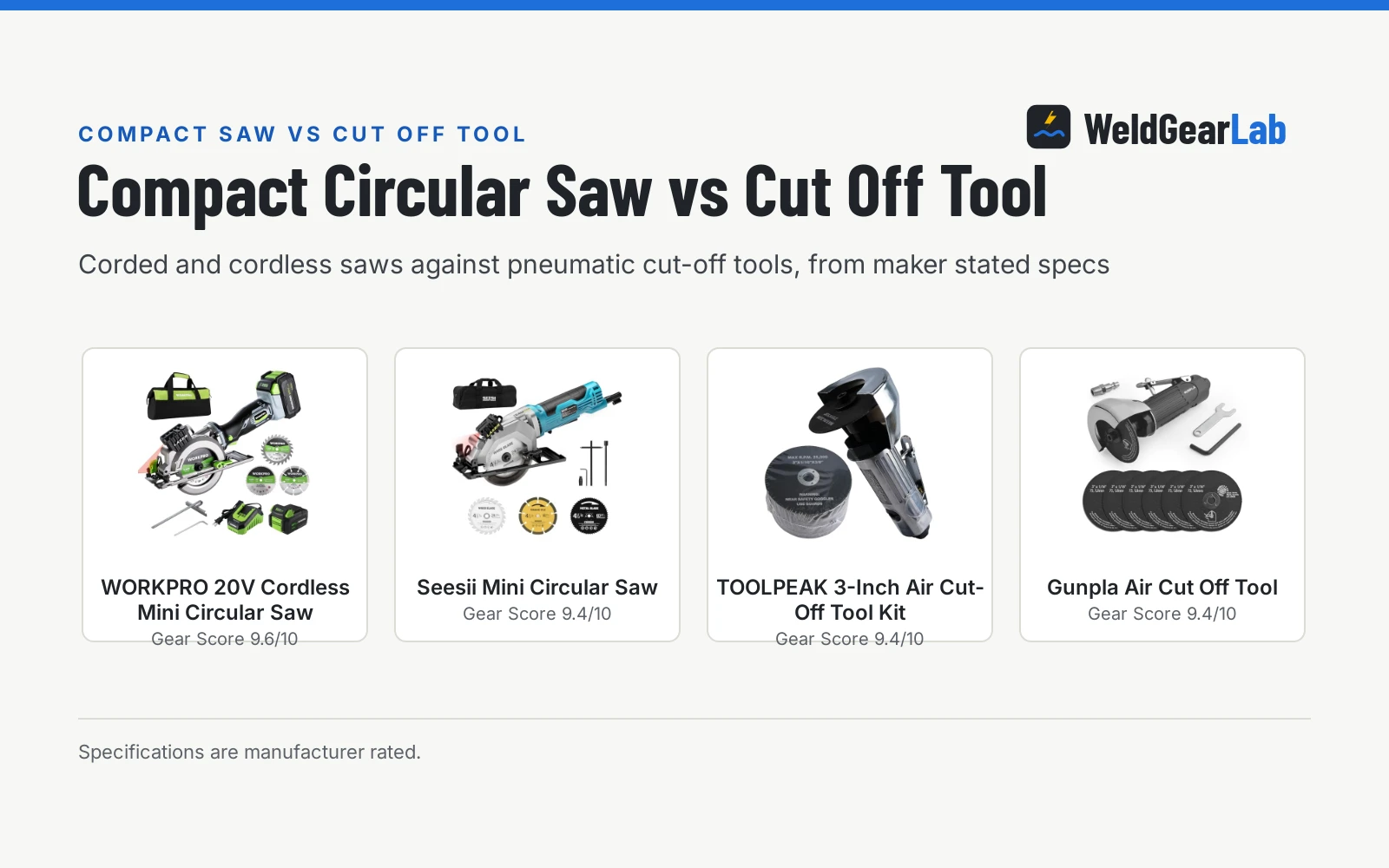
For cutting, yes, with a cut-off wheel. But the cut off tools here are smaller and faster for straight cuts: 19,500 to 24,000 RPM on a 3 in disc, against 11,000 to 19,500 RPM on the angle grinders. If cutting is all you do, the dedicated tool is handier.
Can a cut off tool grind?
The listings pitch cut off tools for cutting, not grinding. A cut-off disc is thin and can shatter under side load; grinding wants a grinding wheel on an angle grinder.
What size disc do I need?
The cut off tools here use 3 in discs; the angle grinders run 3 to 5 in. Bigger discs cut deeper but need a bigger tool: the Milwaukee M18 is 12.87 in long against the RYOBI’s 8.5 in.
Corded or cordless?
The Genesis and SHALL are 3.5-amp corded tools with a cord to manage. The DEWALT, Milwaukee 2522-20, TEENO and RYOBI are battery tools: freedom to move, batteries to charge. The Milwaukee M18 listing is battery powered at 18V.
What safety features matter?
The listings name several: the Milwaukee M18 has a paddle switch, electronic clutch and overload protection; the Milwaukee 2522-20 has Redlink Plus overload protection and reversible blade rotation; the TEENO has overheat protection. Eye protection and a guard are still on you.
Related: paddle vs slide switch angle grinders and straight vs 90 degree die grinder.