Die Grinder vs Cut Off Tool: When to Use Each
Die grinder vs cut off tool: two cut-off tool listings compared side by side, with a verdict on when each tool type wins.

On this page
Top picks at a glance
As an Amazon Associate I earn from qualifying purchases.
- 1
 Ingersoll Rand 426 Air Reversible Cutoff Tool9.6/10View on Amazon
- 2
 Milwaukee 2522-20 Cut-Off Tool,12V9.6/10View on Amazon
Verdict. Pick the cut off tool for cutting metal, sheet and bolts: both listings here are cut-off tools, and a spinning cutoff wheel is the right shape for slicing. Pick the die grinder for grinding, deburring and detail work where a small mounted point or burr reaches where a wheel cannot.
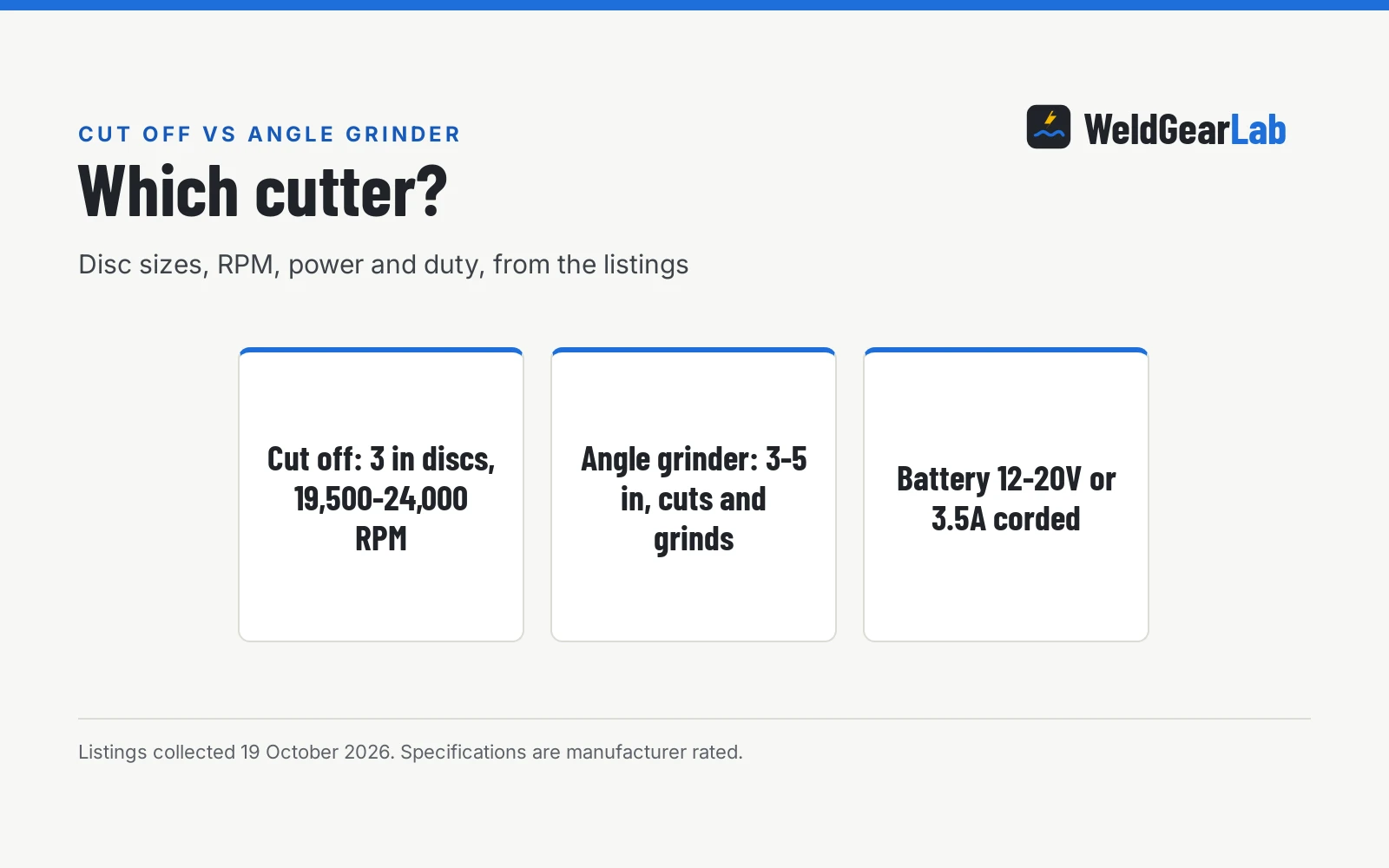
Die grinder vs cut off tool is a question of cutting against grinding. A cut-off tool spins a thin wheel for slicing through metal; a die grinder spins a small burr or mounted point for removing material, smoothing edges and detail work. This comparison puts two cut-off tool listings side by side and explains where each tool type wins.
WeldGearLab gets a commission on purchases made through links on this page, and your price stays the same. Read our affiliate disclosure.
The two machines

Ingersoll Rand 426 Air Reversible Cutoff Tool
An air reversible cut-off tool at 20,000 rpm with a lock-out lever and 1 yr warranty.
Pros
- Reversible cutting direction for spark control
- Speed regulator knob to match cutting needs
- Lock-out lever against accidental throttle operation
- 1 yr warranty on material and workmanship, 5 wheels included
Cons
- Pneumatic, needs an air compressor
- Composite housing, not metal
- No stated blade or wheel size
Milwaukee 2522-20 Cut-Off Tool,12V
A 12V brushless cut-off tool at 20,000 rpm, bare tool, with overload protection.
Pros
- Powerstate brushless motor for maximum power and motor life
- Reversible blade rotation for cutting control
- Redlink Plus overload protection
- 12V battery power, 1.2 kg, one-handed use
Cons
- Bare tool, battery and charger not included
- Warranty stated as Manufacturer Warranty with no term
- No wheels listed among included components
Other welders and gear to compare
 AOBEN 1200W Angle Grinder 4-1/2 inchCheck price on Amazon
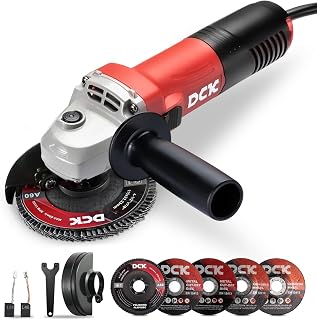 DCK Angle GrinderCheck price on Amazon
 5 Inch Brushless Angle Grinder for Makita 18VCheck price on Amazon
 DCA 4-1/2 Inch Angle GrinderCheck price on Amazon
 Makita 9557PBX1 4-1/2" Paddle Switch Cut-Off/Angle GrinderCheck price on Amazon
 DEWALT DCG426B 20V Max Variable Speed Die GrinderCheck price on Amazon
Side by side
| Tool | Weld Score | Speed | Power | Features | Warranty |
|---|---|---|---|---|---|
| Ingersoll Rand 426 Air | 9.6/10 | 20,000 rpm | Pneumatic | Reversible, lock-out lever | 1 yr |
| Milwaukee 2522-20 M12 | 9.6/10 | 20,000 rpm | 12V battery | Brushless, overload protection | No term stated |
19 October 2026
Die grinder vs cut off tool: power and output
Both listings state 20,000 rpm. The Ingersoll Rand 426 is pneumatic, so it needs an air compressor, while the Milwaukee 2522-20 runs on a 12V battery as a bare tool. The Milwaukee’s spec table lists 2000 watts, which is implausible for a 12V tool; treat that figure with caution and trust the 12V figure.
Control features
Both tools are reversible: the Ingersoll Rand reverses cutting direction to control spark direction, and the Milwaukee reverses blade rotation for cutting control. The Ingersoll Rand adds a speed regulator knob and a lock-out lever against accidental throttle operation; the Milwaukee adds Redlink Plus overload protection.
Weight and build
The Milwaukee states 1.2 kg in metal and plastic with an ergonomic grip for one-handed use. The Ingersoll Rand states a composite housing and contradicts itself on weight: the bullets say a lightweight 2 lb design while the spec table says 3.1 pounds.
What is in the box
The Ingersoll Rand includes 5 cutoff wheels and the tool itself. The Milwaukee is a bare tool with an instruction guide; battery, charger and wheels are not listed. Budget for those if you do not already own the M12 platform.
Warranty
The Ingersoll Rand states a 1 yr warranty on material and workmanship. The Milwaukee states only Manufacturer Warranty with no term.
Choose the cut off tool if
You cut mufflers, tailpipes, sheet metal, nuts and bolts. The Ingersoll Rand suits air-tool owners with a compressor; the Milwaukee suits M12 battery owners who cut away from the bench.
Choose the die grinder if
You grind welds, deburr edges or shape small parts. A die grinder’s burr or mounted point reaches into corners and onto edges where a cutoff wheel cannot go, and it removes material rather than slicing it.
Buying advice: die grinder vs cut off tool
Cutting or grinding: name the job first
The quickest way to choose is to name the job in one verb. If the verb is cut, slice, or separate, the cut-off tool wins: its thin spinning wheel is shaped for slicing through sheet metal, tailpipes, mufflers, nuts and bolts. If the verb is smooth, deburr, shape, or blend, the die grinder wins: its small burr or mounted point removes material from edges and welds and reaches into corners where a flat wheel cannot go.
Power source: compressor, battery, or neither in the box
The two listings here show the two power philosophies. The Ingersoll Rand 426 is pneumatic, which means it draws its power from a shop air compressor: no compressor, no tool. That suits a shop that already runs air tools, because the tool itself is simple and light, but it chains the work to the air hose. The Milwaukee 2522-20 runs on a 12V battery, which frees the work from the hose, but the listing sells it as a bare tool: no battery, no charger, and no wheels are listed. If you already own the M12 platform, that is fine; if you do not, budget for the battery and charger before comparing prices, because the tool alone cannot run.
Speed: both state 20,000 rpm, but control differs
Both listings state a maximum of 20,000 rpm. Do not read much into the tie: it is the stated maximum on each listing, and real working speed depends on load and the wheel in use. What separates them is control. The Ingersoll Rand states a speed regulator knob, which lets the user dial the speed down for delicate cuts, plus a reversible cutting direction to steer sparks away from the work and the user. The Milwaukee states reversible blade rotation for the same spark-direction reason, and its Redlink Plus system is stated to guard against overload. Reversible rotation is the feature to look for on either tool: sparks always go somewhere, and the listing that lets you choose where is the safer pick.
Safety features worth paying attention to
Cut-off tools throw sparks and spin a wheel that can shatter if abused, so the safety lines in these listings matter. The Ingersoll Rand states a lock-out lever: a spring-loaded latch that must be engaged before the throttle works, which prevents the tool from starting if it is bumped or grabbed wrong. It also states a composite housing that insulates against cold outside air, which matters for comfort on long winter jobs when the expanding air chills the tool. The Milwaukee states Redlink Plus overload protection, which is the battery tool’s way of shutting down before the motor cooks itself. Neither listing mentions eye protection or wheel guards, but those are the operator’s responsibility regardless of brand: a cutoff wheel is not a disc to use without a guard and glasses.
Weight and handling for overhead and awkward cuts
The Milwaukee states 1.2 kg with an ergonomic grip for one-handed cutting control. The Ingersoll Rand is lighter in the bullets at 2 lb, though its spec table says 3.1 pounds, so treat the weight as approximate. For cutting under a car or above shoulder height, every ounce counts, and the pneumatic tool’s simple build is the lighter option in practice. For one-handed control on a ladder or a fender, the Milwaukee’s stated ergonomic grip is the relevant line. If the work is mostly at the bench, weight matters less than the power source and the wheels.
Wheels and consumables: what comes with the tool
The Ingersoll Rand includes 5 cutoff wheels, so it cuts out of the box. The Milwaukee lists no wheels, so the first purchase includes the tool, the battery, the charger, and the wheels. Price the whole setup, not the tool alone, when comparing. Wheels are consumables: they wear with every cut, and a wheel that is too small for the guard or the wrong type for the metal is a hazard. Buy wheels rated for the tool’s stated speed and the metal being cut, and replace a wheel that is chipped or cracked instead of nursing it through one more cut.
Warranty and the weight of a stated term
The Ingersoll Rand states a 1 yr warranty on material and workmanship, which is short but stated. The Milwaukee states only Manufacturer Warranty with no term, which is why it scores zero on warranty here. A stated term is a promise you can hold; an unstated one is not. For a tool that lives in a harsh shop, the stated year on the pneumatic pick is worth more than the silence on the battery pick, though neither listing promises much.
Which shop each listing suits
The Ingersoll Rand suits the shop that already owns a compressor: it is pneumatic, reversible, has a speed regulator and a lock-out lever, includes 5 wheels, and states a 1 yr warranty. The Milwaukee suits the shop on the M12 battery platform that cuts away from the bench or the air hose: 12V, reversible, brushless, with overload protection, sold as a bare tool.
FAQ for welders
Can a die grinder cut metal like a cut-off tool?
Both listings in this comparison are stated for cutting: the Ingersoll Rand for metal cutting and body repair, and the Milwaukee as a cut-off tool. Judge any other tool type by a listing stated for that work.
Which listing is better for a shop with a compressor?
The Ingersoll Rand 426: pneumatic, reversible, with a speed regulator and a stated 1 yr warranty.
Which listing suits cordless work?
The Milwaukee 2522-20 at 12V, though it is a bare tool and the listing states no warranty term.
Why do the two listings both state 20,000 rpm?
That is the stated maximum rotational speed on each listing; it is a coincidence of the category, not a shared part.
Scoring, line by line
| Product | Gear Score | Perf. /35 | Build /25 | Value /25 | Safety /10 | Warranty /5 |
|---|---|---|---|---|---|---|
| Ingersoll Rand 426 Air | 9.6 | 32 | 22 | 21 | 3 | 3 |
| Milwaukee 2522-20 M12 | 9.6 | 32 | 22 | 21 | 3 | 0 |
Displayed scores fall between 9.2 and 9.8: the weighted point total is mapped onto that band in a straight line, so earning more points always lifts the score.
More welding guides
See every metal fab tool guide.