Can You Weld in Shorts and a T Shirt?
Welding in shorts and a t shirt exposes bare skin to severe ultraviolet radiation burns, flying sparks, and hot slag, making heavy flame-resistant cotton workwear and leather protective gear essential.
 By WeldGearLab Editorial
Updated October 9, 2026
By WeldGearLab Editorial
Updated October 9, 2026
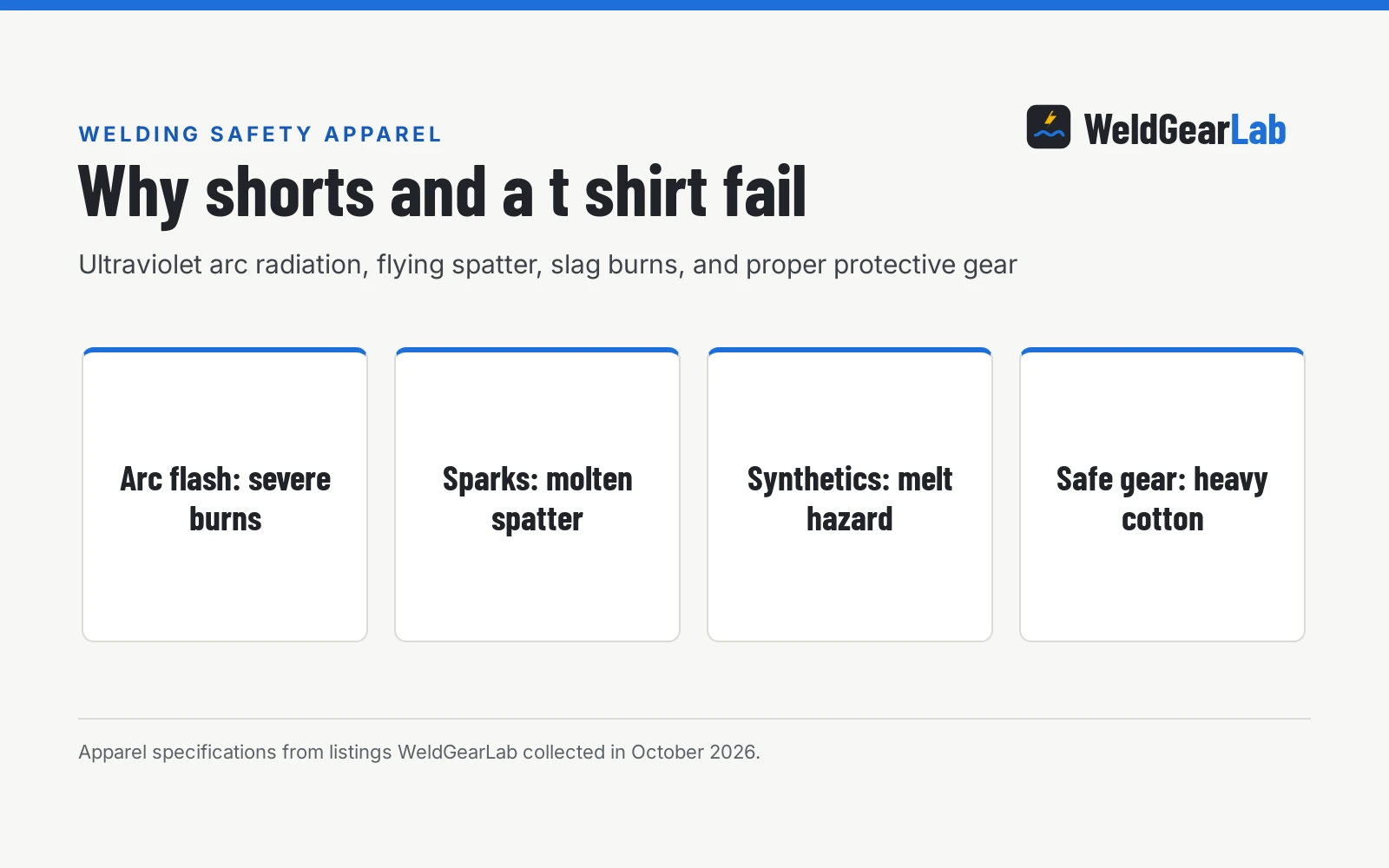
No, you should never weld in casual summer clothes. If you wonder can you weld in shorts and a t shirt, the answer is an absolute no. An electric welding arc produces intense ultraviolet radiation that burns bare skin rapidly, while molten sparks and hot slag cause painful contact burns. Even a brief arc strike on exposed arms or bare legs can lead to blistering skin damage and ignited fabric. Safe welding demands full-body coverage made of flame-resistant materials, heavy leather protection, and proper footwear.
As an Amazon Associate I earn from qualifying purchases. This guide links to our product roundups, where WeldGearLab earns a commission when you buy through links, at no extra cost to you. Read our affiliate disclosure.
Can you weld in shorts and a t shirt?
The electric welding arc is not simply a heat source; it produces intense ultraviolet rays, infrared energy, and visible light. Bare skin exposed to an electric arc suffers rapid radiation burns that cause acute pain, redness, and blistering similar to severe sunburns. Shorts leave your thighs, calves, and shins open to direct arc rays, while short sleeves leave your forearms and upper arms vulnerable. Beyond radiation, welding constantly produces flying sparks and dropping slag. Molten metal rolling across bare skin produces deep, blistering burns, and sparks falling into low-cut shoes can burn through socks instantly.
Side by side
| Shorts and Synthetic Tee | Standard Heavy Cotton | Flame-Resistant Workwear | |
|---|---|---|---|
| UV radiation protection | None; bare skin suffers rapid ultraviolet radiation burns | Strong; dense weave blocks direct ultraviolet arc rays | Complete; heavy coverage eliminates arc radiation exposure |
| Spatter and spark resistance | None; hot sparks contact and burn bare skin directly | Good; heavy fabric deflects light sparks and spatter | Superior; heavy flame-resistant cloth and leather shed spatter |
| Hot slag contact | Severe hazard; molten slag burns skin and drops into shoes | Limited; falling slag can burn through untreated fabric | High resistance; leather and heavy apparel deflect hot slag |
| Heat and flame behavior | Synthetic fibers melt into hot liquid plastic against skin | Chars without melting, but untreated cloth can ignite | Treated fabric self-extinguishes and chars without melting |
| Typical fabric composition | Polyester, thin cotton, or synthetic athletic blends | Untreated heavy cotton duck or heavyweight denim | Flame-resistant treated cotton or heavy split leather |
| Neck and throat defense | Open collar leaves throat and chest open to falling sparks | Standard buttoned shirt covers chest with open collar gaps | High buttoned collar or leather bib shields neck and throat |
| Leg and foot protection | Bare legs exposed; open footwear catches dropping slag | Full-length trousers protect legs from direct flash | Cuffless heavy trousers over leather work boots shed debris |
Protective clothing must guard against radiation, flying spatter, and falling slag at the same time. While casual summer wear offers no defense against arc hazards, dedicated shop workwear creates a dependable thermal barrier between hot metal and your skin.
Primary hazards of exposed skin and casual clothing
- Ultraviolet arc radiation. Arc rays damage unprotected skin cells rapidly. Exposure causes intense redness, blistering, and deep peeling across bare arms, neck, and legs. Repeated radiation exposure also increases long-term skin health risks.
- Flying molten spatter. Welding processes eject liquid metal globules from the puddle. When hot beads contact bare skin, they cause immediate pinpoint burns that damage tissue before you can react.
- Dropping hot slag. Chipping slag and out-of-position welds send molten crust downward. Shorts leave the lower body completely exposed, allowing falling debris to lodge between socks and footwear.
- Synthetic fabric melting. Everyday athletic shorts and casual shirts frequently contain synthetic materials like polyester. When spatter hits synthetic cloth, the fabric melts into boiling plastic that fuses directly to human skin.
Hands and forearms face the closest exposure to sparks and heat, making heavy leather coverage essential; our guide to the best welding gloves for MIG covers durable options with extended gauntlet cuffs.
What safe welding apparel requires instead
- Full skin coverage. Long sleeves and full-length trousers prevent ultraviolet rays from contacting bare skin, stopping radiation burns before they start.
- Dense natural fibers. Heavy cotton duck or denim resists sparks and chars instead of igniting or melting when hit by flying spatter.
- Buttoned collars and covered pockets. Work shirts with high button-down collars and flapped pockets prevent stray sparks from lodging against the chest and neck.
- Cuffless pants over leather boots. Straight pant legs worn outside leather work boots create a smooth path for falling slag to drop harmlessly to the shop floor without entering shoes.
Proper apparel functions as an integrated shield. For a detailed overview of essential gear from head to toe, check our welding safety gear checklist for beginners.
Cotton vs synthetic clothing welding safety
The choice of fabric determines whether a stray spark bounces off or causes severe injury. Reference listings demonstrate critical differences in material composition and construction:
- Pure synthetic fabrics. Everyday shirts such as the AYKRM work shirt use 100% polyester. Polyester fibers possess a low melting point. Under welding sparks, pure synthetic materials melt instantly into hot liquid plastic that adheres to skin, creating catastrophic burn injuries. Never wear pure synthetic clothing near welding or cutting processes.
- Polyester and cotton blends. Casual tops like the Alalaso tee feature 70% polyester and 30% cotton with an item weight of 244 g. Even partial synthetic content creates serious melting hazards. The cotton component burns while the polyester component melts, making blended garments unsafe for metal fabrication.
- Flame-resistant pure cotton. Dedicated welding apparel like the BOCOMAL button-up and DPSAFETY shirt use 100% cotton fabric. Unlike untreated cotton tees that can ignite from sustained sparks, flame-resistant treated cotton chars and self-extinguishes rather than catching fire or melting.
- Stretch cotton blends. Certain flexible workwear models, like the BOCOMAL canvas shirts, utilize 98% cotton and 2% spandex. The heavy cotton body provides spark resistance while minimal elastic fiber allows comfortable movement without compromising flame safety.
Fabric weights and safety ratings explained
Fabric thickness determines how effectively clothing resists heat, hot beads, and radiation penetration. Reference listings illustrate standard fabric weights and industry certifications:
- Lightweight cotton shirts. Workwear listings from DPSAFETY and BOCOMAL specify 6oz fabric weights. These long-sleeve shirts provide breathable coverage for lighter welding and warm shop environments where full skin coverage is needed without excessive heat retention.
- Medium work shirts. Standard flame-resistant shirts from BOCOMAL list 6.5oz fabric weights. This weight provides durable resistance against flying sparks while remaining flexible for general shop fabrication. Specific BOCOMAL listings report an item weight of 1.3 pounds for their long-sleeve work shirts.
- Heavyweight canvas and jackets. Heavy shop shirts and welding jackets from BOCOMAL feature 8.5oz fabric weights. The denser weave provides substantial protection against sustained spatter and heavier welding processes.
- Safety certifications and standards. Reliable protective listings highlight NFPA2112 certification, CAT 2 arc flash ratings, and UL certification. These standards verify that the garment self-extinguishes upon flame contact and resists ignition under intense thermal energy.
Can you weld in shorts and a t shirt for quick tack welds?
Hobbyists and beginners often wonder if throwing on a helmet for a brief repair or tack weld without changing out of summer clothes is acceptable. The risk remains identical. An electric arc generates maximum ultraviolet radiation immediately upon striking. Arc burns require no warm-up period, and a stray spatter bead travels just as fast during a brief tack weld as during a production run. Skipping protective gear for a short task frequently leads to severe burns on exposed knees, shins, or arms.
Always combine flame-resistant clothing with a certified welding hood to protect your face and eyes from direct arc radiation; read our review of the best welding helmet for MIG welding for dependable auto-darkening options.
Fume and fire safety. Beyond protective clothing, keep flammables away from your workspace. Flying sparks can travel across concrete and ignite sawdust, rags, or dry brush. Always weld in well-ventilated areas to avoid breathing welding plumes, and wear approved safety glasses beneath your hood to shield your eyes from flying slag during cleanup.
Frequently Asked Questions
Can you weld in a t-shirt if you wear leather welding sleeves?
Leather welding sleeves shield arms from direct radiation and spatter, but a standard t-shirt leaves the neck and chest vulnerable. Flying sparks can easily enter open collars and ignite lightweight fabric. Pairing leather sleeves with a high-collar leather bib or flame-resistant apron provides much better coverage if you must work in warm conditions.
What happens if you weld in shorts?
Welding in shorts exposes your legs to intense ultraviolet radiation, leading to blistering burns similar to severe sunburns. Molten spatter and falling slag can land directly on unprotected skin or fall straight into your footwear. Long pants without cuffs are necessary to guide falling debris safely to the floor.
Is 100% cotton safe for welding?
Heavy untreated 100% cotton such as denim or duck canvas provides reasonable defense for low-amperage hobby tasks because cotton chars rather than melting. However, lightweight cotton tees remain vulnerable to spark penetration and can ignite if saturated with grease or frayed. Dedicated flame-resistant cotton workwear offers significantly higher safety.
Can welding UV rays go through clothing?
Thin, loosely woven fabrics like lightweight t-shirts allow ultraviolet radiation to pass through the weave, burning the skin underneath. Darker colors and tightly woven, heavy fabrics block arc rays effectively. As a practical shop check, fabrics with an open weave that allow visible light through also let ultraviolet rays reach the skin.
What should you wear when welding in hot weather?
In summer heat, choose lightweight flame-resistant cotton workwear rated for safety instead of wearing casual summer clothes. A lightweight long-sleeve flame-resistant shirt paired with a breathable welding cap and unlined leather gloves keeps you shielded without causing excessive heat exhaustion. Keep well hydrated and take regular cooling breaks rather than shedding personal protective equipment.
Related: best welding respirator for under a helmet, best welding gloves for high heat, and the welding safety gear hub. Also see our guide to what is a welding curtain.
About the author
WeldGearLab Editorial is the editorial team behind WeldGearLab. We research product listings, specifications, safety listings and warranty terms, score every pick with the published Gear Score method, and correct errors when readers report them. We do not run our own shop trials; see How We Pick for exactly how picks are made.