Best Carbon Felt Welding Blanket (2026): 5 Picks for the Shop
Five carbon felt welding blankets for the shop, compared on stated heat rating, felt thickness, size, certifications and the warranty each listing states.

On this page
Top picks at a glance
As an Amazon Associate I earn from qualifying purchases.
- 1
 Best OverallXOHUYD 40×409.5/10View on Amazon
- 2
 Most Coverage and WarrantyMatace 6×89.4/10View on Amazon
- 3
 High Heat Runner-UpBSTFLEX 39×489.4/10View on Amazon
- 4
 Thickest FeltFLASLD 48×729.4/10View on Amazon
Sparks do not ask permission before they land. When the arc is lit and slag starts popping off the joint, a carbon felt welding blanket is what stands between that shower and everything you do not want burned. This guide names the best carbon felt welding blanket for shop work by comparing five listings on what each one actually states: heat rating, felt thickness, size, certifications and warranty. Every claim below comes from the listing itself; where a listing stays silent, this guide says so.
WeldGearLab gets a commission on purchases made through links on this page, and your price stays the same. Read our affiliate disclosure.
Quick picks
- Best Overall XOHUYD 40×40: Over 3000°F stated resistance with ASTM D6413 and UL94-V0, in 5mm felt. Check price on Amazon
- Most Coverage and Warranty Matace 6×8: 48 square feet of 5mm felt and the only stated warranty here, 1 year. Check price on Amazon
- High Heat Runner-Up BSTFLEX 39×48: Stated 3000°F with ASTM D6413 and a stated thermal conductivity. Check price on Amazon
- Thickest Felt FLASLD 48×72: 6mm felt, the thickest here, in a 48×72 inch blanket. Check price on Amazon
The machines


Large 40x40Inch Welding Blanket Pad Fireproof
A 40x40 inch, 5mm carbon felt blanket with the highest stated heat resistance here, over 3000°F, certified to ASTM D6413 and UL94-V0.
Pros
- Stated heat resistance over 3000°F, the highest here
- Certified to ASTM D6413 and UL94-V0
- 5mm felt, which the listing compares against thin 3mm blankets
- Lowest weight here at 1.48 pounds, folds for transport
Cons
- No warranty term in the listing
- Bullets mention multi-size selection, but only one size is listed
- 40x40 inch size is smaller than the 48x72 inch FLASLD

Welding Blanket Fireproof 6x8 Feet
A 6x8 foot, 5mm carbon felt blanket covering 48 square feet, with ASTM D6413 cited and the only stated warranty in this guide, 1 year.
Pros
- 48 square feet of coverage, the most here
- 1 year manufacturer warranty, the only stated term here
- 5mm 100% carbon felt, with ASTM D6413 cited
- Cut-to-fit and foldable for storage
Cons
- No heat rating figure in the listing
- Heaviest blanket here at 5.8 pounds
- The 6x8 foot size needs real floor or bench space to lay flat
- 5mm felt is thinner than the 6mm FLASLD
39 x 48 x 1/5 inches Carbon Fiber Welding Blanket
A 39x48 inch, 5mm carbon felt blanket rated to 3000°F (1648°C), certified to ASTM D6413, with a stated thermal conductivity of 0.13 W/(m-K).
Pros
- Stated 3000°F (1648°C) heat resistance
- Certified to ASTM D6413
- States thermal conductivity, 0.13 W/(m-K), rare in this class
- 39x48 inch size, a full 1m x 1.2m per the spec table
Cons
- Included components read 2pcs while unit count reads 1: confirm quantity
- No warranty term in the listing
- Hand wash only per the care instructions

FLASLD Welding Blanket Fireproof Mat Heat
A 48x72 inch, 6mm carbon felt blanket, the thickest felt and largest single blanket here, rated to 1800°F.
Pros
- 6mm felt, the thickest here
- 48x72 inch, the largest single blanket here
- Stated 1800°F resistance
- Trims with scissors or a utility knife, cut edges stay seamless
Cons
- No certification standard cited
- No warranty term in the listing
- 1800°F rating trails the 3000°F blankets here
- Bullets wander into grill and fireplace uses with no welding detail

VEVOR Carbon Felt Welding Blanket 4 Pack
A 4-pack of 37x36 inch, 3mm carbon felt blankets rated to 1800°F, the value pick for covering more area or keeping spares.
Pros
- 4-pack: cover more area or keep spares on hand
- 37x36 inch blankets trim to fit
- 1800°F heat resistance with flame retardant construction
- Lightweight and foldable for transport and storage
Cons
- 3mm felt, the thinnest here
- No certification standard cited
- No warranty term in the listing
- 3.31 pound spec weight covers the set, not per blanket
Other welders and gear to compare
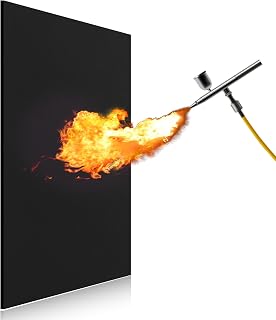 FLASLD Welding Blanket Fireproof Mat 36×48 inch HeatCheck price on Amazon
- FLASLD 18×24 inch Welding Blanket Fireproof Mat 5mm HeatCheck price on Amazon
 Welding BlanketCheck price on Amazon
 Welding Blanket Fireproof 20 x 24InchCheck price on Amazon
 Welding Blanket 2-Pack 10x10 InchCheck price on Amazon
Spec sheet comparison
| Model | Gear Score | Size | Thickness | Heat rating | Certifications | Warranty |
|---|---|---|---|---|---|---|
| XOHUYD 40×40 | 9.5/10 | 40×40 in | 5mm | 3000°F+ | ASTM D6413, UL94-V0 | None stated |
| Matace 6×8 | 9.4/10 | 6×8 ft | 5mm | Not stated | ASTM D6413 | 1 year |
| BSTFLEX 39×48 | 9.4/10 | 39×48 in | 5mm | 3000°F | ASTM D6413 | None stated |
| FLASLD 48×72 | 9.4/10 | 48×72 in | 6mm | 1800°F | None stated | None stated |
| VEVOR 4-Pack | 9.4/10 | 37×36 in, 4-pack | 3mm | 1800°F | None stated | None stated |
These numbers are the manufacturer’s ratings exactly as each listing gives them, recorded on 22 October 2026.
Buying guide: choosing the best carbon felt welding blanket
Heat rating
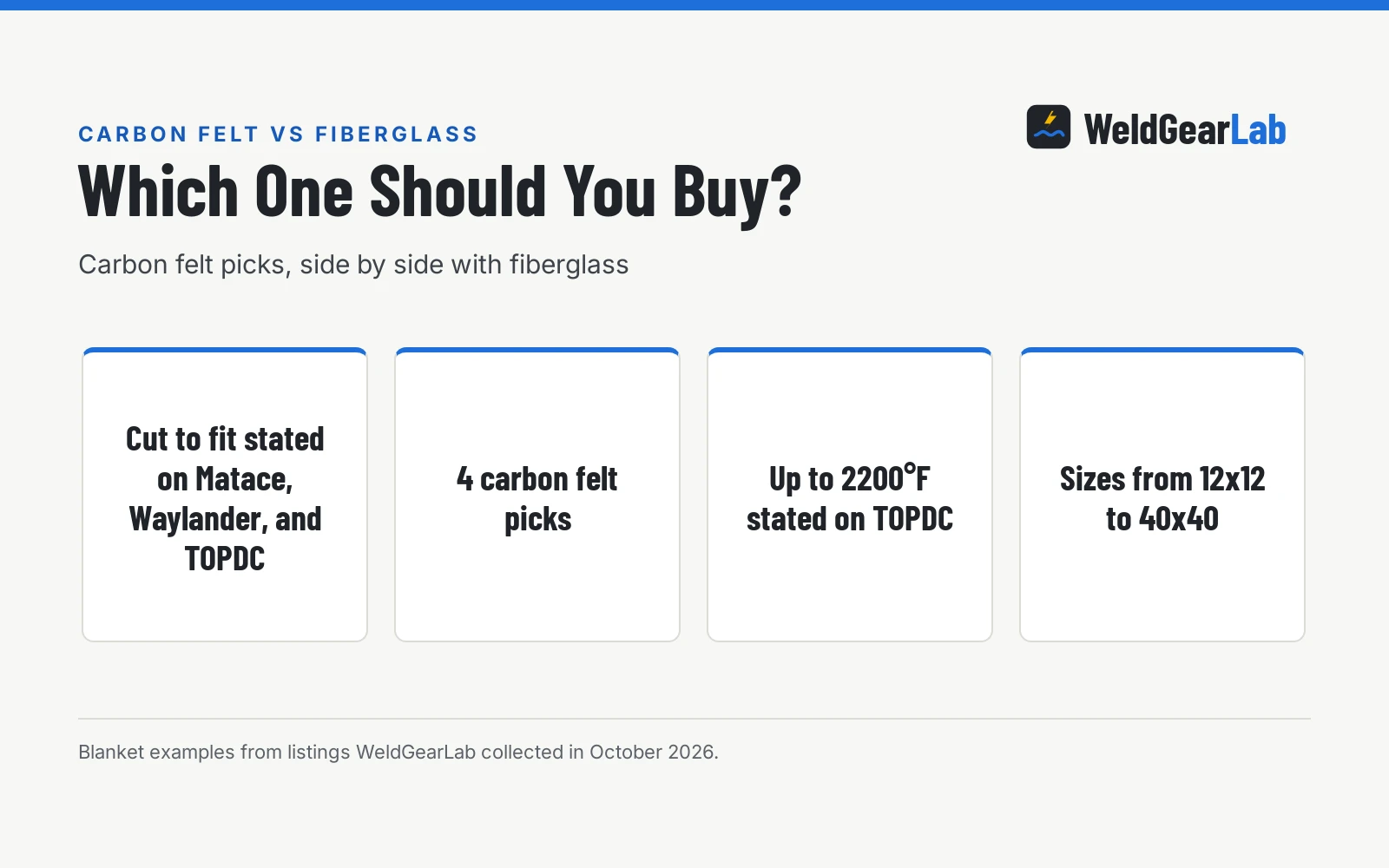
Stated heat ratings in this guide run from 1800°F to over 3000°F. The FLASLD and VEVOR blankets state 1800°F, the BSTFLEX states 3000°F (1648°C), and the XOHUYD states over 3000°F. The Matace listing states no heat rating figure, so judge it on size and felt instead. Match the rating to the work you do; a blanket rated above your process temperature gives you margin. Ratings describe the felt, not the job: a 3000°F blanket still needs full coverage of the spark zone, and a thin spot or gap lets slag through whatever the rating. Read the rating as one input among size, thickness and construction.
Felt thickness
Thickness here runs from 3mm to 6mm. The VEVOR 4-pack uses 3mm felt, the Matace, XOHUYD and BSTFLEX use 5mm, and the FLASLD uses 6mm, the thickest here. Thicker felt insulates longer and resists burn-through from heavy slag. If you weld thick stock with high heat input, favor the thicker felts; for light tack work, 3mm is easier to fold and carry. Thickness also affects handling: the 6mm FLASLD is the most substantial felt here but also the bulkiest to fold, while the 3mm VEVOR blankets fold flat and stack. For a blanket that lives on one bench, thickness wins; for a blanket that rides in a truck from site to site, foldability matters too.
Size and coverage
Sizes run from the 37×36 inch VEVOR blankets to the 48×72 inch FLASLD, with the Matace covering 48 square feet as a 6×8 foot blanket. A bigger blanket covers more bench, but it also needs more storage space and more weight to hold it down. The VEVOR 4-pack splits coverage across four blankets, which suits several small stations or a large bench pieced together. Measure the bench before you buy: a blanket that hangs well past the edges catches more slag but also drags on the floor and collects debris, while a blanket cut to the bench stays put and stays cleaner. The trimmable felt in this guide means you can start large and cut down, which beats starting small.
Certifications
Three listings cite a flame-resistance standard: the Matace, XOHUYD and BSTFLEX cite ASTM D6413, and the XOHUYD adds UL94-V0. A cited standard tells you the felt was evaluated against a published method, which is more useful than an unqualified flame retardant claim. The FLASLD and VEVOR listings cite no standard; judge those on their stated ratings and felt specs. Where no standard is cited, look at what the listing does state: a concrete heat rating figure, a felt thickness in millimeters, and a clear size. Vague phrases like heavy-duty mean little without those numbers; the listings that state all three give you something checkable.
Trimming to fit
Every listing here describes the felt as trimmable: the FLASLD cuts with scissors or a utility knife with seamless edges, and the others describe cut-to-fit or foldable felt. Trim the blanket to the bench or the job, and keep the offcuts for small parts and pipe work. A blanket that folds flat stores on a shelf instead of draped over everything in the shop. Cutting does not weaken the felt the way it weakens a coated fabric: the listings describe seamless, non-fraying edges after trimming. Keep a sharp pair of shears or a fresh utility blade for the job, since a dull edge tears instead of cutting. Save every offcut; small pieces shield clamps, vise jaws and nearby tools.
Single blanket or multi-pack
Four of the five picks here sell as single blankets; the VEVOR sells as a 4-pack of 37×36 inch blankets. A single large blanket covers one bench with no seams, which is what you want under sustained work. A multi-pack covers several stations, gives you spares when one wears out, and lets you double up layers where slag falls heaviest. If you run one bench, buy the single that fits it; if you run a whole shop, the pack favors VEVOR.
Use as directed. A welding blanket contains sparks, slag and radiant heat; it does not replace safe work practices. Keep flammables clear of the area, let the work and the blanket cool before handling, and check the felt for thin spots or damage before each use. See the OSHA welding overview for safe hot-work practices.
Before You Strike an Arc
- Confirm the blanket covers the full spark zone before you strike the arc; reposition it when you move the work.
- Clamp the ground to the workpiece or a bare metal spot, never to the felt.
- Let the blanket cool before you fold it; carbon felt holds heat after the weld ends.
- Trim with scissors or a utility knife to the size the job needs, and save the offcuts for small parts.
- Store the blanket flat or loosely folded; sharp creases wear the felt faster at the fold.
FAQ for welders
What is a carbon felt welding blanket?
A carbon felt welding blanket is a heat shield made from carbon fiber felt, laid over benches, floors and nearby equipment to catch sparks, slag and radiant heat. The listings describe the felt as soft, flexible and trimmable, and the XOHUYD listing notes it does not shed glass fibers the way fiberglass does. Use it wherever hot work happens near things you do not want burned. Carbon felt handles higher stated temperatures than the fiberglass blankets the XOHUYD listing compares against, and it stays flexible enough to drape over pipes and equipment. It is sold by size and thickness, not by brand magic: compare the numbers, not the adjectives.
What heat rating do I need?
Stated ratings here run from 1800°F to over 3000°F. An 1800°F rating suits light work; the 3000°F blankets suit hotter processes with more margin. Match the rating to your process, and remember the Matace lists no rating figure at all. When in doubt, buy more rating than your process needs; the difference between ratings is small next to the cost of a shop fire.
Can I cut a welding blanket to size?
Yes. The FLASLD listing states the felt trims with scissors or a utility knife and the cut edges stay seamless, and the other listings describe cut-to-fit or foldable felt. Measure the bench or the spark zone, trim once, and keep the offcuts for small jobs. There is no downside to trimming stated in any listing here; the felt is sold as a cut-to-fit material. Just measure twice, since a cut too small cannot be undone.
How thick should the felt be?
Thickness in this guide runs from 3mm to 6mm. Thicker felt insulates longer against heavy slag; the 6mm FLASLD is the thickest here. Thinner felt folds easier and stores smaller, which is the VEVOR 4-pack’s argument. Pick thickness for the heat you run, not for the shelf. Thickness is not the whole story: a 5mm blanket with a cited standard can outperform a thicker blanket with no rating behind it. Read thickness together with the heat rating and any cited certification.
Is carbon felt better than fiberglass?
The XOHUYD listing claims its carbon felt outperforms standard fiberglass blankets with a 1000°F limit and does not shed glass fibers. That is the maker’s claim, stated in neutral terms. For a deeper comparison of blanket materials, see our fiberglass vs cotton welding blanket guide. Fiberglass blankets have their own place and their own ratings; the comparison here is only what the XOHUYD listing claims. If you already own fiberglass blankets in good shape, nothing in this guide says to replace them.
Do welding blankets come with a warranty?
Only one listing here states one: the Matace includes a 1 year manufacturer warranty. The other listings state no warranty term, so their warranty scores are zero. A stated warranty is rare in this class, which is part of why the Matace ranks near the top. A warranty on a consumable heat shield is unusual, which makes the 1 year term worth noting even though the blanket does not lead on heat rating. Do not expect warranty service to cover normal wear from slag and heat; warranties cover defects, not consumption.
Related: welding blanket sizes, welding blanket material, welding blanket vs fire blanket, welding blanket for home garage and welding safety gear.
Scoring, line by line
Each blanket is scored on performance, build, value, safety listing and warranty, with the weights published on our How We Pick page. Welding blankets have no electrical safety listing to state, so every blanket here scores zero on that criterion; the ranking comes from the other four.
| Product | Gear Score | Perf. /35 | Build /25 | Value /25 | Safety /10 | Warranty /5 |
|---|---|---|---|---|---|---|
| XOHUYD 40×40 | 9.5 | 32 | 21 | 21 | 0 | 0 |
| Matace 6×8 | 9.4 | 26 | 20 | 18 | 0 | 3 |
| BSTFLEX 39×48 | 9.4 | 30 | 20 | 19 | 0 | 0 |
| FLASLD 48×72 | 9.4 | 28 | 21 | 19 | 0 | 0 |
| VEVOR 4-Pack | 9.4 | 26 | 19 | 22 | 0 | 0 |
Displayed scores fall between 9.2 and 9.8: the weighted point total is mapped onto that band in a straight line, so earning more points always lifts the score.