Bench Grinder vs Die Grinder: Which One Should You Buy?
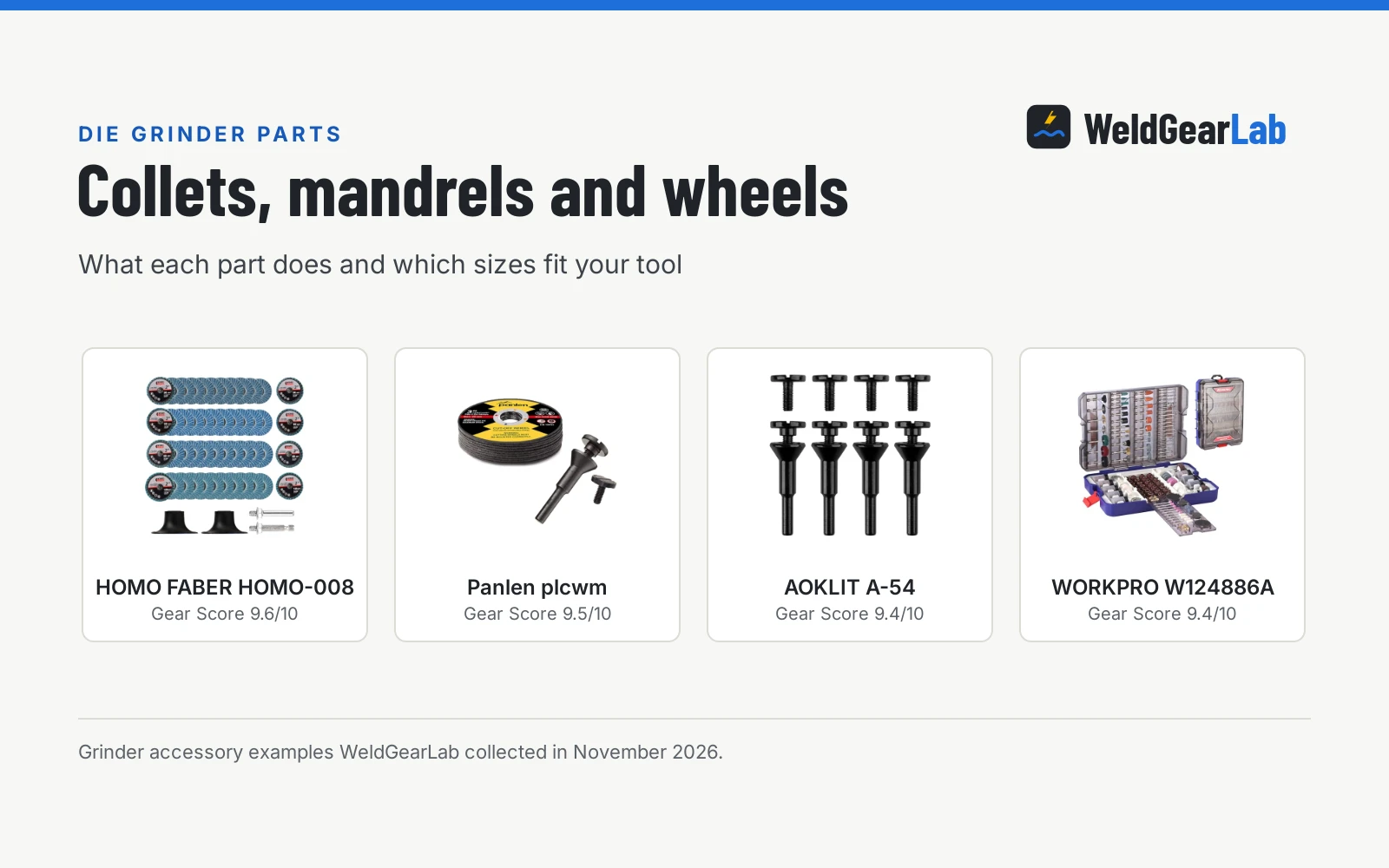
Bench grinder or die grinder? The bench grinder sharpens and shapes at the wheel; the die grinder cleans welds and grinds where the work sits. Three 8 inch bench grinders compared.

On this page
Top picks at a glance
As an Amazon Associate I earn from qualifying purchases.
- 1
 HTC Adjustable Bench Grinder Stand Pedestal9.8/10View on Amazon
- 2
 BHA 3 x 1/32 x 3/8 Cut Off Wheels for Die Grinders9.7/10View on Amazon
- 3
 WEN BG4282 4.8-Amp 8-Inch Single Speed Bench Grinder with LEDView on Amazon
- 4
 WEN BG625V 2.5-Amp 6-Inch Variable Speed Bench Grinder withView on Amazon
- 5
 JET 10-Inch Bench GrinderView on Amazon
- 6
 DEWALT DW758 8-Inch Bench GrinderView on Amazon
- 7
 Ingersoll Rand 301B 1/4" Collet Air Die Grinder Max freeView on Amazon
- 8
 Ingersoll Rand 3107G 1/4-Inch Straight Air Die Grinder withView on Amazon
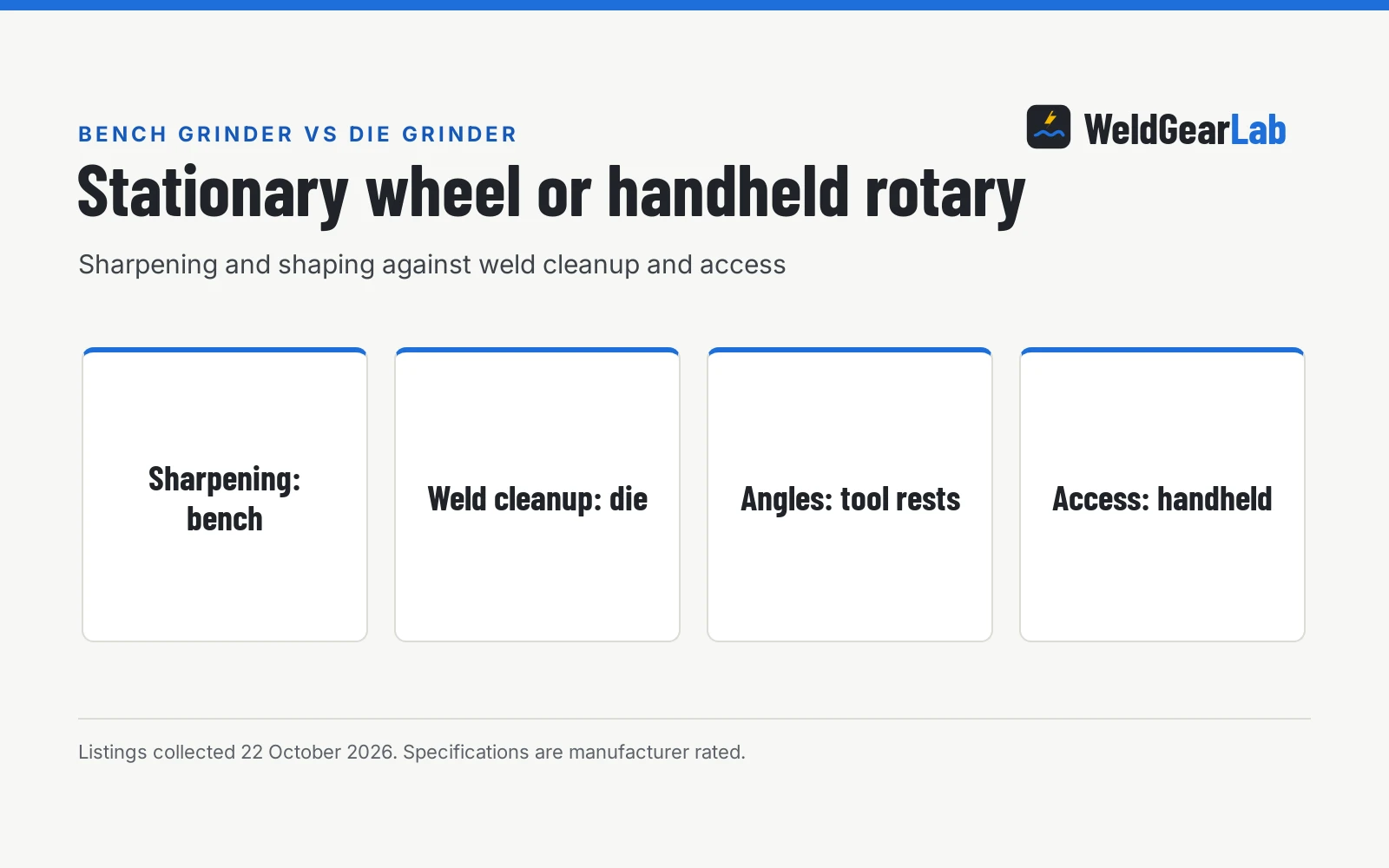
Bench grinder vs die grinder: they both spin abrasives, and that is nearly all they share. A bench grinder is stationary: you bring the work to its two large wheels, which makes it the sharpening and shaping tool. A die grinder is a handheld rotary tool: you bring the tool to the work, which makes it the weld cleanup and in-place grinding tool. For a fabrication shop the real question is not which is better, but which jobs you do standing at a bench and which you do on the workpiece.
Other welders and gear to compare
 WEN BG4282 4.8-Amp 8-Inch Single Speed Bench Grinder with LEDCheck price on Amazon
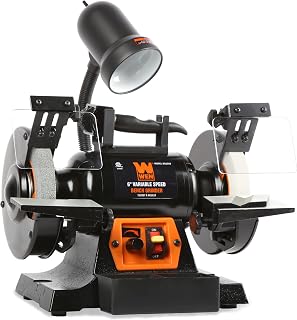 WEN BG625V 2.5-Amp 6-Inch Variable Speed Bench Grinder withCheck price on Amazon
 JET 10-Inch Bench GrinderCheck price on Amazon
 DEWALT DW758 8-Inch Bench GrinderCheck price on Amazon
 Ingersoll Rand 301B 1/4" Collet Air Die Grinder Max freeCheck price on Amazon
 Ingersoll Rand 3107G 1/4-Inch Straight Air Die Grinder withCheck price on Amazon
This guide links to our product roundups, where WeldGearLab gets a commission on purchases made through links on this page, and your price stays the same. Read our affiliate disclosure.
The difference in one paragraph
A bench grinder mounts two wheels on a motor fixed to the bench or a stand, with a tool rest in front of each wheel and an eye shield above it. You hold the workpiece against the rest at a set angle and let the wheel do the work, which is why bench grinders own sharpening: the rest, not your wrist, sets the angle. A die grinder is a slim rotary tool held in one hand, spinning small burrs, mounted points and cut-off wheels. Nothing sets the angle but your hand, and that is the point: it reaches the weld, the port and the inside corner where the work cannot come to a bench.
Side by side
| Bench grinder | Die grinder | Edge | |
|---|---|---|---|
| Form | Bench or stand mounted, two wheels | Handheld rotary tool | Neither; different tools |
| Work flow | You bring the part to the wheel | You bring the tool to the part | Die grinder, for access |
| Best at | Sharpening, shaping, deburring small parts | Weld cleanup, porting, grinding in place | Split by job |
| Abrasives | Large wheels; wire and buffing wheels fit too | Small burrs, mounted points, cut-off wheels | Bench grinder |
| Angle control | Tool rest sets the angle | Freehand, follows the surface | Bench grinder |
| Protection | Eye shields and spark deflectors on the tool | Protection is worn by the operator | Bench grinder |
The three bench grinders in the gear section run 8 inch wheels, and their listings quote wheel speeds.
When the bench grinder is the better choice
- Sharpening. Chisels, drill bits, mower blades, axes and lathe tools: the tool rest holds the angle and a low-speed wheel keeps heat down while you work.
- Shaping and deburring at the bench. Rounding an edge, dressing a mushroomed chisel head or cleaning a cut end before welding.
- Repeatable work. Identical edges are a rest adjustment on a bench grinder and a freehand guess on anything handheld.
- Buffing work. A bench grinder also takes buffing wheels for polishing of small parts, and the BUCKTOOL dual-speed example includes a buffing wheel in the box.
When the die grinder is the better choice
- Weld cleanup in place. Dressing a bead on a gate, a trailer or a frame that cannot be carried to the bench.
- Internal and recessed work. Porting, enlarging a hole, grinding inside a tube or cleaning a bore: the slim nose goes where a bench wheel never will.
- Cutting in place. With a cut-off wheel it trims fasteners and stock on the workpiece, as our die grinder cut-off wheel picks cover.
- Fit-up during fabrication. Coping, notching and adjusting a joint while it is clamped in the fixture, not after it leaves the bench.
The gear
The gear section covers the three bench grinders in this guide, ranked by what their listings state.
1. RIKON 80-805 Low Speed Bench Grinder
The sharpening specialist of the three. Its 1/2 HP motor runs at 1,750 RPM, a low speed the listing ties to reduced heat buildup and controlled grinding. It arrives with 8 x 1 inch wheels in 60 and 120 grit on a 5/8 inch arbor, dual adjustable tool rests with a groove in the left rest for drill bits, adjustable eye shields and spark arrestors, and a diamond wheel dresser in the box. The base is cast iron with anti-vibration rubber feet, the weight is 37 pounds, and the warranty is the longest here: 5 years, stated in the bullets and the table. Who it fits: a shop whose grinder mostly sharpens, and wants the dresser and the warranty included.
2. BUCKTOOL TDS-200C4HL Low Speed Bench Grinder
The strongest motor here: 4.8A and 3/4 HP rated, with a stated peak of 1-1/4 HP, again at 1,750 RPM, and built to drive a CBN wheel. The right wheel is an extra wide 8 x 1-1/2 inch 120 grit WA wheel and the left an 8 x 1 inch 80 grit, both on a 5/8 inch shaft. A 3W LED with its own switch, an eye shield with a 3X magnifier, tool rests that adjust from 0 to 45 degrees, a safety switch with a key and a wheel dresser round it out; the table states a 2 year limited warranty and a weight of 16.8 kg. Who it fits: woodworkers and fabricators who sharpen wide tools and may upgrade to a CBN wheel later.
3. BUCKTOOL TDS-200DS Dual Speed Bench Grinder Buffer Combo
The versatile one: a 1/2 HP dual-speed motor at 1,725 and 3,450 RPM, with 80 and 120 grit aluminum oxide wheels and a buffing wheel in the box for polishing, on a cast iron base with two cast aluminum tool rests and a 3X magnifier. The table states a 2 year limited warranty. One caution: the same table lists the wattage as 44520 watts, which does not fit a 1/2 HP machine on a 120V supply, so trust the title and bullets over that table figure. Who it fits: a shop that wants one machine for slow sharpening, fast stock removal and buffing, and accepts the thinner documentation.
Bench grinder vs die grinder: can one replace the other?
No, in either direction. A die grinder can touch up an edge freehand, but it cannot hold a sharpening angle the way a rest does, and its small points are slow going on large surfaces. A bench grinder cannot follow you to the workpiece at all. When the work includes both bench sharpening and cleanup on assemblies, both tools earn a place: the bench grinder lives by the tooling, the die grinder lives by the work. If you can only buy one first, buy for the work you already have waiting: sharpening and bench work say bench grinder, weld cleanup on assemblies says die grinder.
Wheels and eyes. A grinding wheel that is cracked or ringed wrong can burst at speed. Use the eye shields the listings describe (the RIKON adds spark arrestors), wear eye protection under a face shield, keep the tool rests close to the wheel as the manual directs, and never grind on the side of a wheel not made for it. On a die grinder, every guard is the one you wear: eye and hearing protection, and a firm two-handed grip on small work.
FAQ for welders
Which is better for weld cleanup, a bench grinder or a die grinder?
The die grinder, because weld cleanup happens on the workpiece: a gate, a frame or a trailer that will never sit on your bench. The bench grinder cleans up small parts and tools you can carry to it. See also our angle grinder picks for welding prep, the third tool in this conversation.
Can a bench grinder sharpen drill bits and chisels?
Yes; that is its home job. The RIKON listing even cuts a groove for drill bits into its left tool rest, and the low-speed machines here (1,750 RPM) are sold for sharpening because slower wheels build less heat in a thin edge.
What does low speed mean on a bench grinder?
On these listings, 1,750 RPM (1,725 on the dual-speed Bucktool’s low setting), against 3,450 RPM on that machine’s high setting. Low speed suits sharpening edges; high speed removes metal faster for shaping and rough work.
Can a die grinder sharpen tools?
It can touch up an edge, but freehand only: there is no rest to hold the angle, so repeatable sharpening of chisels, bits and blades belongs on the bench grinder. A die grinder’s small burrs are made for shaping and cleanup, not for holding a bevel.
Do I need both a bench grinder and a die grinder?
Work that covers both bench sharpening and in-place cleanup calls for both, because the overlap is small: the bench grinder owns sharpening, shaping and small parts; the die grinder owns access and in-place cleanup. Start with the one your current work needs and add the other when a job asks for it.
Related: angle grinder vs bench grinder, bench grinder vs belt grinder for metal, and the metal fab tools hub.