Belt Grinder vs Angle Grinder: Which One Should You Buy?
Belt grinder vs angle grinder: when each wins, plus four belt grinders ranked by size, power and features.

On this page
Top picks at a glance
As an Amazon Associate I earn from qualifying purchases.
- 1
 VEVOR Belt Grinder Sander9.5/10View on Amazon
- 2
 DEWALT Angle Grinder Tool9.7/10View on Amazon
- 3
 VEVOR Belt Grinder Sander with VFDView on Amazon
- 4
 VEVOR 8 Inch Bench GrinderView on Amazon
- 5
 Original Multitool 2" x 36" Belt Grinder Attachment for BenchView on Amazon
- 6
 Ryobi 5133001903 R18AG-0 One+ Cordless Angle Grinder AngledView on Amazon
- 7
 HERZO Dust Shroud for Angle Grinder 4/4.5/5 inch UniversalView on Amazon
- 8
 Makita 9557PBX1 4-1/2" Paddle Switch Cut-Off/Angle GrinderView on Amazon
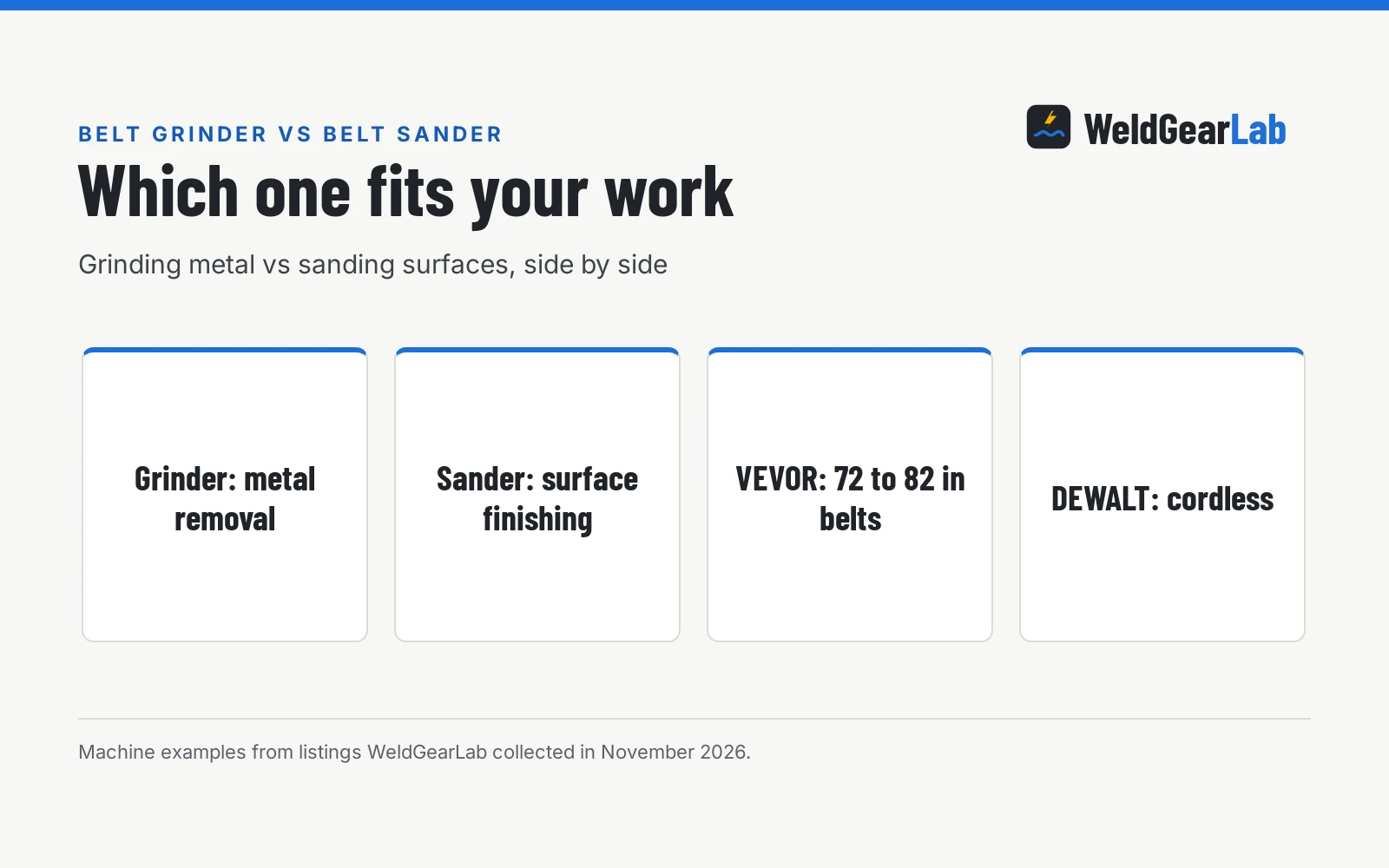
Belt grinder vs angle grinder: a belt grinder shines for profiling, beveling and sharpening with a flat platen, while an angle grinder wins for cutting, grinding welds and working in tight spots. For a metal shop, the belt grinder is the precision tool; the angle grinder is the versatile one. This guide answers the question and ranks four belt grinders from the listings.
Other welders and gear to compare
 VEVOR Belt Grinder Sander with VFDCheck price on Amazon
 VEVOR 8 Inch Bench GrinderCheck price on Amazon
 Original Multitool 2" x 36" Belt Grinder Attachment for BenchCheck price on Amazon
 Ryobi 5133001903 R18AG-0 One+ Cordless Angle Grinder AngledCheck price on Amazon
 HERZO Dust Shroud for Angle Grinder 4/4.5/5 inch UniversalCheck price on Amazon
 Makita 9557PBX1 4-1/2" Paddle Switch Cut-Off/Angle GrinderCheck price on Amazon
WeldGearLab gets a commission on purchases made through links on this page, and your price stays the same. Affiliate disclosure.
Belt Grinder vs Angle Grinder: When a Belt Grinder Wins
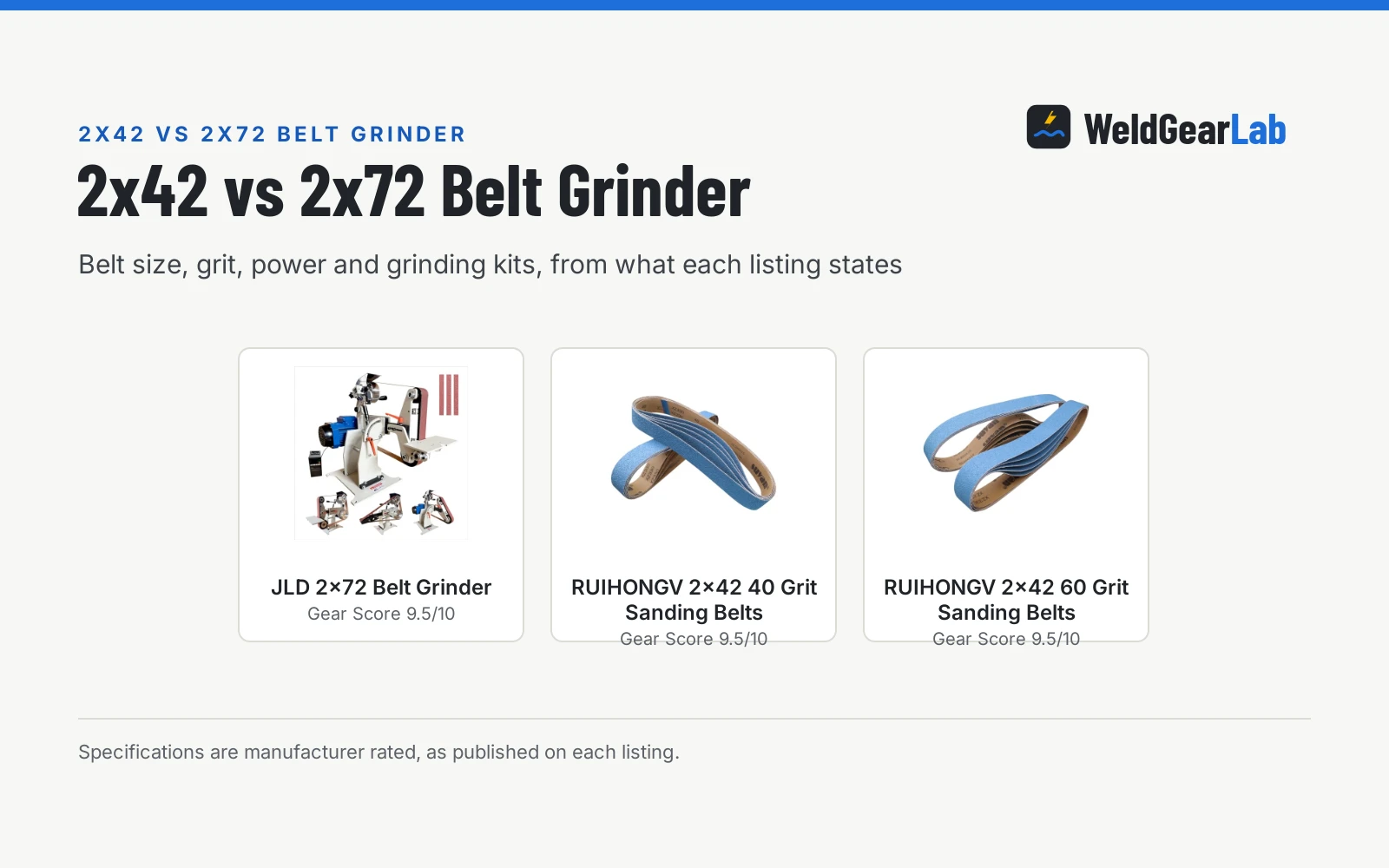
Flat work: the platen gives you a true flat surface for bevels and profiles. Sharpening: a 2×72 belt with the right grit sharpens chisels, knives and tool bits fast. The four listings here are all 2-inch belt grinders: two 2×72 models, one 2×36 attachment, and one 2×28 combo. For knife making and fabrication, the 2×72 is the most common size.
When an angle grinder wins
Cutting: a cutoff wheel slices metal where a belt cannot reach. Weld cleanup: a flap disc knocks down beads in tight corners. Portability: a cordless angle grinder works anywhere. For general metal work, the angle grinder does more jobs.
The gear: four belt grinders ranked
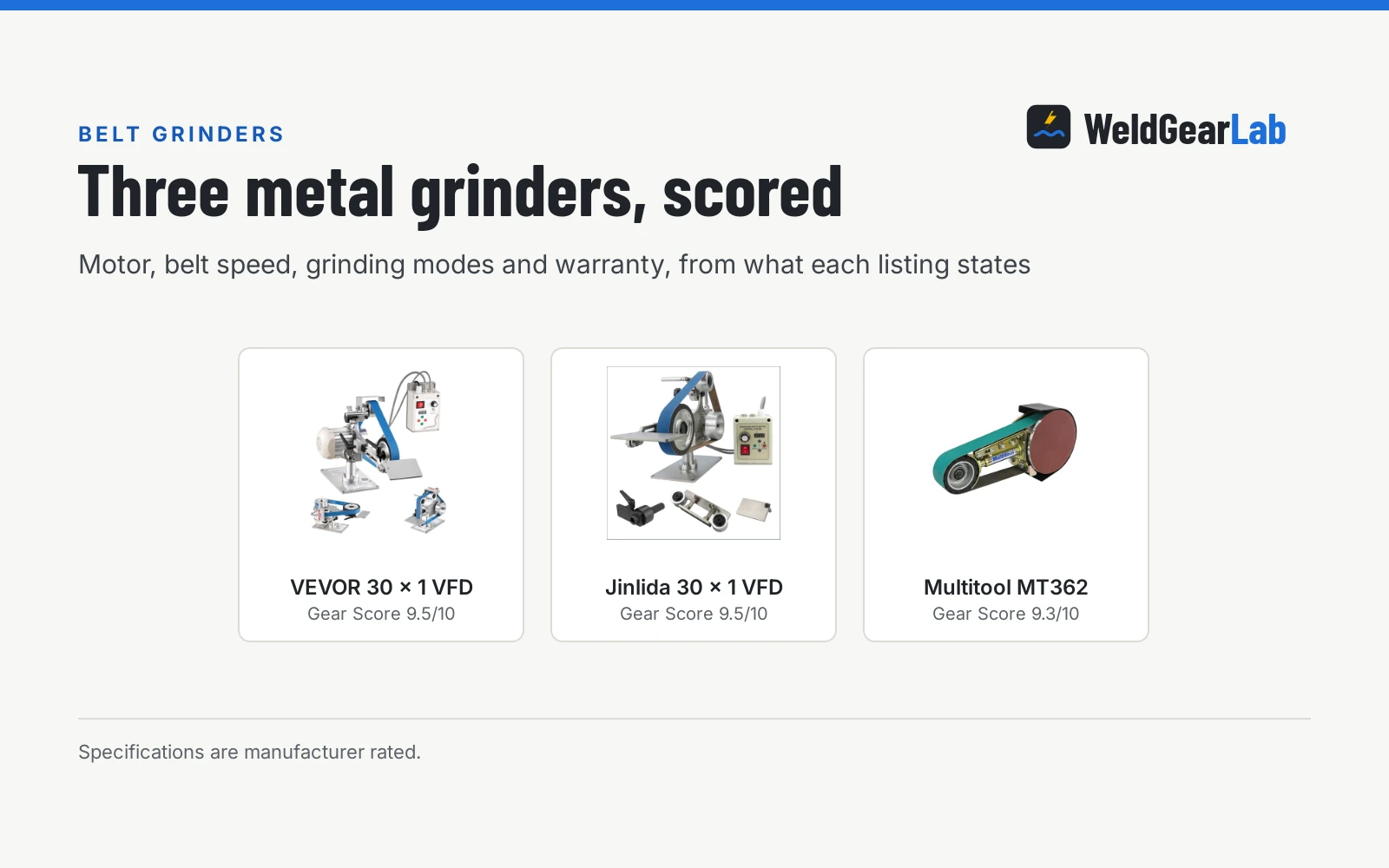
1. JLD Professional Belt Grinder, 2×72, 1500W. A 2×72 inch belt grinder sander with a 1500W pure copper motor and a 2.2KW VFD for stepless speed control from 0 to 2800 rpm. It ships with two grinding kits covering circular, flat and arc grinding, plus three belts in 60, 100 and 180 grit, so one setup goes from rough deburring to fine polishing. The thickened steel frame runs vertical or horizontal, and the box includes a 110V to 220V power transformer. The 2×72 size is the professional standard for knife making and fabrication. The 1500W motor is the highest stated here.
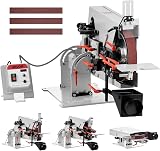
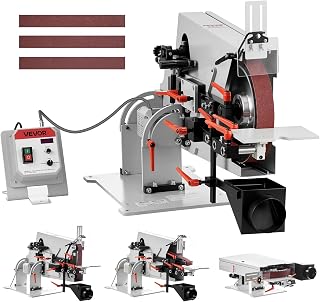
2. VEVOR Belt Grinder, 72×2 variable speed. A 72 x 2-inch variable speed belt grinder sander with a 1500W motor running at 2900 rpm and a VFD for stepless speed regulation at a 32m/min belt line speed. It accepts 72 to 82 x 2 inch belts and ships with three 72×2 belts in 100, 180 and 240 grit, plus three grinding moulds: an arc grinding rack, a circular grinding wheel and a flat grinding rack. The reinforced steel body works vertical or horizontal with a detachable workbench. Variable speed lets you dial back for heat-sensitive work like sharpening. Good for mixed use.
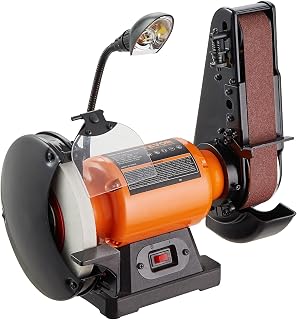
3. VEVOR Bench Grinder & Belt Sander Combo, 350W. An 8-inch bench grinder with a 2×28 belt sander combo at 350W. The wheel runs at 3450 RPM and the belt at 1500 RPM, and the belt arm adjusts from 0 to 90 degrees for horizontal or vertical sanding. A transparent eye shield and a built-in LED work light keep the work visible, and the steel body with non-slip rubber feet stays put at 29.1 lb. The combo covers grinding wheels and a belt in one footprint. The 2×28 belt suits smaller parts and tighter spaces.
4. Multitool 2×36 Belt Grinder Attachment. A 2×36 belt grinder attachment for a bench grinder, with three grinding surfaces on the belt plus a 7 in disc, a 3.5 in contact wheel and a 2.125 x 5.875 in platen. It fits most bench grinders with a 1/2 in or 5/8 in shaft, mounts horizontal or vertical, and the listing calls for at least 1/2 hp. A quick-change belt system with automatic tensioning and tracking adjustment keeps belt swaps fast, and the box includes a 100 grit belt, an 80 grit disc and mounting hardware, with a 3 year warranty stated. It converts a bench grinder you own into a belt grinder. The 2×36 belt is a compromise size, good if you already have the grinder.
Choosing a belt grinder
Belt size
2×72 is the most common size for serious work; 2×36 and 2×28 suit smaller shops. Longer belts spread heat over more surface, which suits longer grinding sessions. Match the size to your typical workpiece.
Power
The JLD and the VEVOR 72×2 both list 1500W motors; the VEVOR combo lists 350W, and the Multitool attachment calls for a bench grinder of at least 1/2 hp. More power means faster stock removal without bogging, and the two 1500W models pair that with VFD speed control. For heavy grinding, pick the higher wattage; for light sharpening and small parts, the combo or the attachment does the job.
Variable speed
Variable speed helps for sharpening and heat-sensitive metals. The JLD lists a 2.2KW VFD with stepless speed adjustment from 0 to 2800 rpm, and the VEVOR 72×2 lists a VFD for stepless speed regulation at a 32m/min belt line speed.
What comes in the box
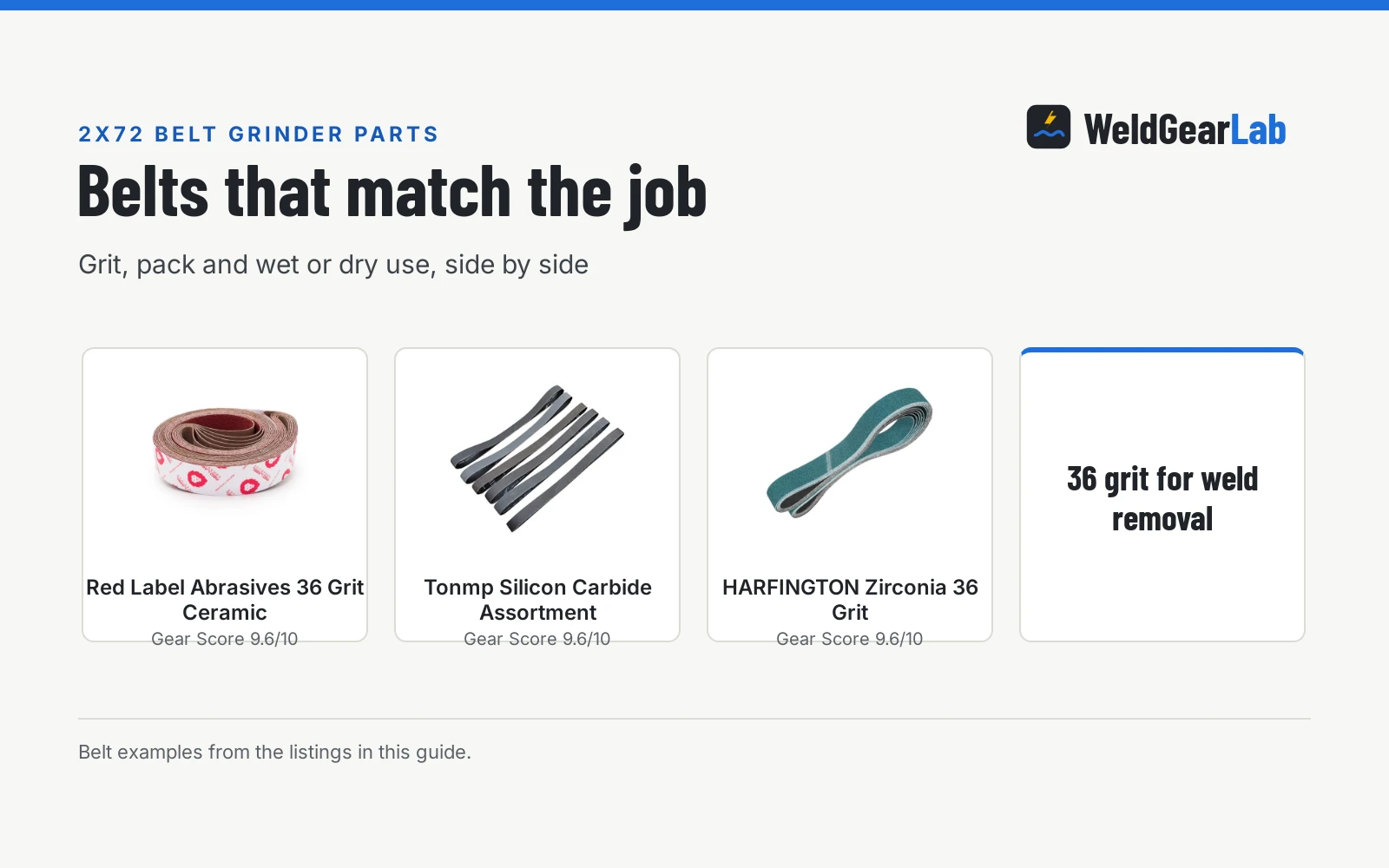
Belts and accessories decide how much you spend after the purchase. The VEVOR 72×2 ships with three belts in 100, 180 and 240 grit plus three grinding moulds; the Jinlida ships with three belts in 60, 100 and 180 grit plus two grinding kits. The Multitool attachment includes a 100 grit belt, an 80 grit disc and mounting hardware, with a 3 year warranty stated. The VEVOR combo includes the eye shield assembly, the grinding wheel and belt worktable assemblies and a hex wrench.
Footprint and setup
The 2×72 machines are the biggest: the VEVOR 72×2 lists 35.24 by 15.75 by 25.98 in at 184.5 lb, and the Jinlida lists 30 by 24 by 18 in. Both run vertical or horizontal. The VEVOR combo is the compact choice at 29.1 lb with a 0 to 90 degree belt arm, and the Multitool attachment bolts onto a bench grinder you already own. Measure the bench before you buy; the big 2×72 frames want a dedicated stand.
Around the Barn
For a farm shop, the angle grinder gets more use day to day: cutting, grinding, wire wheels. Add a belt grinder when you start making or sharpening tools regularly. Both earn their space.
FAQ for welders
Can a belt grinder replace an angle grinder?
No. They do different jobs. A belt grinder excels at flat profiling and sharpening; an angle grinder cuts and works in tight spots. Many shops keep both.
What size belt grinder should I get?
2×72 is the most common size for serious work. Smaller 2×36 or 2×28 models suit light duty or tight spaces.
Is 1500W enough for a belt grinder?
The 1500W figure is the highest stated here; the 350W combo suits lighter work. The JLD’s 1500W handles heavy grinding; lower wattage suits lighter work.
Which belt grits come with these grinders?
The VEVOR 2×72 includes 100, 180 and 240 grit belts, the Jinlida includes 60, 100 and 180 grit belts, and the Multitool attachment ships with a 100 grit belt plus an 80 grit disc. Coarse grits remove material fast; fine grits refine the finish.
Will the Multitool attachment fit my bench grinder?
The listing states it fits most bench grinders with a 1/2 in or 5/8 in shaft, mounts horizontally or vertically, and calls for at least 1/2 hp. Check your grinder’s shaft size and 1/2 hp minimum against those figures before ordering.
More welding guides
See every Metal Fab Tools guide.