Uses for a Combination Square in Metalworking (2026)
Uses for a combination square in metalworking, from marking and checking angles to gauging depth, and the squares that cover each job.

On this page
Top picks at a glance
As an Amazon Associate I earn from qualifying purchases.
- 1
 Swanson 16 in. Combination Square, Zinc Head9.6/10View on Amazon
- 2
 2 Pack Combination Square9.6/10View on Amazon
- 3
 WORKPRO Aluminum Alloy Carpenter Square9.6/10View on Amazon
- 4
 Combination Square 12 Inch and 7 Inch Carpenter9.6/10View on Amazon
A steel plate needs a square edge before it fits the frame, and a cut line drawn off square wastes the piece. That is the job a combination square earns its keep on. Uses for a combination square in metalworking cover marking, checking, measuring and layout, and this guide runs through each one, then shows the squares that cover them.
This guide links to our product roundups, where WeldGearLab gets a commission on purchases made through links on this page, and your price stays the same. Read our affiliate disclosure.
Swanson 16 in. Combination Square, Zinc Head
A 16 in framing-length square with a zinc head, stainless blade and acrylic vial, built for long layout lines and depth gauging.
Pros
- 16 in blade reaches across framing layouts and longer stock
- Acrylic vial in the head, tougher than tube-type vials that crack on a drop
- Black-etched stainless blade with brass scriber and spring-loaded brass bolt
- Slides through the head to gauge stock depth without a second tool
Cons
- A 16 in blade is long for small bench work and tight spots
- Zinc head is heavier than the aluminum heads on the sets here
- Only one square in the box, with no rafter square for angled layout
- No metric graduations are stated in the listing
2 Pack Combination Square
A 12 in and 6 in pair with etched dual-sided scales that marks 90 and 45 degree angles and replaces five separate measuring tools.
Pros
- Two blades, 12 in and 6 in, cover bench work and longer layout
- Etched dual-sided scales in 1/16 in, 1/32 in and millimeters, readable from either side
- Aluminum head with a bubble level for plumb and horizontal checks
- Built-in metal scriber and spring-loaded locking screw that holds the blade tight
Cons
- No warranty term is stated
- No rafter square in the set for roof pitch or angled layout references
- Two loose pieces to keep track of in a busy shop
- Short 6 in blade cannot span wide stock in one pass
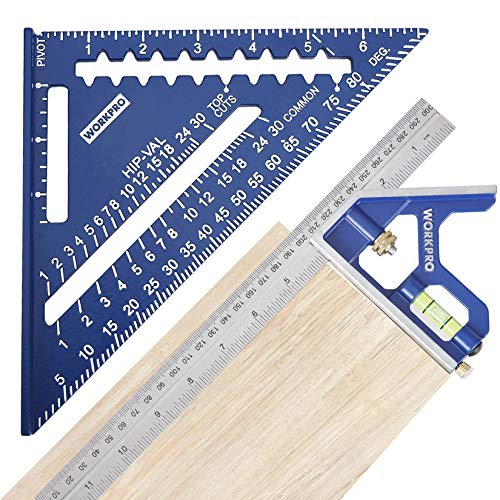
WORKPRO Aluminum Alloy Carpenter Square
A 12 in combination square paired with a 7 in rafter square, with deep-engraved markings for framing, miter and angled layout work.
Pros
- 12 in combination square plus a 7 in rafter square in one set
- Deep-engraved white markings on the rafter square, readable in any light
- 3 scale values on the rule: 1/16 in, 1/32 in and 1 mm
- Level vial and metal scriber on the combination square add layout uses
Cons
- No warranty term is stated
- Zinc-alloy head is heavier than the aluminum heads on the Micymedo sets
- Rafter square markings suit wood framing more than fine metal layout
- No carry case in the box for the two pieces
Combination Square 12 Inch and 7 Inch Carpenter
A 12 in combination square with a 7 in rafter square for measuring, marking and layout, with dual-sided scales and a bubble level.
Pros
- 12 in combination square plus a 7 in die-cast aluminum rafter square
- Dual-sided inch and metric scales with 1/16, 1/32 and mm markings
- Rafter square carries degree, common rafter, hip/valley and jack rafter references
- Metal locking screw with spring holds the blade for 90 and 45 degree marking
Cons
- Only one combination square length; no short blade for small parts
- The 7 in rafter square is short for long rafter layout
- Removable scribe can go missing in a busy shop
- Scales and references lean toward wood framing rather than metal layout
Uses for a Combination Square in Metalworking
A combination square marks lines square to an edge, and the head slides along the blade so the same tool marks a line at any point along the stock. The head also carries a 45 degree face, so one tool marks both square and miter lines without swapping tools.
The same tool checks work as well as marks it. Set the head against an edge and the blade shows whether a cut or a fit-up is square, and the 45 degree face checks mitered joints the same way. The bubble level in the head shows whether a surface sits level while the square is in place.
Slide the blade through the head and the square turns into a depth gauge, reading how deep a slot or a recess runs. Set the head at a height and it works as a height gauge for marking a line parallel to a surface. The scriber stored in the head marks metal where a pencil line would rub off.
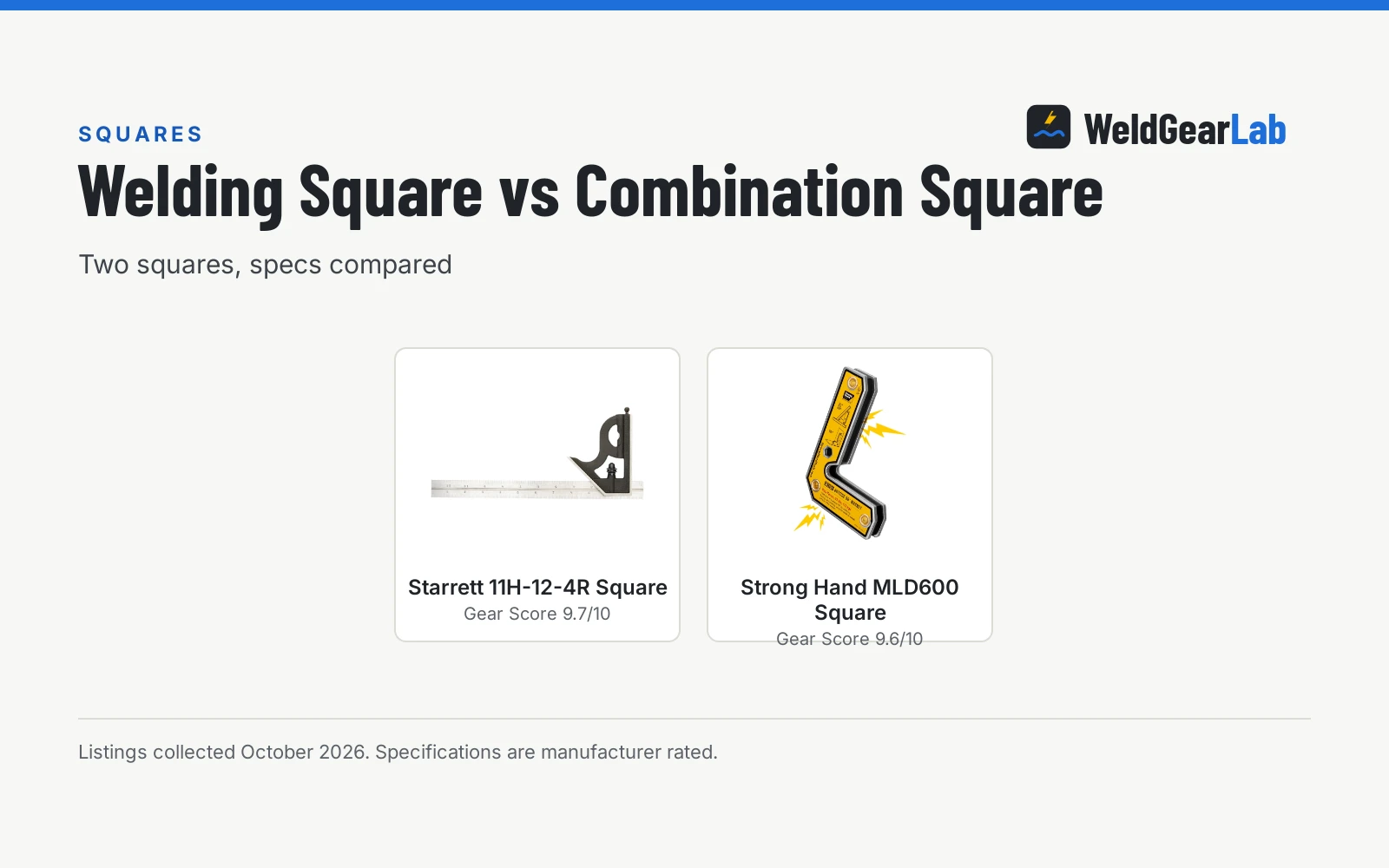
On longer stock the square lays out framing lines and checks long edges, and a rafter square in the set adds roof pitch and rafter references for angled cuts. The lipped edge of a rafter square braces against the edge of a board for straight, parallel lines. A welding square covers some of the same marking jobs; see welding square vs combination square for the differences.
The Squares That Cover These Uses
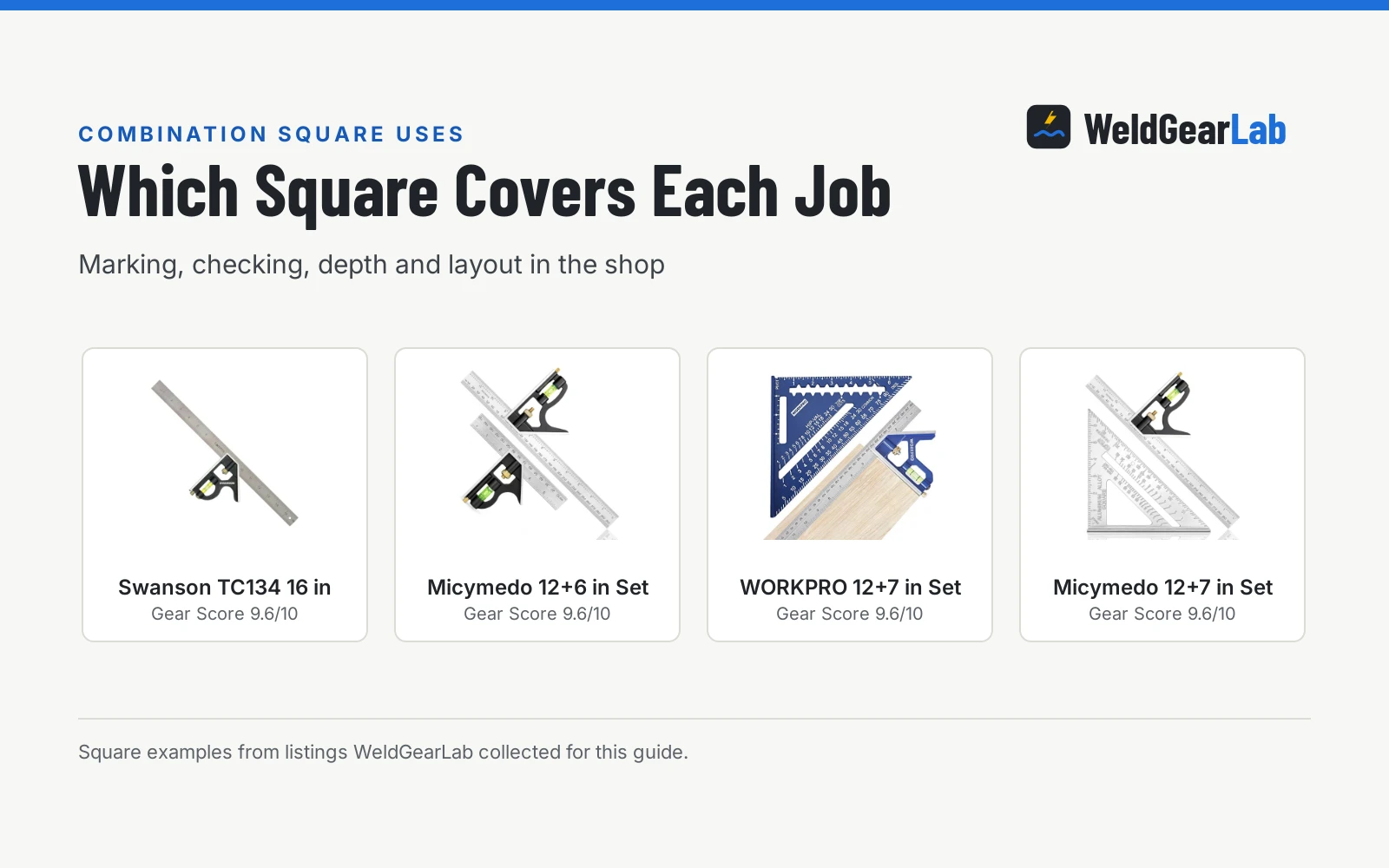
Each square below handles a step above, from marking and checking square lines to gauging depth and laying out framing cuts, and the best combination square set guide compares full sets for the shop.
Side by Side
| Square | Blade | Head | Scales | Extras |
|---|---|---|---|---|
| Swanson TC134 16 in | 16 in stainless steel | Zinc head, acrylic vial | Not stated | Brass scriber, depth gauge |
| Micymedo 12+6 in Set | 12 in and 6 in stainless steel | Aluminum alloy head, bubble level | 1/16, 1/32, mm | Metal scriber, 2 pieces |
| WORKPRO 12+7 in Set | 12 in stainless steel rule | Zinc-alloy head, level vial | 1/16, 1/32, 1 mm | 7 in rafter square, metal scriber |
| Micymedo 12+7 in Set | 12 in stainless steel ruler | Aluminum alloy head, bubble level | 1/16, 1/32, mm | 7 in rafter square, removable scribe |
Blade length, head material and the scales on the rule are what set these squares apart. The longest blade suits framing layouts, while two of the sets pair a combination square with a rafter square for angled cuts.
FAQ for welders
What is a combination square used for in metalworking?
It marks lines square to an edge, checks whether a cut or a fit-up is square, and lays out miter lines with its 45 degree face. The same tool works as a depth gauge and a height gauge, and the scriber marks metal where a pencil would rub off. On framing work it lays out long square lines along the stock.
Can a combination square mark 45 degree angles?
Yes. The head carries a 45 degree face as well as a square face, so the blade marks miter lines without a second tool. These squares mark both 90 and 45 degree angles, and the rafter squares in two of the sets add degree scales and rafter references for angled cuts.
How do you use a combination square as a depth gauge?
Slide the blade through the head until the end of the blade touches the bottom of the slot or recess, then lock the head and read the depth where the head meets the blade. The spring-loaded locking screw holds the blade in place while the reading is taken. The Swanson square (on Amazon) and both Micymedo sets list depth gauging as a use.
What do the 1/16 and 1/32 marks on a combination square mean?
They are the smallest inch graduations on the rule: 1/16 in and 1/32 in, with millimeter graduations alongside them on the dual-sided scales. Finer marks suit fine layout work, while the coarser marks suit rough framing lines. The Micymedo and WORKPRO squares carry these graduations on stainless steel rules.
Which size combination square fits framing work?
A 16 in blade suits framing layouts and longer stock, since the blade reaches across wider boards in one pass. The Swanson square is the longest here at 16 in, and its listing calls it the largest combination square in the Swanson line. Shorter 12 in and 6 in blades suit bench work and small parts, where a long blade gets in the way.
Related: best combination square set, machinist square vs combination square, welding square vs combination square, and the metal fab tools hub.