Sand Casting vs Investment Casting: Which Fits Your Shop
Sand casting packs sand around a pattern while investment casting builds a ceramic shell around wax; here is how the methods compare and which sand casting gear suits a small shop.

On this page
Top picks at a glance
As an Amazon Associate I earn from qualifying purchases.
- 1
 Rosenthal Delft Clay Casting SandView on Amazon
- 2
 6LBs Natural Casting Sand Ultra-Fine(400Mesh)View on Amazon
- 3
 BORDSTRACT Sand Casting SandboxView on Amazon
- 4
 Natural Casting Sand Ultra-Fine(400Mesh)View on Amazon
A ring, a coin or a small bronze part starts as a pattern, and the mold around that pattern decides how much detail survives the pour. Sand casting vs investment casting is the choice between packing sand around a pattern and building a ceramic shell around a wax pattern, and the right call depends on the detail, the size of the run and the metal. This guide covers sand casting gear only, with no investment casting gear in the mix, so the gear section walks through that sand casting kit while the comparison covers each method.
Other welders and gear to compare
 Rosenthal Delft Clay Casting SandCheck price on Amazon
 6LBs Natural Casting Sand Ultra-Fine(400Mesh)Check price on Amazon
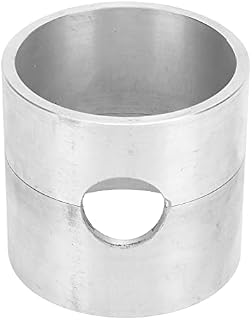 BORDSTRACT Sand Casting SandboxCheck price on Amazon
 Natural Casting Sand Ultra-Fine(400Mesh)Check price on Amazon
This guide links to our product roundups, where WeldGearLab gets a commission on purchases made through links on this page, and your price stays the same. Read our affiliate disclosure.
The difference in a paragraph
Sand casting packs molding sand around a pattern inside a flask frame, then lifts the pattern out and pours metal into the cavity the pattern leaves. Investment casting coats a wax pattern in ceramic, melts the wax out and pours metal into the shell that stays behind. Sand casting suits larger parts, short runs and quick pattern changes; investment casting suits fine detail, thin walls and parts that need little finishing after the pour. Each method pours molten metal, so each needs dry molds, good ventilation and full face and hand protection.
Sand casting vs investment casting side by side
| Sand casting | Investment casting | What the gear shows | |
|---|---|---|---|
| Mold | Sand packed around a pattern in a flask | Ceramic shell built around a wax pattern | 400 mesh sand and Delft clay |
| Pattern | Pattern pressed into sand, then lifted out | Wax pattern melted out of the shell | Clay and sand press around a pattern |
| Detail | Fine detail with 400 mesh sand | Finest detail and thin walls | 400 mesh sand in 5.5 LB and 5 LB bags |
| Metals | Gold, silver, aluminum, bronze, copper, brass, pewter, zinc | Gold, silver, bronze and more | Gold, silver, aluminum, bronze, copper, brass, pewter, zinc |
| Reuse | Sand and clay used again | Shell breaks away after the pour | Reusable sand and clay |
The table lines up the methods on the points that matter in a small shop. Sand casting wins on simple setup and reusable molding material; investment casting wins on detail and surface finish. The gear covered here is all sand casting kit, so the next section walks through it piece by piece.
When sand casting is the better choice
- Larger parts and short runs. A sand mold comes together fast around a pattern, and the sand and clay go back into service after the pour.
- Quick pattern changes. A pattern lifts out of packed sand, so a shop can swap patterns without building a fresh shell each time.
- Fine detail from fine sand. 400 mesh sand reproduces intricate detail on jewelry, coins and statues, and Delft clay captures fine lines in gold, silver and bronze.
- Reusable molding material. Delft clay and 400 mesh sand go back into service, so the material cost stays low across many pours.
When investment casting is the better choice
- Finest detail and thin walls. A ceramic shell picks up detail a sand mold cannot hold, and thin sections come out clean.
- Smooth surface straight from the mold. Parts leave the shell with little finishing, which suits jewelry and small precision parts.
- Complex shapes without parting lines. A shell forms in one piece around the wax pattern, so shapes that would show a parting line in sand come out clean.
- Small runs of high-value parts. Gold and silver parts gain the most from the detail and finish a shell gives.
Sand casting gear covered here
The gear below is ranked from the largest sand supply to the frame that holds the mold, with each entry carrying the figures its maker states.
Deexun 5.5 LB 400 mesh casting sand. The Deexun kit is the largest sand supply in the group: 5.5 LB of 400 mesh casting sand with 0.22 LB of binding soil and 0.22 LB of release sand in the box. The maker states the fine 400 mesh grain gives sharp detail on jewelry, coins and statues, and the sand suits gold, silver, aluminum and bronze. The bag measures 9.0 by 6.3 by 1.96 inches, and the sand is reusable across many projects.
Holama 5 Lbs 400 mesh casting sand. The holama bag carries 5 Lbs of oil-free 400 mesh casting sand in a 7.2 by 7.2 by 7.0 inch bag. The maker states the fine grain reproduces intricate detail with a smooth finish, and the sand suits gold, silver, pewter, aluminum, zinc, copper, brass and bronze. Mixing binders and water sets the viscosity, so this sand suits a caster who already knows the craft.
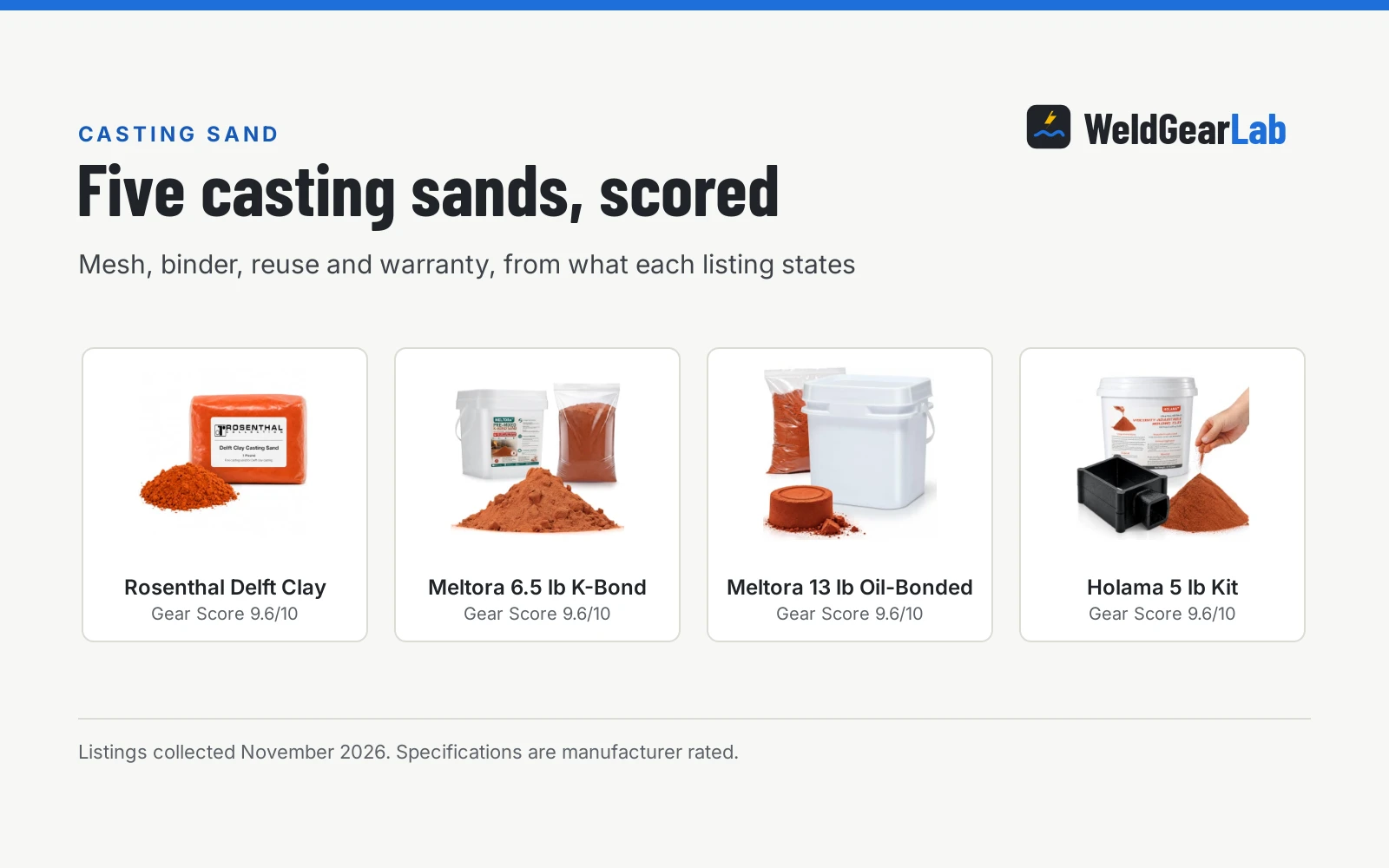
Rosenthal Delft Clay, 1 Pound. Rosenthal Delft Clay comes as a 1 Pound bag of red clay in a 3.0 by 3.0 by 3.0 inch pack, from the Rosenthal Collection, which dates to 1926. The clay blends high-refractory silica sand with an organic binder, holds its form under heat, and presses around a pattern for molds in gold, silver, bronze, pewter and copper. The maker backs it with a 2 Years warranty, and the clay can be broken down, mixed back and shaped again.
Besttruck 2-part cast iron flask frame. The besttruck flask frame is the hardware that holds a sand mold together: a 2-part cast iron frame, 6.9 by 4.0 by 2.8 inches, with locating pins that line the halves up and a black oxidation finish that resists rust. It suits gold, silver, copper and brass, and works with Petro bond, Delft and sand casting clay. The maker gives a 1 year warranty and allows returns within 30 days.
Which method fits your shop?
If the work is jewelry, coins or small replicas and the shop already pours metal, sand casting with 400 mesh sand is the practical start: the Deexun kit carries 5.5 LB of sand with 0.22 LB of binding soil and 0.22 LB of release sand, and the holama bag carries 5 Lbs of oil-free sand at the same 400 mesh. Add a flask frame like the besttruck 2-part cast iron frame, 6.9 by 4.0 by 2.8 inches, to hold the mold, and Delft clay for fine work in gold, silver and bronze. When the part needs the finest detail, thin walls or a smooth finish straight from the mold, investment casting is the better method, even though this guide covers no investment casting gear.
Pouring safety. Whichever method wins, pour outdoors or with strong ventilation, keep tools and molds dry, wear a full face shield and leather protection, and never melt unknown or sealed scrap. A mold with trapped moisture can spit metal, so dry every mold and tool before the pour.
FAQ for welders
Can sand casting match investment casting on detail?
Close, on the right sand. 400 mesh sand reproduces intricate detail on jewelry, coins and statues, and Delft clay captures fine lines in gold, silver and bronze. Investment casting still leads on the finest detail, thin walls and surface finish, since a ceramic shell holds shapes a sand mold cannot.
How much sand does a small shop need to start?
The Deexun kit carries 5.5 LB of sand with 0.22 LB of binding soil and 0.22 LB of release sand, the holama bag carries 5 Lbs, and the Rosenthal bag carries 1 Pound of Delft clay. A shop starting out can begin with the Deexun kit or the holama bag and a flask frame, then add clay for fine work.
What holds a sand mold together during the pour?
The flask frame holds the mold: the besttruck frame is a 2-part cast iron frame, 6.9 by 4.0 by 2.8 inches, with locating pins and a black oxidation finish. Delft clay holds its own form through a silica sand and organic binder blend, and 400 mesh sand binds well enough to hold sharp detail.
Is casting safe to do at home?
Casting needs care: work outdoors or with strong ventilation, keep tools and molds dry, wear a full face shield and leather protection, and never melt unknown or sealed scrap. A mold with trapped moisture can spit metal, so dry every mold and tool before the pour.
Related: metal casting, gas forge vs coal forge, best propane forge for blacksmithing, and carbon vs stainless knife steel.