Parts of a Ball Peen Hammer: Head, Peen and Handle Explained
A ball peen hammer has a face for striking, a ball peen for shaping metal, a handle that carries the head, and a grip built to soak up shock.

On this page
Top picks at a glance
As an Amazon Associate I earn from qualifying purchases.
- 1
 ESTWING Ball Peen Hammer9.7/10View on Amazon
- 2
 VAUGHAN Ball Pein Hammer, 4 oz, Hickory handle9.6/10View on Amazon
A bracket edge needs truing, a rivet needs peening, and the hammer on the bench carries a flat face for striking and a ball for shaping. Parts of a ball peen hammer are the face, the peen, the eye, the handle and the grip, and each part does a different job on metal. This guide names every part, shows what it does, and matches the head weight to the work in front of you.
This guide links to our product roundups, where WeldGearLab gets a commission on purchases made through links on this page, and your price stays the same. Read our affiliate disclosure.
ESTWING Ball Peen Hammer
A 32 oz ball peen hammer forged in one piece from solid steel, with a smooth rounded ball peen and a molded vinyl Shock Reduction Grip.
Pros
- Forged in one piece from solid steel, with no joint between head and handle
- Smooth rounded ball peen for shaping sheet metal and peening rivets
- Shock Reduction Grip reduces impact vibration by 70%, per the maker
- Made in the USA from American steel, in Rockford, IL since 1923
Cons
- At 32 oz it is the heaviest head weight the maker lists, so it suits heavy work more than fine work
- No warranty term is stated
- One-piece steel handle means no wood handle to swap when the grip wears
- 14.5 inches long, so it needs more bench and toolbox space than the 4 oz Vaughan
VAUGHAN Ball Pein Hammer, 4 oz, Hickory handle
A 4 oz ball pein hammer in American high carbon steel with a compression wedged hickory handle and a polished face, bevel and peen.
Pros
- Drop-forged and heat-treated American high carbon steel
- Polished face, bevel and peen for precise strikes and smooth shaping
- Compression wedged hickory handle for balance and shock reduction
- Rust-resistant powder-coated finish protects against corrosion and wear
Cons
- At 4 oz it is too light for shaping sheet metal or peening large rivets
- No warranty term is stated
- 10.5 inches long, so the short handle gives less reach than the Estwing
- Small 4 oz head covers less metal per strike, so shaping takes more blows
Parts of a ball peen hammer: the head, the eye and the handle
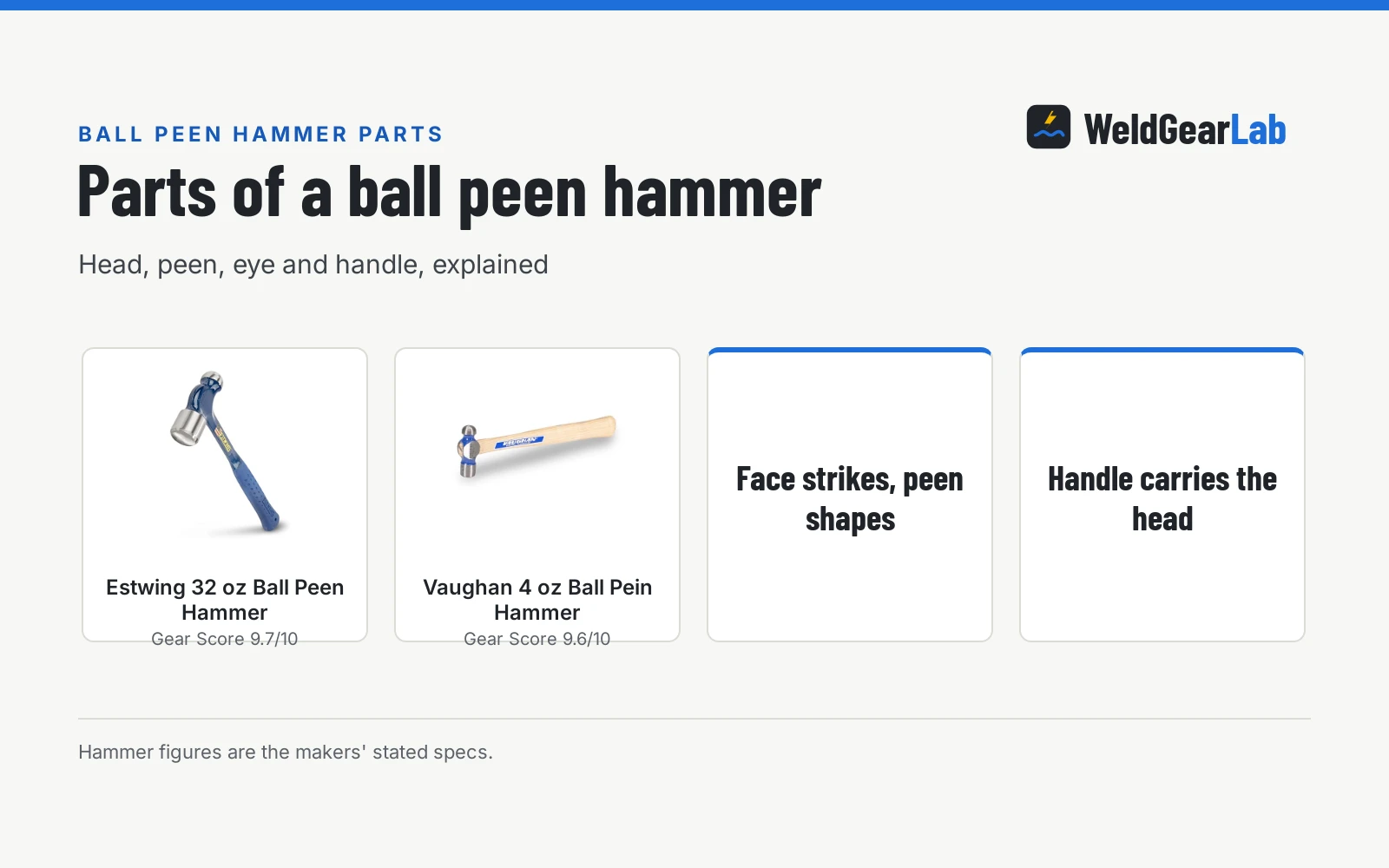
The head is the steel striking end, with a flat face for striking and a ball peen for shaping. The face strikes punches, chisels and rivets, and the peen shapes sheet metal and peens rivet heads. The eye is the opening in the head where the handle seats. The handle carries the head and sets the balance, and the grip is the part of the handle the hand holds.
- Face. The flat striking end, used on punches, chisels and rivets.
- Peen. The smooth rounded ball end, used to shape sheet metal and peen rivets.
- Eye. The opening in the head where a separate handle seats and locks; a one-piece hammer has no eye.
- Handle. The shaft that carries the head and sets the balance of the hammer.
- Grip. The part of the handle the hand holds, molded vinyl on the Estwing and hickory on the Vaughan.
On the Vaughan the hickory handle passes through the eye and is locked with a compression wedge. On the Estwing the head and handle are forged in one piece of steel, so there is no wedge and no joint at the eye.
Face and peen: striking and shaping
The face does the straight striking: driving punches, striking chisels and setting rivets. The peen does the shaping: the ball end works metal to contour and peens rivet heads over. The Vaughan hammer (on Amazon) lists a polished face, bevel and peen, which the maker links to precise strikes and smooth shaping. Match the end to the job: face for force, peen for form.
The hammers side by side
| Estwing 32 oz | Vaughan 4 oz | What it means | |
|---|---|---|---|
| Head weight | 32 oz | 4 oz | Heavier heads suit shaping and rivets; lighter heads suit fine work |
| Head material | Solid steel, forged in one piece | American high carbon steel, drop-forged | Both makers state forged steel heads |
| Peen | Smooth rounded ball end | Polished peen | The ball shapes metal and peens rivets |
| Handle | Molded vinyl Shock Reduction Grip | Compression wedged hickory | Vinyl grip damps vibration; hickory wedges lock the head |
| Face | Not stated | Polished face and bevel | A polished face suits precise strikes and smooth shaping |
| Vibration | Reduces impact vibration by 70% | Handle reduces shock | The Estwing figure is the maker’s stated figure |
| Made in | USA, Rockford, IL, since 1923 | American steel | Both makers state American steel |
| Warranty | Not stated | Manufacturer warranty, no term stated | Neither hammer lists a warranty term |
The Estwing is the heavy hammer here, at 32 oz, and the Vaughan is the light hammer, at 4 oz. The table shows where they part ways: one-piece steel and a vinyl grip against a wedged hickory handle and a polished face. Neither hammer lists a warranty term, so the warranty row reads the same for both.
The gear for this job
The parts above only make sense in the hand, so the gear below pairs a heavy hammer for shaping sheet metal and peening rivets with a light hammer for detailed metalwork and pin setting.
How to pick the head weight
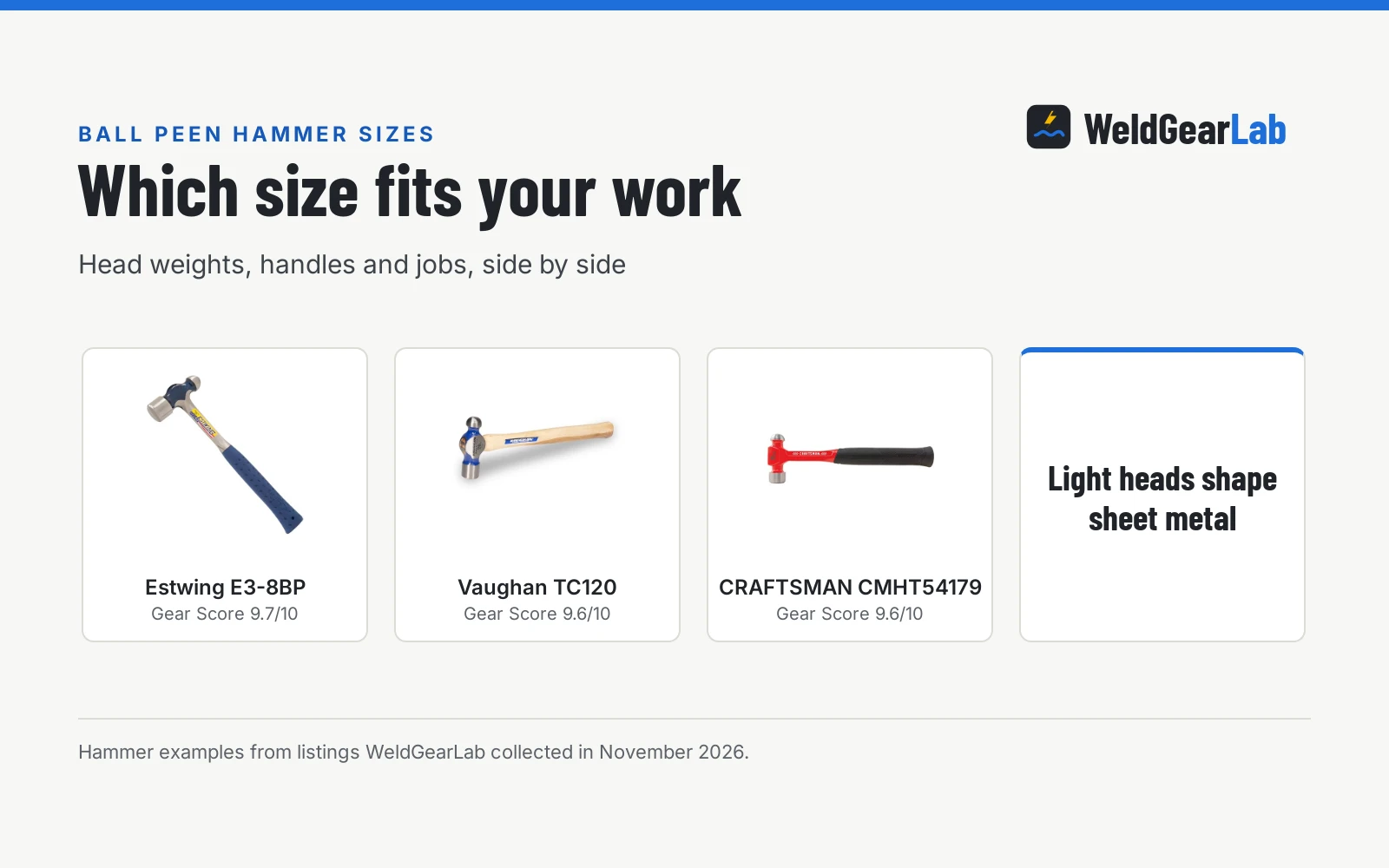
The maker lists head weights of 8, 12, 16, 24 and 32 oz for the Estwing hammer, and the Vaughan hammer in this guide is a 4 oz hammer. Heavier heads suit shaping sheet metal and peening rivets, where the weight does the work. Lighter heads suit detailed metalwork and pin setting, where control matters more than force. Pick the lightest head that still moves the metal, and step up when the work stops moving.
Handle and grip: what holds the head on
On a hammer with a separate handle, the handle meets the head at the eye, and that joint is worth a look before the hammer goes to work. On a wedged hickory handle, like the Vaughan lists, check that the wedge sits flush and the head does not move on the handle. On a one-piece forged hammer, like the Estwing, there is no wedge to check, so check the grip instead: the molded vinyl should sit tight on the steel with no slip. Set aside any hammer with a loose head until the handle is fixed.
FAQ for welders
What is the ball end of a ball peen hammer for?
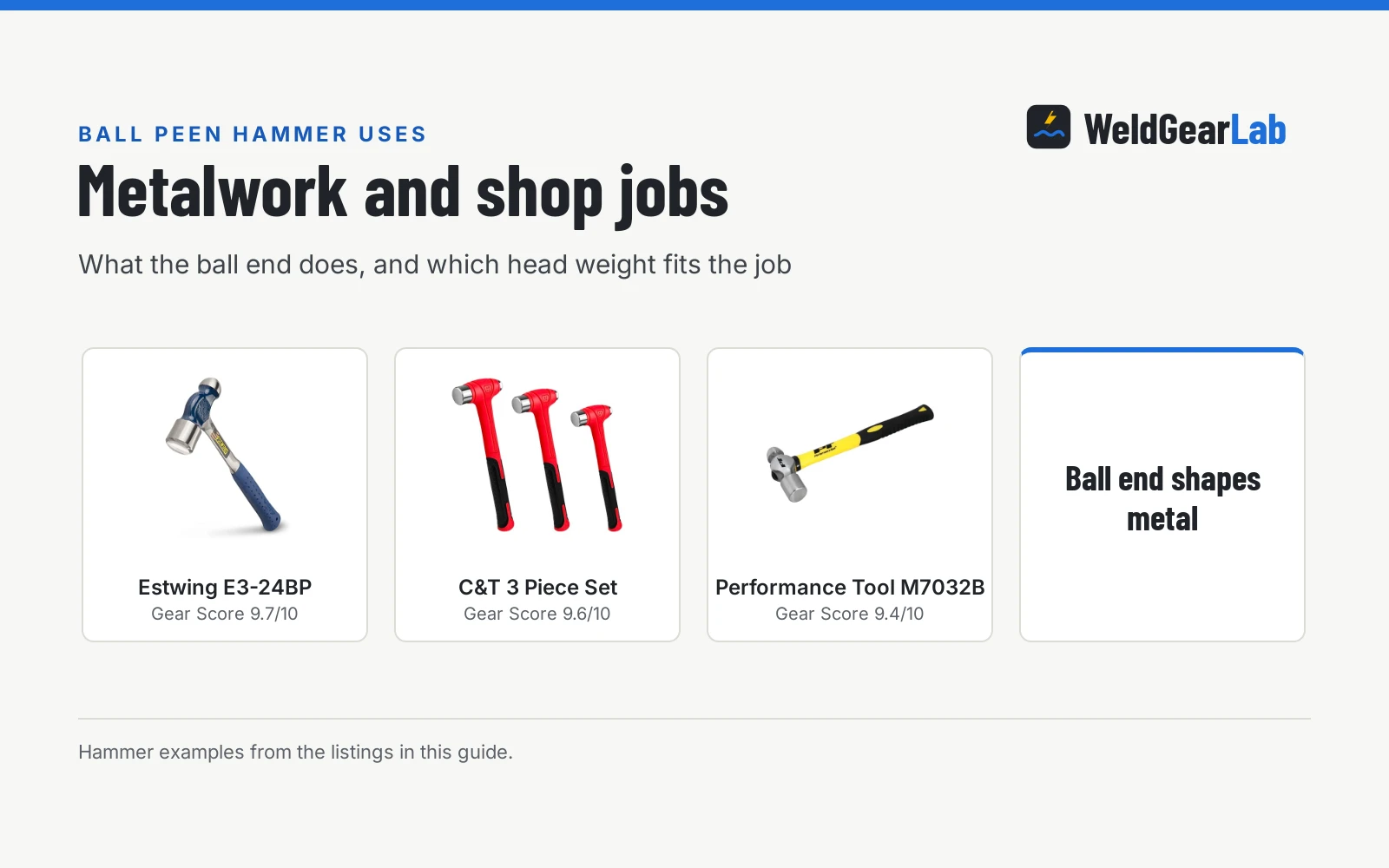
The ball end, called the peen, shapes metal and peens rivets. The Estwing hammer lists a smooth rounded ball end to shape metals to contour, and the Vaughan hammer lists a polished peen for smooth shaping in detailed metalwork. Use the face for striking and the peen for shaping.
What weight ball peen hammer should I buy?
Match the weight to the work. The maker lists head weights of 8, 12, 16, 24 and 32 oz for the Estwing hammer, and the Vaughan hammer in this guide is a 4 oz hammer. Heavier heads suit shaping sheet metal and peening rivets, while the 4 oz head suits detailed metalwork and pin setting.
What is the eye of a hammer?
The eye is the opening in the head where the handle seats. On the Vaughan, the hickory handle passes through the eye and is locked with a compression wedge. On the Estwing, head and handle are forged in one piece, so there is no separate eye joint.
Can a ball peen hammer strike punches and chisels?
Yes. The Estwing hammer lists striking punches and chisels as a use, along with forming and shaping sheet metal and peening rivets. Use the flat face for that work, not the ball peen.
How do I check a ball peen hammer before use?
Check that the head sits tight on the handle and the grip sits tight on the steel. On a wedged hickory handle, look at the wedge in the eye. On a one-piece hammer, look at the grip. Set aside any hammer with a loose head until the handle is fixed.
Related: ball peen hammer uses, ball peen hammer sizes, types of blacksmith hammers, best sheet metal hammer, best auto body hammer and dolly set, and the metal fab tools hub.