Locking Pliers vs C Clamp: Which One Should You Buy?
Locking pliers and C clamps hold metal for fit-up, but they win in different spots: this guide compares them on speed, squeeze and portability, with two locking pliers listing examples ranked.

On this page
Top picks at a glance
As an Amazon Associate I earn from qualifying purchases.
- 1
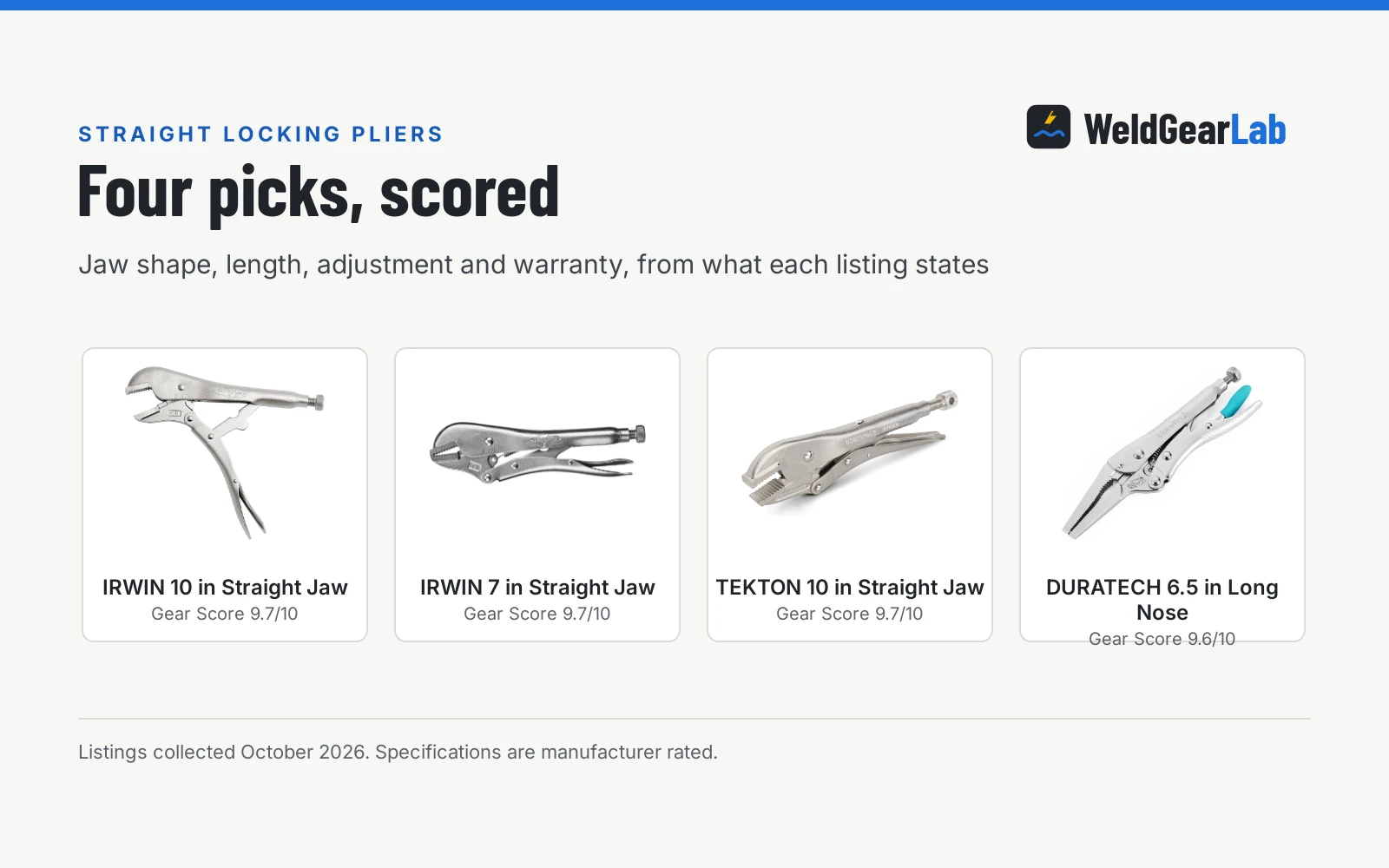
 IRWIN VISE-GRIP Original Locking Pliers9.7/10View on Amazon
- 2
 BESSEY KREK2440 K Body REVO Clamp Kit9.8/10View on Amazon
- 3
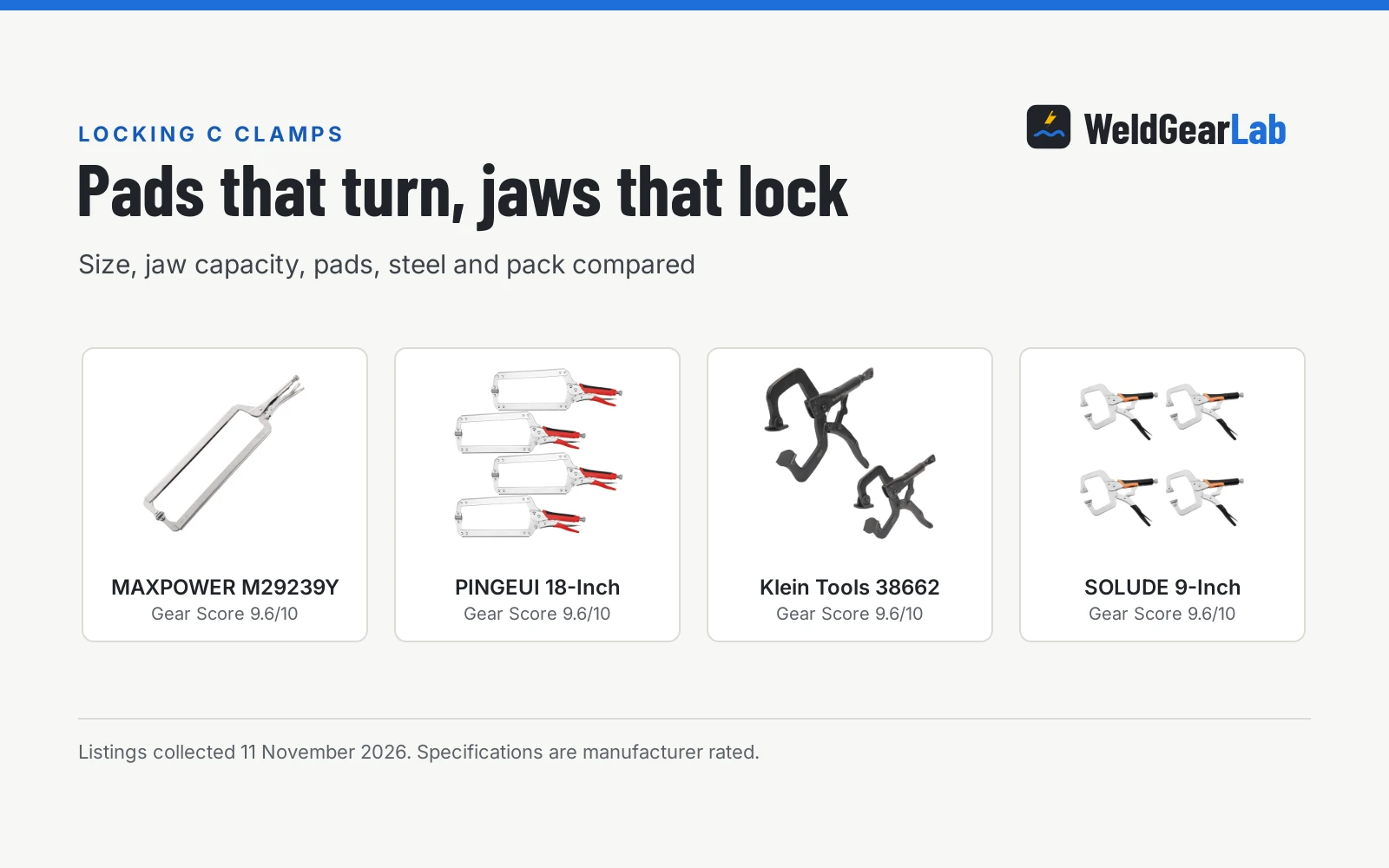
 MAXPOWER 24" C Clamp Locking Pliers9.6/10View on Amazon
- 4
 IRWIN Vise-Grip Original Locking Pliers with Wire Cutter SetView on Amazon
- 5
 WORKPRO Locking PliersView on Amazon
- 6
 DURATECH 7-Inch Locking PliersView on Amazon
- 7
 SK 5-Piece Locking Pliers SetView on Amazon
- 8
 SHALL 6-Piece Locking PliersView on Amazon
- 9
 IRWIN VISE-GRIP Locking PliersView on Amazon
You are tacking a joint together and nothing holds the metal square. The pieces shift while your hands are full, and the tack wanders off the mark. This is the bench problem behind locking pliers vs c clamp. Locking pliers snap onto a workpiece and keep holding after you let go, which makes them the quick answer for odd shapes and repairs away from the bench. C clamps take longer to set, but the screw delivers more squeeze across flat stock on a steady surface. Read on for how the two compare on fit-up speed, holding power and portability, plus locking pliers examples from current listings.
Other welders and gear to compare
 IRWIN Vise-Grip Original Locking Pliers with Wire Cutter SetCheck price on Amazon
 WORKPRO Locking PliersCheck price on Amazon
 DURATECH 7-Inch Locking PliersCheck price on Amazon
 SK 5-Piece Locking Pliers SetCheck price on Amazon
 SHALL 6-Piece Locking PliersCheck price on Amazon
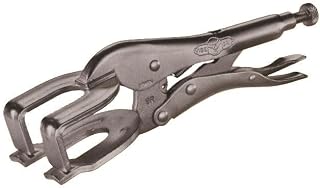 IRWIN VISE-GRIP Locking PliersCheck price on Amazon
This guide links to our product roundups, where WeldGearLab gets a commission on purchases made through links on this page, and your price stays the same. Read our affiliate disclosure.
Locking pliers vs c clamp in one paragraph
A locking plier is a clamp with handles: you set the jaw opening with the screw, squeeze, and the tool locks. A C clamp is a frame with a screw: you spin the screw until the pad presses the work against the frame. Locking pliers win on speed and on jobs where you only have a free hand for a moment. C clamps win where you need slow, even pressure across wide, flat stock. Shops that do fit-up work often keep each type on the bench.
Side by side
| Locking pliers | C clamps | Edge | |
|---|---|---|---|
| Holding action | Jaws lock and hold | Screw presses the pad | Tie |
| Setup speed | Set the screw once, then squeeze to clamp | Spin the screw for every piece | Locking pliers |
| Flat stock squeeze | Firm grip, less screw force | Steady pressure across the pad | C clamps |
| Odd shapes and pipe | Curved jaws wrap round stock | Flat pads skate on round faces | Locking pliers |
| Portability | Rides in a tool pouch | Frames are bulky to carry | Locking pliers |
| Working near the weld | Handles stay clear of the joint | Frame can block the torch angle | Locking pliers |
| Release | Trigger release | Back the screw off | Tie |
| Surface marking | Teeth can dent soft metal | Pad is gentler on flat faces | C clamps |
The pattern in the table is simple: locking pliers trade raw squeeze for speed and reach, while C clamps trade speed for steady pressure. If the job needs a clamp that grabs and holds while you reposition, start with locking pliers. If the joint is flat, wide and must not move while you weld out the seam, reach for the C clamp.
When locking pliers are the better choice
- Odd shapes and round stock. Curved jaws wrap pipe and angle that flat C clamp pads skate across.
- Fast tacking. Set the screw once, then each clamp goes on with a squeeze instead of a long spin.
- Work away from the bench. Locking pliers ride in a tool pouch; a fistful of C clamps is a load to carry.
- Holding while you reposition. The lock keeps the part in place while your hands move to the torch.
Our best locking pliers set roundup covers more options for the bench.
When C clamps are the better choice
- Wide, flat stock. The screw presses the whole pad down evenly across plate and sheet.
- Long seams. Several clamps spaced along a seam hold it flat while you weld out the length.
- Delicate clamping. Fine screw control lets you snug a part without crushing it.
- Heat near the joint. A steel frame stands up to spatter near the joint better than plastic handles like those on some locking pliers.
Compare bar clamps vs C clamps for welding if you also clamp long boards or wide panels.
Two locking pliers listings, ranked
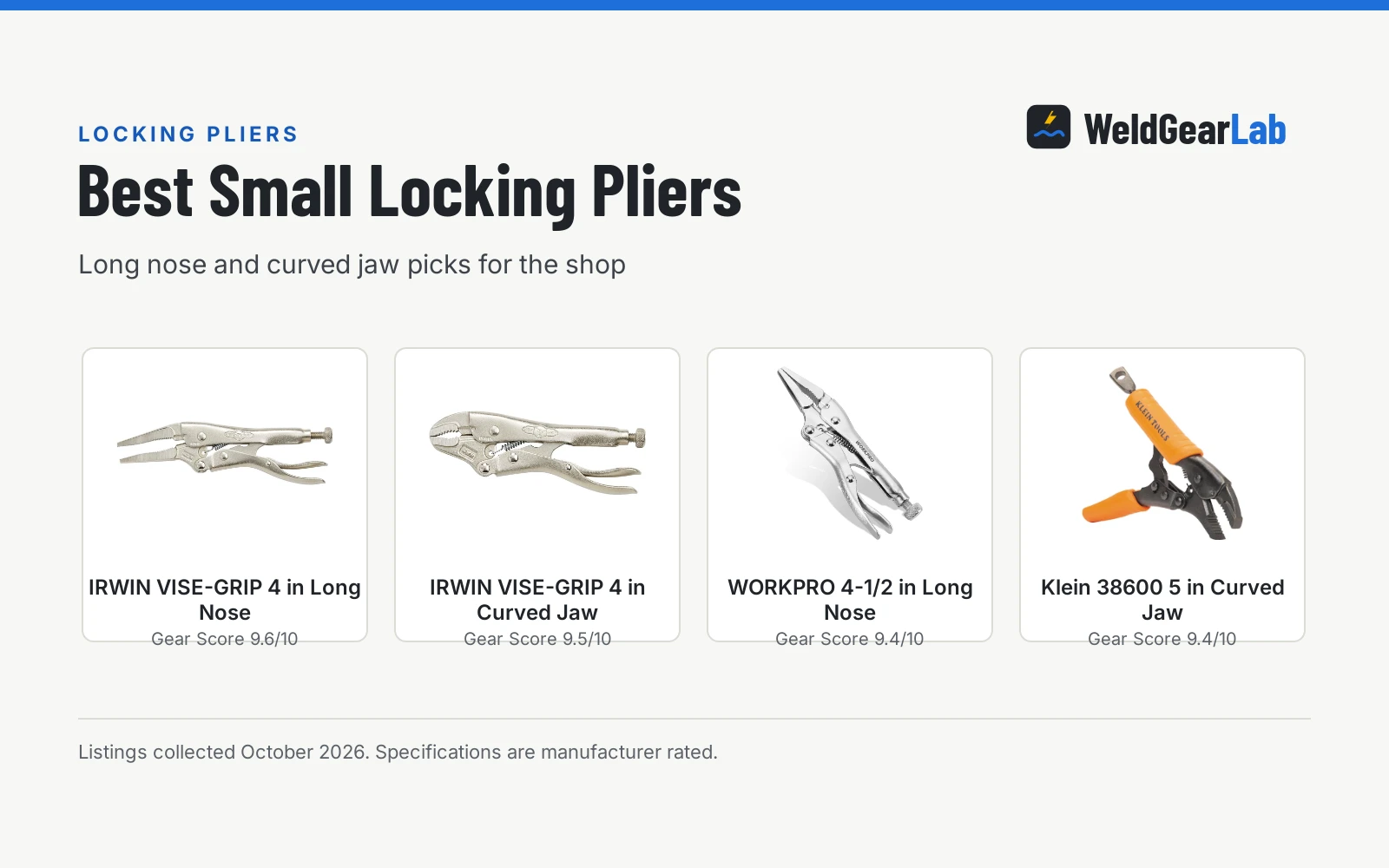
The IRWIN Vise-Grip Original Locking Pliers with Wire Cutter Set, 2 Piece, 36 leads the pair. It is a 2-piece set with a 7-inch curved jaw locking plier with wire cutter and a 6-inch long nose locking plier with wire cutter. The listing states high-grade heat-treated alloy steel, a classic trigger release for locking force, and hardened teeth made to grip from any angle. Two tools in the same box, each covering a different jaw job, make it the stronger value for a bench that needs general clamping and a nose for tight spots.
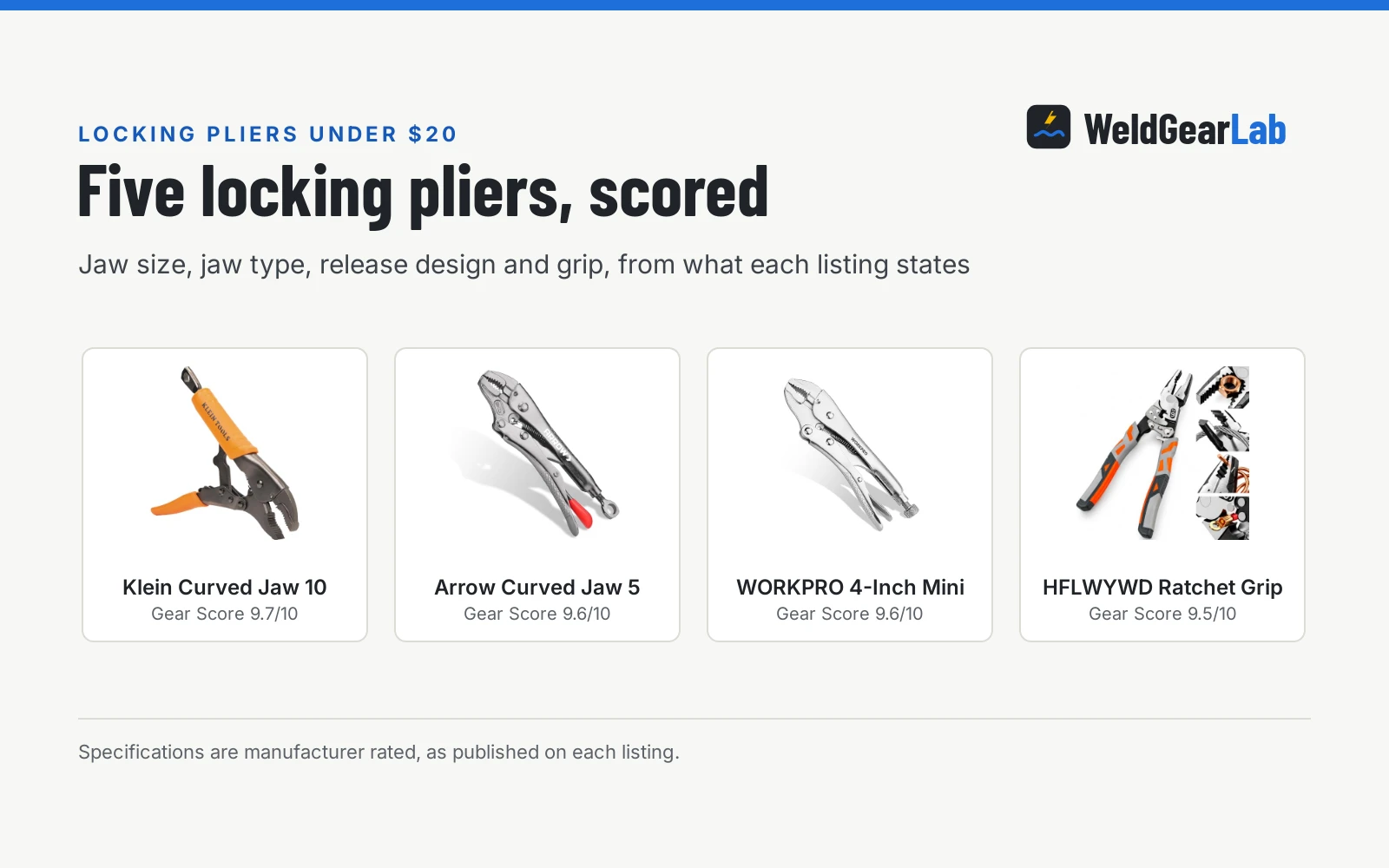
The WORKPRO Locking Pliers, 10-inch Curved Jaw Vice Grips lands behind the IRWIN set. The listing states chromium-vanadium steel, heat treatment, an adjustable screw for jaw width, a one-handed release trigger, and a diamond-pattern anti-slip handle. The spec table lists 1.1 pounds. A snag keeps it behind: the listing cannot agree on size. The title and the included-components line say 10-inch, while the bullet list says the box holds a 7-inch curved jaw plier. With the title trusted over the bullets, the listing still reads like it was assembled from two different products, which is a concrete reason to rank it lower.
How to read a locking pliers listing
Listings tell you most of what matters if you read past the title:
- Jaw type. Curved jaws grip round stock and general work; long nose reaches into tight spots.
- Size in inches. The IRWIN set pairs a 7-inch curved jaw with a 6-inch long nose; the WORKPRO title claims 10-inch while its bullets say 7-inch, so read the title and the bullets before you buy.
- Steel. The listings here state high-grade heat-treated alloy steel and chromium-vanadium steel; either is a legitimate tool steel when the maker names it.
- What is in the box. Count the tools, not the adjectives: a 2-piece set beats a single tool only if you will use the two tools.
- Wire cutter. Each of these listings includes a wire cutter, handy for tie wire and small stock on a welding bench.
Clamps near a weld get hot. Let them cool before you grab them barehanded, and keep anything flammable clear of the work area.
FAQ for welders
Can locking pliers replace C clamps for welding fit-up?
For quick tacking and odd shapes, yes, they are the faster tool. For wide flat stock that must stay flat along a long seam, C clamps hold steadier. Fit-up benches often carry each type because neither covers every joint.
Will locking pliers mark the workpiece?
The hardened teeth that grip so well can dent soft metal and mar a finished surface. Clamp on scrap, on a weld zone that will be ground later, or slip a thin shim between the jaw and the work.
Do I need the wire cutter version?
Not for clamping, but the cutter earns its keep on a welding bench: trimming tie wire, cutting small stock, snipping wire ends. If you already own side cutters, a plain jaw version does the same clamping job.
Why do my locking pliers slip on greasy metal?
Oil defeats the teeth. Wipe the jaws and the workpiece with a clean rag before clamping, and reset the screw so the jaws close firmly. On painted or scaled metal, clamp on a clean spot or grind a small window first.
Can I use locking pliers as a ground clamp?
No. Locking pliers hold parts; they are not a substitute for the work lead on your welder. Run the ground through the machine’s own work clamp and keep the pliers out of the current path.
Related: angle clamps vs C clamps, best locking C clamps, and best heavy-duty welding clamps. Also see our bar clamp vs C clamp for welding comparison.