Lightweight vs Standard Welding Helmet: Which One Should You Buy?
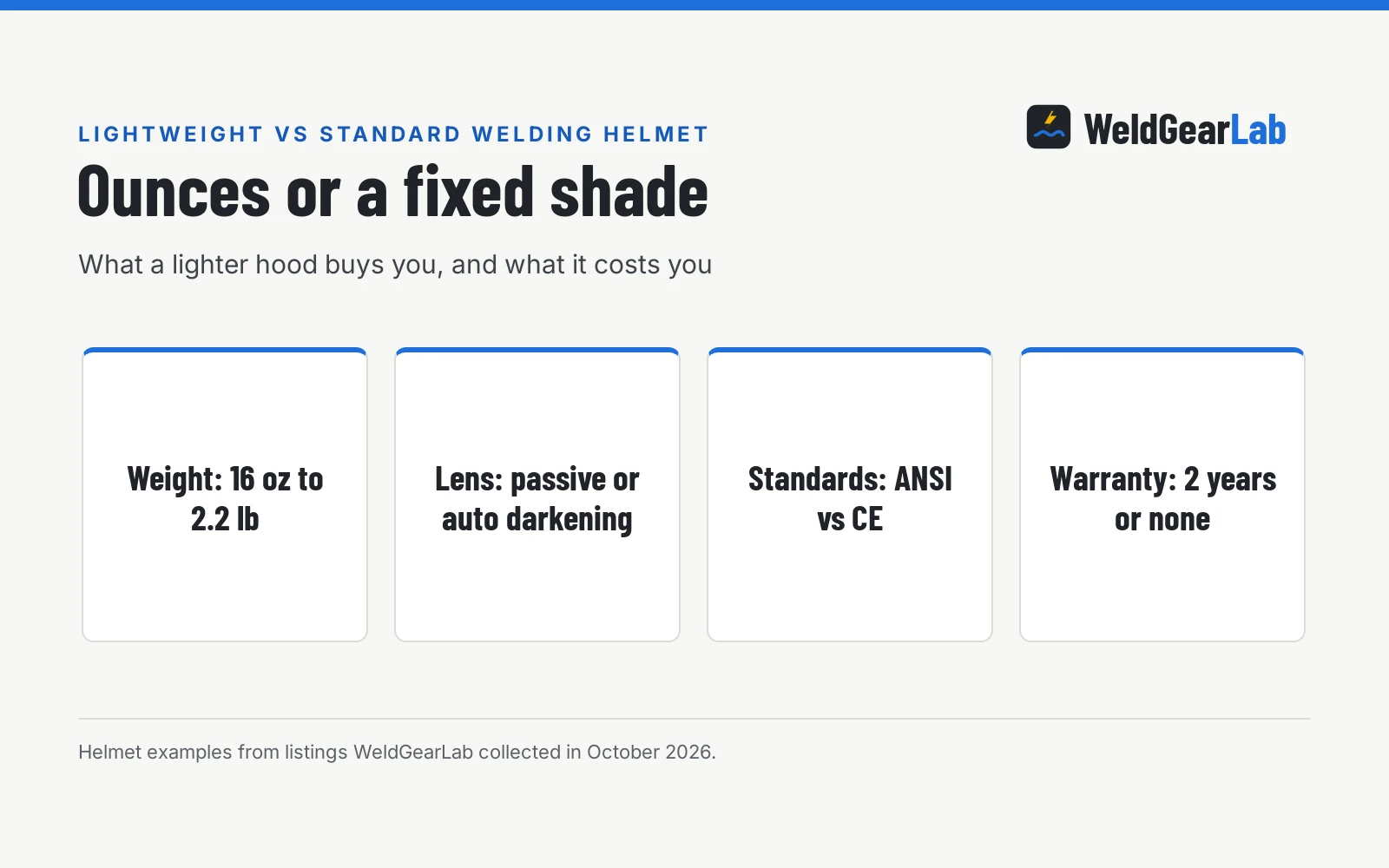
Lightweight vs standard welding helmet: four helmet listings compared on stated weight, lens type, stated standards and warranty, with the 1.26 lb auto darkening hood scoring ahead.

On this page
Top picks at a glance
As an Amazon Associate I earn from qualifying purchases.
- 1
 Jackson Safety HLX100 Passive Welding Helmet9.7/10View on Amazon
- 2
 Miller 238497 MP-10™ Passive Welding HelmetView on Amazon
- 3
 Jackson Safety Premium Graphics Auto Darkening Welding HelmetView on Amazon
- 4
 ANDELI Auto Darkening Welding Helmet 2 LED Lights InternalView on Amazon
- 5
 TOOLIOM Flip-Up 3.94 x 3.66 Lens Welding Helmet for MIGView on Amazon
- 6
 Sellstrom Welding HelmetView on Amazon
- 7
 Forney 55673 Welding HelmetView on Amazon
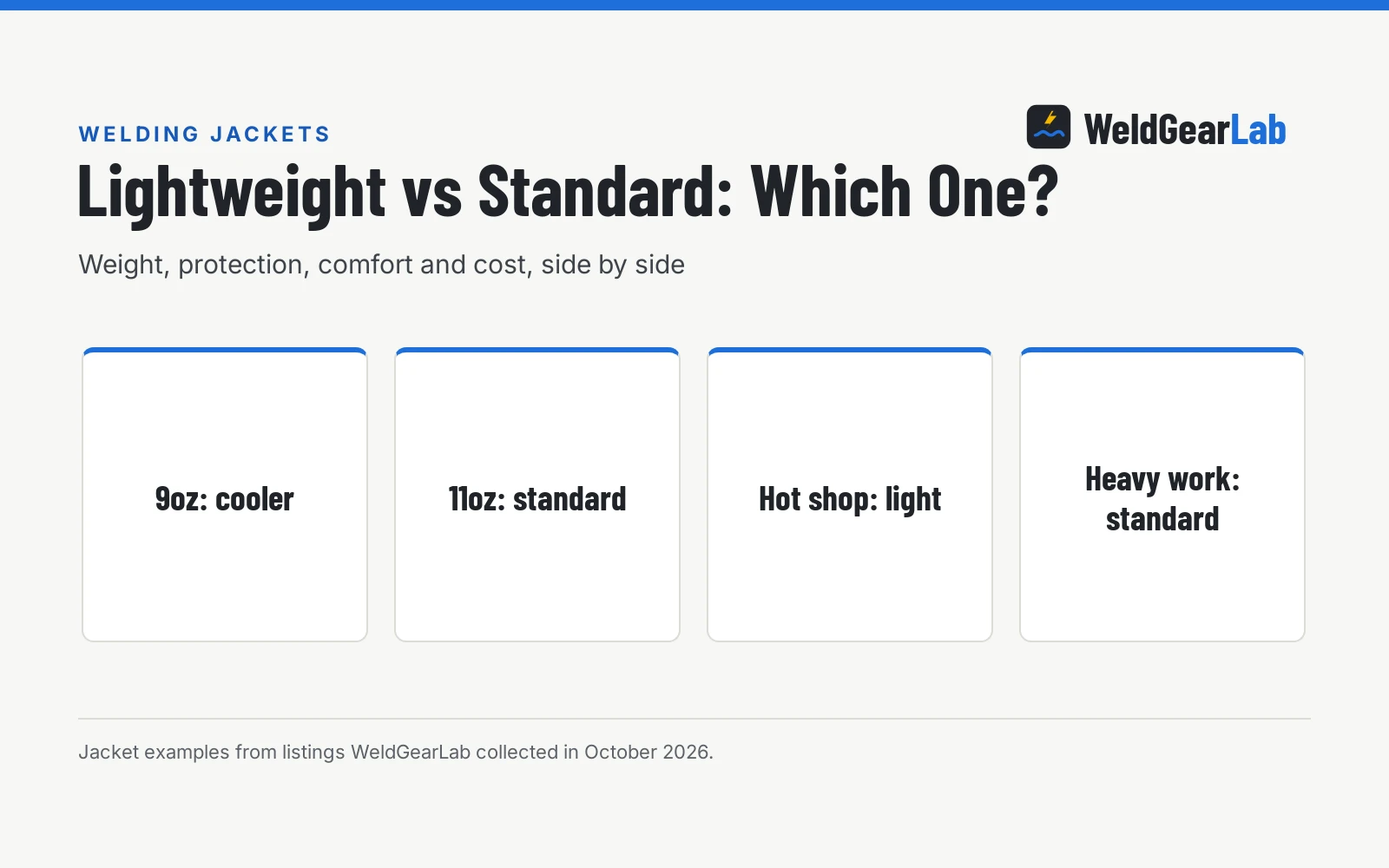
Lightweight vs standard welding helmet is a question of what you want on your head for hours: the lightweight example in this guide is a 1.26 lb auto darkening hood, while the passive shade 10 examples range from 16 oz to 2.2 lb, trading weight for a big window or a fiberglass pipeline shell. A lighter helmet cuts neck strain on long days, but lens type and stated standards matter more than ounces alone. This guide compares both sides for home, farm and hobby welding, using four helmet listings we reviewed.
Other welders and gear to compare
 Miller 238497 MP-10™ Passive Welding HelmetCheck price on Amazon
 Jackson Safety Premium Graphics Auto Darkening Welding HelmetCheck price on Amazon
 ANDELI Auto Darkening Welding Helmet 2 LED Lights InternalCheck price on Amazon
 TOOLIOM Flip-Up 3.94 x 3.66 Lens Welding Helmet for MIGCheck price on Amazon
 Sellstrom Welding HelmetCheck price on Amazon
 Forney 55673 Welding HelmetCheck price on Amazon
This guide links to our product roundups, where WeldGearLab gets a commission on purchases made through links on this page, and your price stays the same. Read our affiliate disclosure.
Lightweight vs standard welding helmet in one paragraph
A lightweight welding helmet is usually an auto darkening hood like the 1.26 lb Jackson, easy to nod down all day. A standard helmet is usually a passive shade 10 hood, sometimes a fiberglass pipeline shell, where you flip the hood up to inspect the weld. In this guide the passive examples run from the 16 oz Miller to the 2.2 lb Tefuawe, so ounces alone do not define the categories. Both protect your eyes when the stated shade is right; the weight difference shows up in your neck after a few hours.
Lightweight vs standard welding helmet: side by side
| Lightweight helmets | Standard helmets | Examples here | |
|---|---|---|---|
| Stated weight | 1.26 lb (Jackson) | 16 oz (Miller) to 2.2 lb (Tefuawe); Forney 1.4 lb | Jackson 1.26 lb; Forney 1.4 lb; Miller 16 oz |
| Lens | Auto darkening, variable shade 3/10 | Passive fixed shade 10 | Jackson ADF; Forney, Miller shade 10 |
| Viewing area | 9.3 sq in (Jackson) | 4×4 in (Miller) | Jackson 9.3; Miller 4×4 |
| Switching speed | 1/25,000 s | Not stated | Jackson only |
| Standards stated | ANSI Z87.1+, CAN/CSA Z94.3, CE | CE and CSA (Tefuawe); none stated (Forney, Miller) | Jackson strongest; Tefuawe CE/CSA |
| Warranty | 2 years | Not stated | Jackson only |
| Headgear | 370 Speed Dial ratcheting | Ratcheting, adjustable | Jackson Speed Dial; Forney ratcheting; Miller adjustable |
Weights are the makers’ stated figures. The Tefuawe calls itself ultra lightweight in the bullets but lists 2.2 lb, the heaviest of our four examples. The Miller bullets say 16 oz while the spec table says 1.7 lb; trust the bullets.
When a lightweight helmet is the better choice
- Long days of arc time. Overhead or position work with the hood nodding all day is where a 1.26 lb hood pays off.
- Tack and reposition work. An auto darkening lens means no flipping the hood to set the fit up; the Jackson shades 3 to 10 with a 1/25,000 s switch.
- Grinding between passes. A shade 3 grind mode keeps the same hood on for cleanup instead of swapping to goggles.
- Stated standards matter. The Jackson states ANSI Z87.1+ and CAN/CSA Z94.3, the strongest stated standards here.
Our best auto darkening welding helmet guide compares more lightweight hoods.
When a standard helmet is the better choice
- You want simple and tough. A passive shade 10 has no batteries to die and no sensor to block; the Forney and Miller are both fixed shade 10.
- Big clear window. The Miller lists a 4×4 in viewing area, passive and simple, for a wide view of the puddle.
- Pipeline style fit. The Tefuawe is a fiberglass sugar scoop shell shaped to clear the chest and work tight.
- Respirator compatibility. The Tefuawe listing says the eyes-to-lens distance adjusts to fit more respirators.
See passive vs auto darkening welding helmet and flip up vs fixed lens welding helmet for the lens tradeoffs.
Helmet examples: the gear in this guide
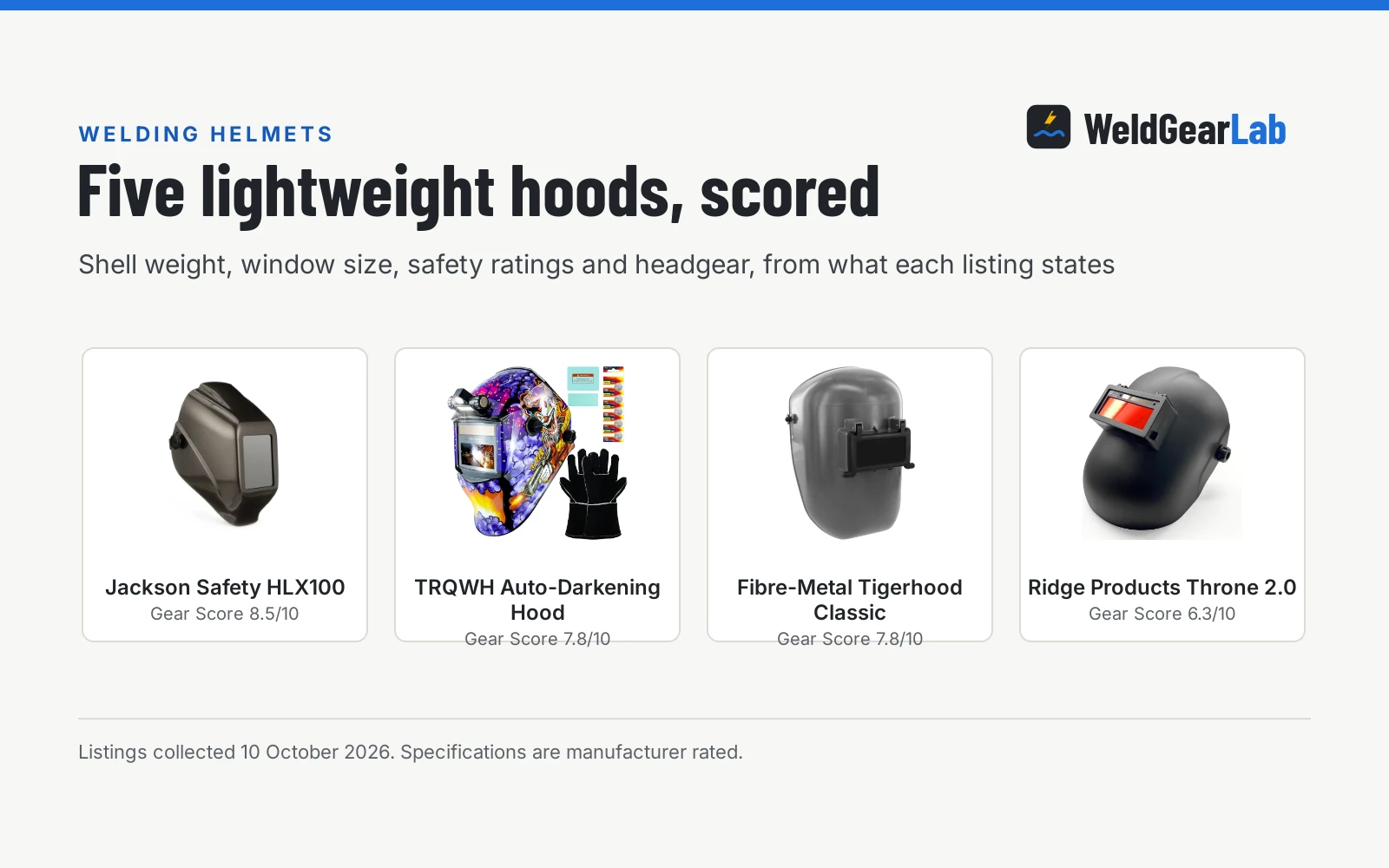
Four helmet listings, ranked by our scores. The Jackson leads on stated standards, lens features and a 2 year warranty.
| Helmet | Stated weight | Lens | Standards stated |
|---|---|---|---|
| Jackson Safety 47100 | 1.26 lb | Auto darkening, shade 3/10 | ANSI Z87.1+, CAN/CSA Z94.3, CE |
| Tefuawe FPL-2×4 | 2.2 lb | Fits 2×4.25 in lens | CE, CSA |
| Forney Bandit III 55672 | 1.4 lb | Passive shade 10, flip front | None stated |
| Miller MP-10 | 16 oz (bullets; spec table says 1.7 lb) | Passive shade 10, 4×4 in view | None stated |
Jackson Safety 47100. The 1.26 lb example, auto darkening with a 3/10 variable shade, 1/1/1/1 optical clarity, 4 arc sensors and a 1/25,000 s switching speed. The 3.94 x 2.36 in viewing area works out to 9.3 sq in. It states ANSI Z87.1+, CAN/CSA Z94.3 and CE, ships with a 370 Speed Dial ratcheting headgear, and the only stated warranty of the four: 2 years. Solar plus a CR2032 battery, which is not included.
Tefuawe FPL-2×4. A flip up chopped fiberglass sugar scoop pipeline hood at a stated 2.2 lb, fitting a 2×4.25 in lens, with CE and CSA listed. The fiberglass is described as moisture-proof and impact-resistant, the ratcheting headgear adjusts for more respirator clearance, and a helmet bag is included. Note the contradiction: the bullets call it ultra lightweight, but 2.2 lb is the heaviest stated weight here.
Forney Bandit III 55672. A passive shade 10 flip front helmet at a stated 1.4 lb with ratcheting headgear, medium size. The listing keeps it simple: a heat-treated No. 10 shade lens and an expanded viewing area. No certification is stated and the warranty field reads only Warranty, with no term.
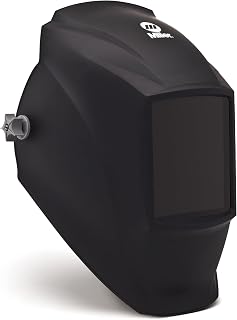
Miller MP-10. A passive shade 10 helmet with a large 4×4 in viewing area and heavy-duty nylon construction. The bullets state 16 oz while the spec table states 1.7 lb; trust the bullets. The headgear adjusts and the hood lifts for inspection, and a magnifying lens holder is included. No certification and no warranty term are stated.
Arc flash safety. A helmet only protects your eyes if the shade is right for the process and amperage and the lens is intact. Never weld with a cracked cover lens or a hood that will not stay down. Keep flammables clear of the work area, and vent the shop; see our welding fume extractor vs respirator comparison.
FAQ for welders
How much does a welding helmet weigh?
Our four examples range from a stated 16 oz to 2.2 lb: the Miller states 16 oz in the bullets while its spec table says 1.7 lb, the Jackson states 1.26 lb, the Forney 1.4 lb and the Tefuawe 2.2 lb. A few tenths of a pound is not much on a shelf, but it adds up on your neck over a day.
Is a lighter welding helmet better?
For long sessions, usually. But compare lens and standards too: the 1.26 lb example here is also the only one with an auto darkening lens, ANSI Z87.1+ and a 2 year warranty. A light hood with no stated certification is not automatically the better helmet.
What shade do I need?
The passive examples here are shade 10; the Jackson varies from 3 to 10, with shade 3 for grinding. Match the shade to your process and amperage from the machine manual, and keep a shade darker for high-amperage work if the chart calls for it.
Does CE or CSA mean a helmet is safe?
They are the standards the listing states. The Tefuawe lists CE and CSA; the Jackson lists ANSI Z87.1+, CAN/CSA Z94.3 and CE. None of the passive examples state ANSI or CSA Z94.3. Check what the listing actually names rather than assuming.
Can a passive helmet be upgraded to auto darkening?
The Miller MP-10 listing says yes for that hood: the lens can be swapped for an auto darkening lens, and it includes a magnifying lens holder. That is a statement about one hood, not a rule for all passive helmets.
Related: best stick welding helmet, true color vs regular welding lens and welding helmet vs safety glasses.