Induction Heater vs Torch: Which One Should You Buy?
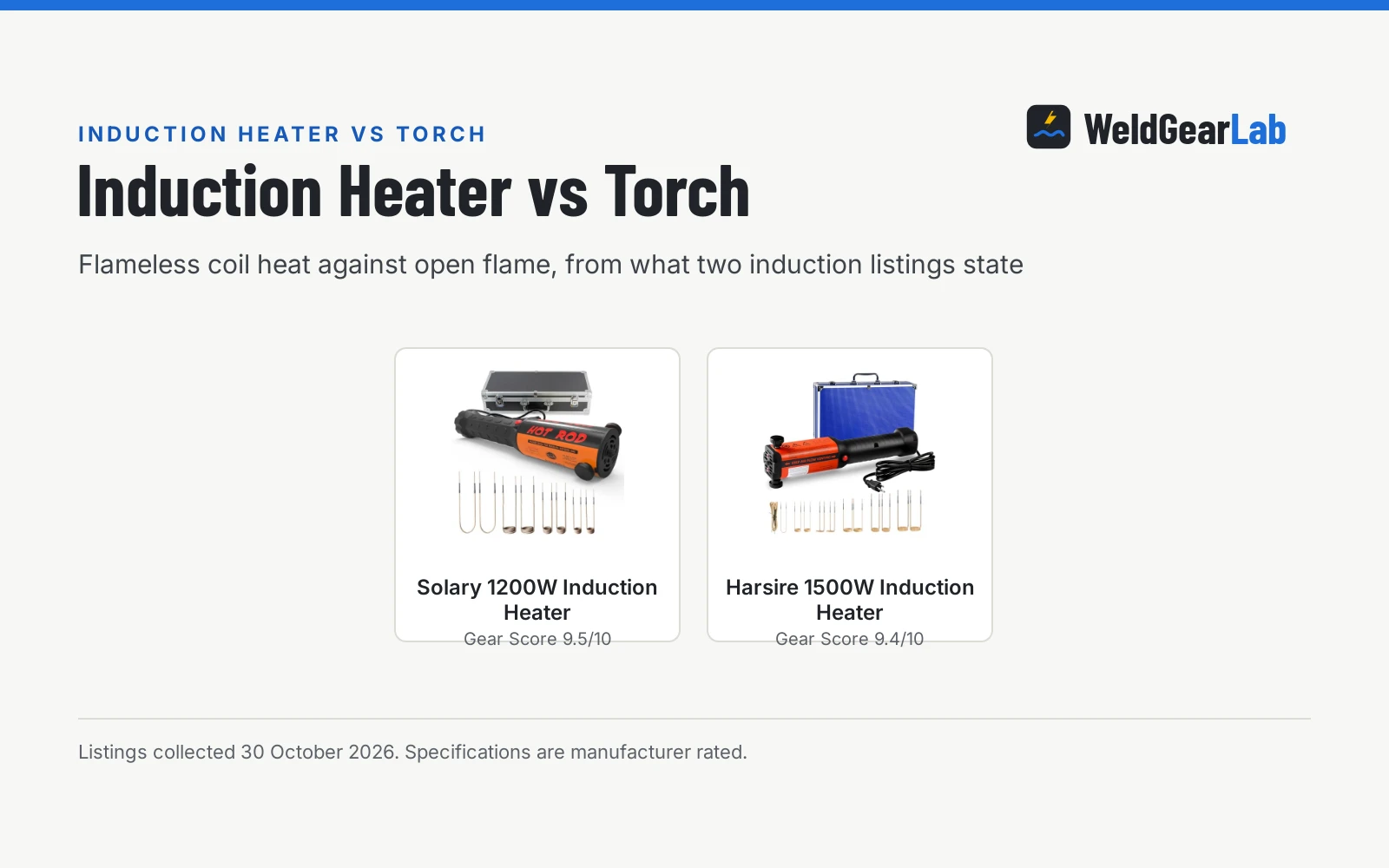
Two induction heater kits offer flameless heat for seized bolts, while a torch brings open flame, and coil fit decides the comparison.

On this page
Top picks at a glance
As an Amazon Associate I earn from qualifying purchases.
- 1
 Solary Induction Bolt Heater Tool9.5/10View on Amazon
- 2
 1500W Induction Heater Bolt Removal Kit w/Case9.4/10View on Amazon
Verdict. In this induction heater vs torch comparison, pick the induction heater side when the job sits near fuel lines, wiring, plastic parts or rubber seals, since the Harsire listing describes flameless heat focused inside the fastener. Pick a torch when open flame is acceptable for the job and the surrounding parts, and flame heat is the method already in hand.
A seized fastener that will not move is the classic shop problem: force risks snapping it, and heat is the usual answer. The choice in an induction heater vs torch comparison comes down to where that heat goes, and what sits nearby while it is applied.
WeldGearLab gets a commission on purchases made through links on this page, and your price stays the same. Read our affiliate disclosure.
The two examples
Solary Induction Bolt Heater Tool
A 1200W, 110V induction bolt heater with 8 coils, a built-in LED light, cooling fan and overheat protection, in a portable aluminum storage case.
Pros
- 1200W on 110V, with heating focused on the fastener inside the coil
- 8 coils: six rigid coils in 25 mm, 30 mm and 45 mm sizes plus two 600 mm flexible coils
- Built-in LED light for low-light work, plus an ergonomic handle
- Cooling fan and overheat protection, in a portable aluminum storage case
Cons
- No bolt size range stated, only coil sizes
- Designed primarily for ferrous metals, so aluminum, stainless steel and brass may respond differently
- No warranty term stated in the listing
- No weight stated in the listing
1500W Induction Heater Bolt Removal Kit w/Case
A 1500W induction bolt removal kit with a case, cooling fans and overheat protection, whose listing disagrees with itself on how many coils it includes.
Pros
- 1500W heater claimed to free rusted bolts in 25 seconds
- Coils in a range of sizes, plus DIY coils
- Cooling fans and overheat protection for back-to-back jobs
- Heating focused inside the fastener, with no open flame and no sparks, per the listing
Cons
- No input voltage stated in the listing
- No warranty term stated in the listing
- No weight stated in the listing
Other welders and gear to compare
 Bernzomatic® DuraCast® Wide Surface TorchCheck price on Amazon
 Bernzomatic FlameCommander Propane TorchCheck price on Amazon
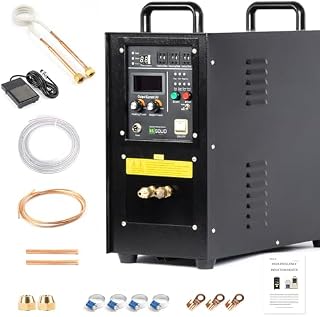 U.S. Solid 15KW High Frequency Induction Heater FurnaceCheck price on Amazon
 Solary Automotive Magnetic Induction HeaterCheck price on Amazon
 Handheld Magnetic Induction Heater for Rusty Screw RemovingCheck price on Amazon
Side by side
| Solary 1200W Induction Heater | Harsire 1500W Induction Heater | What it means | |
|---|---|---|---|
| Power | 1200W | 1500W | Higher stated wattage on the Harsire example |
| Input voltage | 110V | Not stated | Only the Solary listing states voltage |
| Heating claim | Fast heating with electromagnetic fields | 25 seconds for rusted bolts, per the listing | Only the Harsire listing gives a time figure |
| Coils | 8 coils: six rigid and two flexible | Title says 12 coils; bullets say 8-coil and 10 coils | The Harsire coil count needs confirming |
| Coil sizes | 25 mm, 30 mm and 45 mm rigid, plus two 600 mm flexible coils | A range of sizes, plus DIY coils | Different size ranges; check fit around the fastener |
| Cooling | Cooling fan and overheat protection | Cooling fans and overheat protection | Both state cooling and overheat protection |
| Lighting | Built-in LED light | Not stated | Only the Solary listing states a light |
| Case | Portable aluminum storage case | Case included, per the title | Both include a case |
| Dimensions | 17.52 inches x 9.84 inches x 4.53 inches | 18.0 inches x 5.0 inches x 7.5 inches | Sizes differ; neither listing states weight |
| Warranty | Not stated | Not stated | Neither listing states a warranty term |
Treat the specs as maker ratings pulled straight from the listings; we gathered them on 30 October 2026. Neither listing states a safety certification, a warranty term or a weight.
induction heater vs torch: how the heat differs
An induction heater sends electromagnetic energy into the metal fastener inside the coil, so the heat builds in the bolt itself rather than in the air around it. The Harsire listing calls its approach surgical precision heating and claims surrounding rubber seals, paint and bearings stay cool and unharmed, with no open flame and no sparks during operation. The Solary listing is more cautious, saying only that targeted heating can help reduce heat exposure to nearby rubber seals, painted surfaces and bearings. A torch works the other way, with flame heating that the Harsire listing calls messy because it heats everything in sight. That contrast is why the Harsire listing presents induction for work near fuel lines, wiring and plastic components, claiming a user can work without fear of starting a fire or causing collateral damage; that is the listing’s claim, and the Solary listing only says to follow product instructions and safety precautions.
The torch side has no product specs in these listings, so it is judged here on what the induction listings say about flame: open flame and broad heat, against focused coil heat. Both examples in this article are induction heaters. Where flame is acceptable and nothing nearby is harmed by it, the torch remains a plain, familiar option.
Power and coils
The Harsire example states 1500W and claims rusted bolts freed in 25 seconds, while the Solary example states 1200W on 110V and claims fast heating with electromagnetic fields, without giving a time figure in its detailed bullets. The Harsire listing leaves input voltage unstated, so its power figure cannot be tied to a supply voltage from the listing alone. On coils, the Solary set is the tidier story: six rigid coils in 25 mm, 30 mm and 45 mm sizes, plus two 600 mm flexible coils, for exhaust flanges, manifolds, brackets and other rusted fasteners.
The Harsire coil story needs a check before buying: its title says 12 coils, one bullet calls it an 8-coil heater, and another describes 10 specialized coils in a range of sizes plus DIY coils. The spec table lists the size as 10coil, which lines up with the 10-coil description but not the title. Coil fit matters more than count: the Solary listing advises selecting a coil that fits appropriately around the fastener.
Precision and surroundings
Both listings sell the same core idea: heat concentrated where it is needed, with less heat exposure for nearby parts. The Solary listing says its targeted heating can help reduce heat exposure to nearby rubber seals, painted surfaces and bearings, and the Harsire listing says surrounding rubber seals, paint and bearings stay cool and unharmed. The Solary example adds two practical details the Harsire listing does not state: a high-intensity LED light for low-light work, and an ergonomically shaped handle for comfort during prolonged use.
Material matters too: the Solary listing states its heater is designed primarily for ferrous metals such as carbon steel and iron fasteners, and that aluminum, stainless steel and brass may respond differently. Check material compatibility before buying for mixed-metal work.
Cases and handling
Both kits include a case: the Harsire title includes one, and the Solary kit comes in a portable aluminum storage case. Dimensions differ, with the Harsire example listed at 18.0 inches x 5.0 inches x 7.5 inches and the Solary example at 17.52 inches x 9.84 inches x 4.53 inches. Neither listing states a weight, so portability cannot be compared from the listings beyond the case and handle descriptions. Both state cooling protection: the Solary fan and overheat protection activate as soon as the machine is powered on, and Harsire temperature sensors engage cooling fans when needed, to protect internal components during back-to-back jobs.
Choose the induction heater if
- You work near fuel lines, wiring, plastic parts or rubber seals and want no open flame.
- You want heat focused inside the fastener rather than spread across the surrounding parts.
- You want a coil set that covers varied fastener sizes, with a case to keep it organized.
- You work on seized steel fasteners such as exhaust bolts, manifolds and brackets.
Choose a torch if
- Open flame is acceptable for the job and nothing nearby is harmed by broad heat.
- Flame heat is already the method in hand and no electric heater is set up for the job.
- The work does not sit near fuel lines, wiring, plastic parts or seals that flame would harm.
Before You Strike an Arc
- Check the power supply the listing states before plugging in: the Solary listing states 110V, while the Harsire listing leaves voltage unstated.
- Pick a coil that fits around the fastener, and check the material first: the Solary listing states its heater is designed primarily for ferrous metals.
- Check the case contents on arrival, coils, heater and case, so a missing coil is caught before the job starts.
- Follow the product instructions and appropriate safety precautions, and clear anything flammable from the area when a torch is in use.
FAQ for welders
How does an induction heater work?
An induction heater sends electromagnetic fields into the metal fastener inside the coil, so heat builds in the fastener itself. The Solary listing describes this as faster and more precise than oxy-acetylene systems, with heat concentrated where it is needed. There is no open flame during operation, which is the key difference from a torch.
Is an induction heater better than a torch near fuel lines?
The Harsire listing presents its heater as the flameless option for work near fuel lines, wiring and plastic components, with no open flames and no sparks, and says a user can work confidently next to those parts without fear of starting a fire. The Solary listing only says its heater works without an open flame during operation. Always follow the product instructions and appropriate safety precautions, whatever method is used.
Which coil size fits a seized bolt?
Choose a coil that fits appropriately around the fastener, as the Solary listing advises, since effective heating depends on that fit. The Solary set covers rigid sizes plus flexible coils, while the Harsire set lists its own sizes plus DIY coils. Because the Harsire listing disagrees on its coil count, confirm the set with the seller before buying for a specific fastener range.
Can an induction heater heat aluminum or stainless steel?
The Solary listing states its heater is designed primarily for ferrous metals such as carbon steel and iron fasteners. It adds that aluminum, stainless steel and brass may respond differently depending on composition and properties. Check material compatibility before buying for non-ferrous work.
Do these kits include a case?
Yes, both do: the Harsire title includes a case, and the Solary kit comes in a portable aluminum storage case that keeps coils and equipment organized.
Related: best induction heaters for welding, best induction heater for pipe, best handheld induction heater, and the metal fab tools hub.
Scoring, line by line
Both examples are scored on performance, build, value, safety listing and warranty. Neither listing states a safety certification or a warranty term, so both score zero on those criteria, and the ranking turns on stated power, coil detail and listing clarity.
| Product | Gear Score | Perf. /35 | Build /25 | Value /25 | Safety /10 | Warranty /5 |
|---|---|---|---|---|---|---|
| Solary 1200W Induction Heater | 9.5 | 29 | 21 | 21 | 0 | 0 |
| Harsire 1500W Induction Heater | 9.4 | 28 | 20 | 20 | 0 | 0 |
Think of 9.2 as the bottom and 9.8 as the top. Totals are placed between them in proportion, which keeps the order intact: more points, higher score.