Diamond vs Abrasive Cut Off Wheel: Which One Should You Buy?
Diamond and abrasive cut off wheels compared for metal cutting: how they differ on wheel life, cut quality, heat and cost, and which suits your grinder.

On this page
Top picks at a glance
As an Amazon Associate I earn from qualifying purchases.
- 1
 4.5" Diamond Grinding Wheel for Concrete Masonry 18 Segments9.7/10View on Amazon
- 2
 SALI 25 Pack 4-1/2 Inch Cut Off WheelsView on Amazon
- 3
 EZARC Diamond Cutting Wheel 4 1/2 x 7/8 Inch for MetalView on Amazon
- 4
 EZARC Diamond Cutting Wheel 3 x 3/8 Inch for MetalView on Amazon
- 5
 FIXLTFAST 4-1/2" Diamond Cutting Wheel Metal Cut Off Disc forView on Amazon
- 6
 FOXBC 3 Inch Diamond Cut Off Wheel with 5000+ Metal CuttingView on Amazon
- 7
 4 1/2 in Cut Off Wheel Diamond Cutting Wheel for Metal 7/8"View on Amazon
Diamond vs abrasive cut off wheel comes down to this: a diamond wheel keeps cutting for far longer and holds its diameter, while an abrasive wheel cuts fast and cheap but shrinks with every pass. If you cut steel all day, diamond saves wheel changes; if you cut now and then, abrasive discs cost less per wheel. This guide compares them for home, farm and hobby shops, using two 4-1/2 inch wheels as examples.
Other welders and gear to compare
 SALI 25 Pack 4-1/2 Inch Cut Off WheelsCheck price on Amazon
 EZARC Diamond Cutting Wheel 4 1/2 x 7/8 Inch for MetalCheck price on Amazon
 EZARC Diamond Cutting Wheel 3 x 3/8 Inch for MetalCheck price on Amazon
 FIXLTFAST 4-1/2" Diamond Cutting Wheel Metal Cut Off Disc forCheck price on Amazon
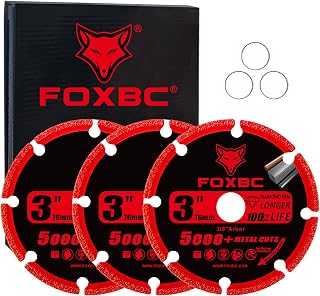 FOXBC 3 Inch Diamond Cut Off Wheel with 5000+ Metal CuttingCheck price on Amazon
 4 1/2 in Cut Off Wheel Diamond Cutting Wheel for Metal 7/8"Check price on Amazon
This guide links to our product roundups, where WeldGearLab gets a commission on purchases made through links on this page, and your price stays the same. Read our affiliate disclosure.
The difference in one paragraph
An abrasive cut off wheel is aluminum oxide grit glued into a thin disc; the grit breaks away as it cuts, so the wheel gets smaller the longer you use it. A diamond wheel bonds industrial diamond grit to a rigid steel core that barely wears, so the diameter stays put for the listed 6000+ cuts. That one difference decides wheel life, cut consistency and cost per cut.
Side by side
| Aspect | ASPRO diamond wheel | SALI abrasive wheel | Takeaway |
|---|---|---|---|
| How it cuts | Diamond grit on a steel core | Aluminum oxide grit that wears away | Diamond holds diameter; abrasive shrinks |
| Wheel life | 6000+ cuts claimed per wheel | Wears with every cut; 25 wheels in the pack | Diamond for long runs |
| Cut quality | Clean, fast cuts with cooling holes | Fast, burr-free cuts per the listing | Both cut clean when new |
| Heat | Cooling openings release heat | Thin 0.045 inch profile limits heat | Diamond runs cooler |
| Dust and debris | Debris-clearing grooves | Double fiberglass mesh; listing says minimizes debris splatter | Grooves clear debris; mesh limits splatter |
| Thickness | 0.074 inch steel core | 0.045 inch | Thin for speed, thick for life |
| Speed rating | 13,300 RPM | 13,300 RPM | Match the grinder |
| Arbor | 7/8 inch | 7/8 inch | Must match |
| Pack size | 3 wheels | 25 wheels | Abrasive wins on count |
| Best for | Long runs, fewer wheel changes | Occasional cuts, low cost per wheel | Frequency decides |
Speed ratings are maximums; always match the wheel rating to your grinder. Both example wheels are rated 13,300 RPM for 4-1/2 inch grinders with a 7/8 inch arbor.
When a diamond wheel is the better choice
- Long production runs. The listing claims 6000+ cuts per wheel, with fewer stops to change discs.
- Consistent depth. The steel core holds its diameter, so depth stays more consistent than with a wearing abrasive disc.
- Cooler cutting. Cooling holes and debris grooves release heat and metal chips for smoother work.
- Fewer wheel changes. Three wheels cover long jobs when each one lasts.
When an abrasive wheel is the better choice
- Occasional cutting. A 25-pack keeps fresh discs on hand for occasional cutting.
- Thin, fast cuts. The 0.045 inch profile slices quickly with little material waste.
- Fresh grit always. Each new disc cuts like new, which suits short jobs.
- Varied metals. The aluminum oxide listing covers carbon steel, stainless steel, iron and nickel alloys.
The gear: the two wheels compared
ASPRO diamond wheel, 3-pack. The long-life pick: industrial diamond edges on a 0.074 inch steel core, rated 13,300 RPM for 4-1/2 inch grinders with a 7/8 inch arbor. The listing claims 6000+ cuts per wheel, with cooling holes and debris-clearing grooves for smoother work. Three wheels cover long runs with few changes.
On scores, the ASPRO diamond wheel ranks first for wheel life and cut consistency, while the SALI abrasive wheel ranks second on value: the 25-pack puts a fresh disc in hand for every job. Neither wheel is wrong; the right one depends on how often you cut.
SALI abrasive wheel, 25-pack. The value pick: aluminum oxide grit in a thin 0.045 inch disc. Rated 13,300 RPM with a 7/8 inch arbor and double fiberglass mesh against breakage, the 25-count pack suits shops that cut in bursts. Each wheel wears as it cuts, so depth changes over its life.
How to match the wheel to your grinder
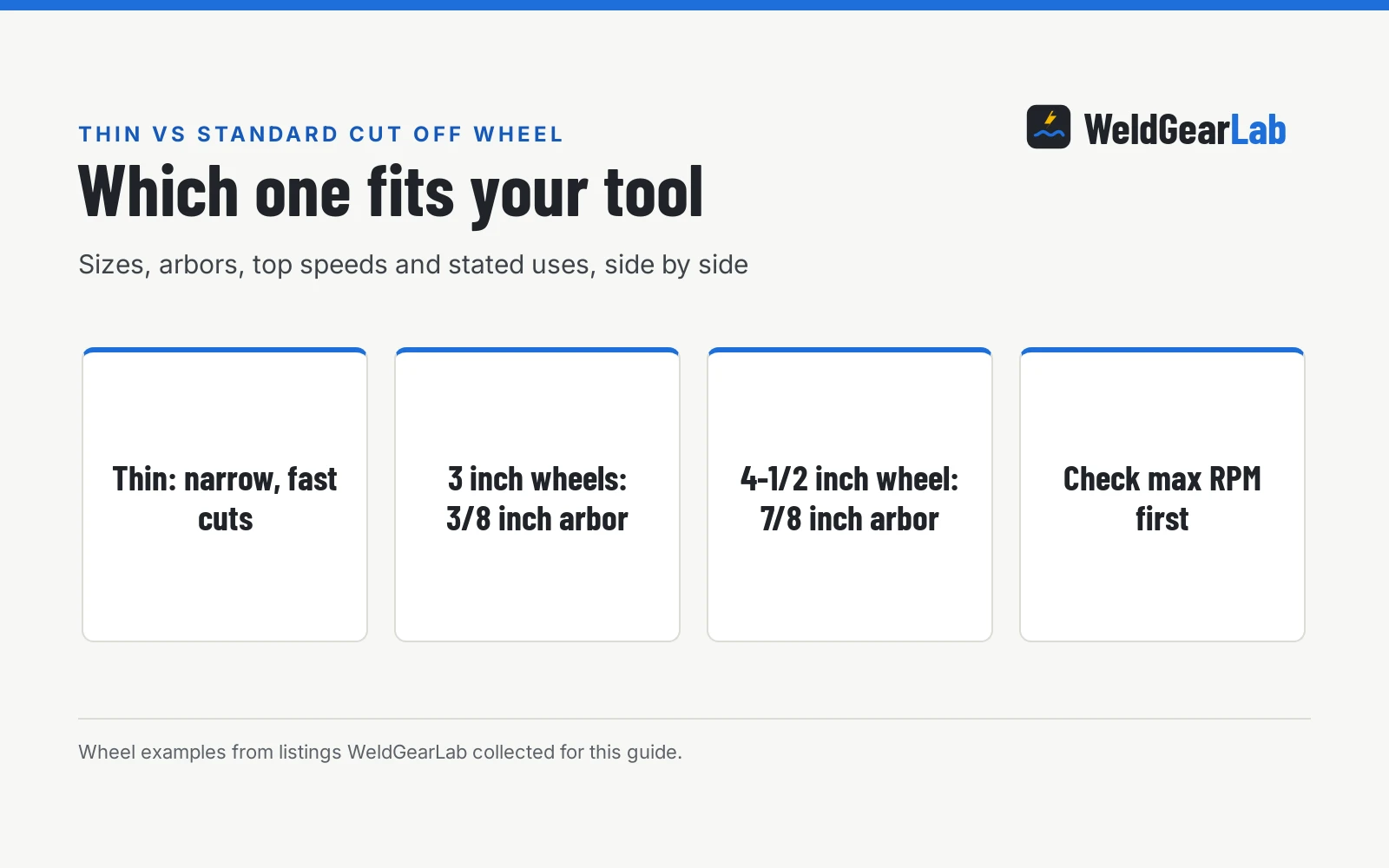
Both wheels here are 4-1/2 inch with a 7/8 inch arbor, the common size for angle grinders. Check three things in the listing:
- Diameter and arbor. A 4-1/2 inch wheel on a 7/8 inch arbor must match the grinder.
- Speed rating. Both wheels rate 13,300 RPM; the wheel rating must meet or beat the grinder speed.
- Thickness. The 0.045 inch abrasive for fast thin cuts, the 0.074 inch diamond core for rigid, long-life cutting.
Diamond vs abrasive cut off wheel: which should you buy?
Buy the diamond wheel if you cut metal often and dislike changing discs: the ASPRO long life pays off in saved time. Buy abrasive if you cut occasionally and want a fresh disc for every job: the SALI 25-pack keeps spares on hand. Either way, match the 4-1/2 inch size, 7/8 inch arbor and 13,300 RPM rating to your grinder.
Sparks, dust and wheel breakage. Cutting throws sparks and metal dust, and a damaged wheel can come apart. Wear a face shield, gloves and hearing protection, keep the guard on the grinder, and never exceed the wheel rated speed. Let the wheel stop before setting the grinder down. See the OSHA welding overview.
FAQ for welders
Can a diamond wheel cut stainless steel?
The ASPRO listing names stainless steel, rebar, iron, alloy steel and aluminum among its metals. The ASPRO listing is made for these metals: match the wheel to the metal and keep the speed within the rating.
Why does my abrasive wheel get smaller?
Abrasive wheels shed grit as they cut; that is how they work. The SALI 0.045 inch disc thins with use. Swap it before it gets too small to cut safely.
Do diamond wheels need water?
The wheels in this guide are dry-cutting discs with cooling holes, per the ASPRO listing. Some diamond blades are wet-cut only, so check the listing before you buy.
Can I use a 4-1/2 inch wheel on a larger grinder?
No. Both wheels here are 4-1/2 inch with a 7/8 inch arbor, made for 4-1/2 inch angle grinders. Always match the wheel to the grinder’s rated size and arbor.
How long does an abrasive wheel last?
It depends on the metal and the pressure, but every abrasive wheel wears with each cut. The SALI listing claims 50% longer life than standard discs, as the maker claim. The 25-pack keeps a fresh disc handy.
Related: best 4 1/2 inch cut off wheels, cut off wheel vs flap disc, best heavy duty angle grinder for fabrication, and best cut off wheel for square tubing.