Ceriated vs Lanthanated Tungsten: Which One Should You Buy?
Ceriated and lanthanated tungsten are both non-radioactive TIG electrodes, but they differ in current capacity, arc stability, and tip longevity across shop jobs.

On this page
Top picks at a glance
As an Amazon Associate I earn from qualifying purchases.
- 1
 YESWELDER TIG Welding Tungsten Electrode 2% Ceriated 10-pk9.6/10View on Amazon
- 2
 ARCCAPTAIN TIG Tungsten9.7/10View on Amazon
- 3
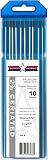 TIG Welding Electrodes 2% Ceriated WC20View on Amazon
- 4
 TIG Welding Tungsten Electrodes 2% Ceriated 1/8" x 7"View on Amazon
When setting up a TIG torch on the bench for a clean weld, choosing ceriated vs lanthanated tungsten comes down to your operating amperage and metal mix. Lanthanated tungsten is the practical all-around electrode for most fab shops because it holds a stable arc from low current up through heavy amperage on both DC steel and AC aluminum. Ceriated tungsten specializes in low amperage DC welding on thin sheet metal and delicate tubing, where its low arc ignition voltage prevents blow-through, but it experiences faster tip erosion under heavy continuous heat. This guide compares their arc characteristics, current capacity, and shop uses step by step.
Other welders and gear to compare
 YESWELDER TIG Welding Tungsten Electrode 2% Ceriated 10-pkCheck price on Amazon
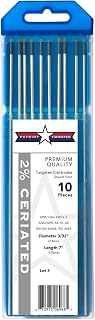 TIG Welding Electrodes 2% Ceriated WC20Check price on Amazon
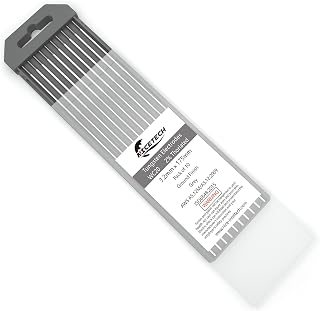 TIG Welding Tungsten Electrodes 2% Ceriated 1/8" x 7"Check price on Amazon
This guide links to our product roundups, where WeldGearLab gets a commission on purchases made through links on this page, and your price stays the same. Read our affiliate disclosure.
The difference in one paragraph
TIG welding relies on a non-consumable tungsten electrode to carry current and maintain a stable arc into the weld puddle. Pure tungsten has a relatively high electron work function, so manufacturers blend in rare earth oxide additives to improve electron emission and ease arc starting. Ceriated tungsten contains cerium oxide (classified as WC20 under ISO standards and EWCe-2 under AWS), which initiates an arc smoothly at low current settings but tends to lose oxide content at the tip during prolonged high-heat runs. Lanthanated tungsten contains lanthanum oxide (classified as WL20 under ISO standards and EWLa-2 under AWS), which provides dependable arc starts while maintaining its ground taper across both direct current and alternating current at higher amperages. Lanthanated serves as a versatile shop workhorse, while ceriated remains a dedicated choice for low-amperage precision work.
Ceriated vs lanthanated tungsten side by side
| 2% Ceriated (WC20 / Gray) | 2% Lanthanated (WL20 / Blue) | Verdict | |
|---|---|---|---|
| Standard classification | WC20 (ISO) / EWCe-2 (AWS) | WL20 (ISO) / EWLa-2 (AWS) | Both standardized internationally |
| Color code | Gray (ISO) or Orange (AWS) | Blue (2% lanthanated) | Blue is consistent; ceriated varies |
| Oxide additive | Cerium oxide | Lanthanum oxide | Both non-radioactive rare earths |
| Primary shop application | Low amperage DC on thin sheet | All-around DC and AC fabrication | Lanthanated is much more versatile |
| Arc ignition at low current | Exceptional, low starting voltage | Excellent, crisp arc starts | Both provide dependable low-current arc starts |
| Point retention at high heat | Oxide migration erodes taper faster | Holds ground taper under sustained heat | Lanthanated lasts longer between regrinds |
| AC welding on aluminum | Suitable for low to moderate amperage | Excellent across low and high current | Lanthanated handles heavy AC cycling better |
| DC welding on steel and stainless | Crisp arc on thin sheet and tubing | Strong performance on thin sheet and plate | Lanthanated covers both light sheet and heavy plate |
| Radioactivity | Non-radioactive | Non-radioactive | Both eliminate thorium radiation risks |
| Standard pack quantity | 10-pack | 10-pack | Both commonly sold in 10-packs |
Electrode performance depends on proper preparation, shielding gas flow, and current type. Always grind your tungsten longitudinally toward the tip, and match your electrode diameter to your welding amperage to prevent arc wandering or premature tip degradation.
When ceriated tungsten is the better choice
- Low amperage direct current. Thin gauge sheet metal, delicate brackets, and small repair joints where you need dependable arc ignition at minimal starting amperage.
- Precision sheet metal and instrument work. The low starting voltage helps avoid blowing through delicate edges before the puddle forms.
- Orbital tube and sanitary pipe. Ceriated electrodes perform reliably in automated or manual low-current pipe welding where maintaining a consistent low-amp arc cone is critical.
- Non-radioactive alternative to red tungsten on low heat. Replaces thoriated tungsten for delicate DC jobs without any radiation hazard during grinding or handling.
For fine bench work with thin filler wire, see our guide on what color tungsten for steel to match your electrode color to your metal thickness.
When lanthanated tungsten is the better choice
- All-around shop fabrication. Handles low current on thin sheet while carrying heavy current on structural steel plate, making it the practical universal pick for the torch.
- Alternating current aluminum welding. Resists thermal shock on AC inverter machines, maintaining a stable arc without spitting tungsten into the molten aluminum puddle.
- High amperage direct current. Retains its ground taper under sustained heavy current on carbon steel, stainless steel, and chromoly without excessive tip erosion.
- Longer point longevity between regrinds. The lanthanum oxide resists rapid migration, reducing torch downtime and electrode sharpening during extended fabrication jobs.
To pair your torch with the right machine, check our guide to the best TIG welder for aluminum and our review of the best TIG gas lens kit for improved shielding gas coverage.
How to identify each tungsten electrode
Color coding and packaging markings help welders identify electrode types quickly. Under international ISO 6848 standards, 2% ceriated tungsten is designated with a gray band (WC20), although the American Welding Society standard AWS A5.12M/A5.12:2009 historically designated orange for EWCe-2. Most commercial imports sold in the United States use the gray color code. Standard 2% lanthanated tungsten consistently uses a blue band (WL20 under ISO and EWLa-2 under AWS). Electrodes are packaged in plastic cases or protective sleeves to shield the precision-ground finish from mechanical damage and shop contaminants during storage.
Listing specifications publish exact dimensions, package quantities, and oxide fractions. For example, YESWELDER lists its 3/32 inch by 7 inch gray WC20 electrodes with a stated composition of 1.80% to 2.20% cerium and a minimum of 97.30% tungsten, conforming to standard AWS A5.12M/A5.12:2009. ARCCAPTAIN supplies 1/16 inch (1.6 mm) by 7 inch (175 mm) ceriated electrodes in a 10-pack adhering to DIN EN 26848 and AWS standards. For fine bench work, Midwest Tungsten Service lists 0.040 inch and 1/16 inch ceriated electrodes in a 10-pack. In heavier sizes, NICETECH offers 1/8 inch by 7 inch electrodes in a 10-pack, carrying the standard class description that cerium electrodes suit low-current work even on thicker electrode diameters. In its listing data, MELTSTAR claims that its 3/32 inch by 7 inch cerium tungsten electrodes provide 5% to 8% higher allowable current density than red thoriated tungsten on positive polarity, though shop fabricators predominantly weld steel using negative polarity.
Arc performance on alternating and direct current
Understanding how these electrodes behave under different welding currents explains why lanthanated tungsten has become the primary shop standard. On direct current electrode negative (DCEN), which is standard for carbon steel, chromoly, and stainless steel, both electrodes start reliably with high frequency or lift arc ignition. At low current settings, ceriated tungsten produces a concentrated, stable arc cone that provides excellent control over small weld puddles on thin metal. When welding current increases for thicker joints, heat accumulates at the electrode tip. Over extended runs at elevated current, cerium oxide tends to migrate toward the hot tip and dissipate, which can cause the taper to erode or alter the arc cone.
Lanthanated tungsten tolerates high heat more effectively because lanthanum oxide remains more evenly distributed throughout the tungsten matrix during heavy duty cycles. On DCEN, it holds a sharp ground point through long welding passes, maintaining a narrow, focused arc column. On alternating current (AC) for aluminum or magnesium fabrication, modern inverter TIG machines alternate between electrode negative (penetration) and electrode positive (cleaning). Ceriated tungsten can weld aluminum on AC at low to moderate amperages, particularly when the balance is adjusted toward electrode negative. However, as AC amperage and cleaning duration increase, ceriated tips erode more quickly. Lanthanated tungsten handles AC cycling across a wider amperage range without spitting tungsten into the weld pool, maintaining a stable, slightly rounded tip on squarewave inverter arcs. For detailed aluminum machine setup tips, review our guide to what color tungsten for aluminum.
Can one tungsten electrode do all your shop work?
Yes. For most fabricators, hobbyists, and repair shops, 2% lanthanated tungsten is the practical answer because it covers both DC steel and AC aluminum without swapping electrodes. If your work involves thin sheet or precision DC repairs, keeping a 10-pack of 2% ceriated electrodes on hand gives you clean low-amperage arc starts without risking contamination from radioactive thoriated rods. See our guide to the lanthanated vs thoriated tungsten comparison and our picks for the best entry level TIG welder.
Tungsten grinding and shop safety. Grinding tungsten creates fine airborne dust. Even though neither ceriated nor lanthanated tungsten contains radioactive thorium, inhaling metallic dust from any grinding operation irritates the lungs. Always dedicate a specific grinding wheel or an enclosed tungsten sharpener for your electrodes, grind longitudinally along the taper rather than across it, and wear appropriate respiratory protection. See our respirator requirements for welding guide for shop safety standards, and check our tutorial on how to sharpen tungsten for TIG welding before striking an arc.
FAQ for welders
Can I weld aluminum with ceriated tungsten?
Ceriated tungsten can be used on alternating current for aluminum welding, particularly on modern squarewave inverter machines at low to moderate amperage. When welding thicker aluminum at higher amperage or with increased cleaning action, ceriated tips erode and degrade faster. Lanthanated tungsten handles alternating current significantly better across higher current levels without spitting into the weld pool.
What color is ceriated tungsten compared to lanthanated?
Under international ISO 6848 standards and common shop usage, 2% ceriated tungsten is marked with a gray color code on the tip or packaging, though AWS A5.12 historically designated orange. Standard 2% lanthanated tungsten consistently uses a blue band across both American and international standards. Both color markings allow welders to quickly identify electrode types in the shop without confusing their alloys.
Is ceriated tungsten radioactive?
No. Ceriated tungsten contains cerium oxide, which is a rare earth element that is completely non-radioactive. It was developed specifically as a safe replacement for red 2% thoriated tungsten, eliminating the airborne radiation hazards associated with grinding thorium alloys.
Why does ceriated tungsten experience tip erosion at high amperage?
At elevated operating temperatures, the cerium oxide inside the electrode migrates toward the hot tip and gradually evaporates. This oxide depletion leaves pure tungsten at the point, which overheats and alters the shape of the arc cone. Lanthanated tungsten retains its oxide distribution and point stability much better under sustained heavy current.
Can lanthanated tungsten replace ceriated tungsten completely?
For the vast majority of welding applications, yes. Lanthanated tungsten matches ceriated tungsten on dependable arc ignition while offering superior durability and current carrying capacity across medium and high amperages. Unless your shop exclusively fabricates thin gauge sheet metal or micro-tubing on direct current, lanthanated tungsten can serve as your single shop electrode.
Related: lanthanated vs thoriated tungsten, best TIG gas lens kit, what color tungsten for steel, what color tungsten for aluminum, and the welding consumables hub. Also see our guide to the best TIG torch.