Brazing Rod Types: Choosing the Right Filler Metal
Brazing rod types are filler metals matched to the base metal: phosphorus copper for copper pipe, brass for brass and steel, and aluminum rods for aluminum repairs.

On this page
Top picks at a glance
As an Amazon Associate I earn from qualifying purchases.
- 1
 CADHENA Brass Brazing Rods, 50 Pack Brazing Rod9.7/10View on Amazon
- 2
 CADHENA Copper Solder, 20 BCuP-2 Copper Brazing9.6/10View on Amazon
- 3
 Bernzomatic® Aluminum Brazing and Welding Rods9.5/10View on Amazon
A copper pipe joint that needs sealing, a brass fitting that has cracked, an aluminum gutter with a split seam: each job calls for a filler metal that melts, flows and bonds without melting the base metal, and that is what brazing rod types are. Brazing rods are filler metals matched to the metal being joined, and this guide explains the types in the listings below: phosphorus copper for copper, brass for brass and steel, and aluminum rods for aluminum.
This guide links to our product roundups, where WeldGearLab gets a commission on purchases made through links on this page, and your price stays the same. Read our affiliate disclosure.
CADHENA Brass Brazing Rods, 50 Pack Brazing Rod
A 50 pack of 1.6 mm brass brazing rods, 11.8 inches long, with a stated HS221 alloy mix and a solidus of 1634 F for gas brazing brass, copper and steel.
Pros
- 50 rods, more than 49 feet of filler in one pack
- Stated alloy mix: Cu 59-61%, Si 0.15-0.35%, Sn 0.8-1.2%
- Solidus 1634 F and liquidus 1661 F stated, with 130 N/mm² tensile strength
- Suits brass, copper, copper alloys, carbon steel and carbide-tipped tools
Cons
- Needs a compatible flux when required
- No warranty term is stated
- Not intended for TIG or argon arc welding
- Only 1.6 mm diameter, so no thicker rod in the pack
CADHENA Copper Solder, 20 BCuP-2 Copper Brazing
A 20 pack of self-fluxing phosphorus copper brazing rods, 1.6 mm by 13.78 inches, for copper pipe, refrigeration and HVAC torch brazing.
Pros
- Self-fluxing phosphorus copper, no flux needed on copper
- 20 rods at 1.6 mm by 13.78 inches
- Brazing range of 1310 to 1508 F stated
- Packed in a PVC tube that keeps rods dry
Cons
- Silver flux should be used when brazing copper alloys
- No warranty term is stated
- Stated for copper and copper alloys, not steel or aluminum
- 20 rods, fewer than the 50 rod brass pack
Bernzomatic® Aluminum Brazing and Welding Rods
Two 12 inch aluminum brazing rods with a working temperature of 720 to 750 F, for repairing aluminum windows, doors, gutters and siding.
Pros
- Low working temperature of 720 to 750 F
- Two 12 inch rods for small aluminum repairs
- Brinell hardness of 100 stated
- Made in United States
Cons
- Only 2 rods in the pack
- For aluminum only, not copper, brass or steel
- No warranty term is stated
- 12 inch rods suit small repairs, not long joints
Brazing Rod Types: The Short Answer
Match the rod to the base metal. Phosphorus copper rods are self-fluxing and suit copper pipe, refrigeration and HVAC work. Brass rods suit brass, copper, copper alloys, carbon steel and carbide-tipped tools, and they use a compatible flux when required. Aluminum rods suit aluminum repairs such as windows, doors, gutters and siding, and they work at a lower temperature than the other rods here. The sections below give the figures for each rod, and the gear section shows the rods side by side.
Side by side
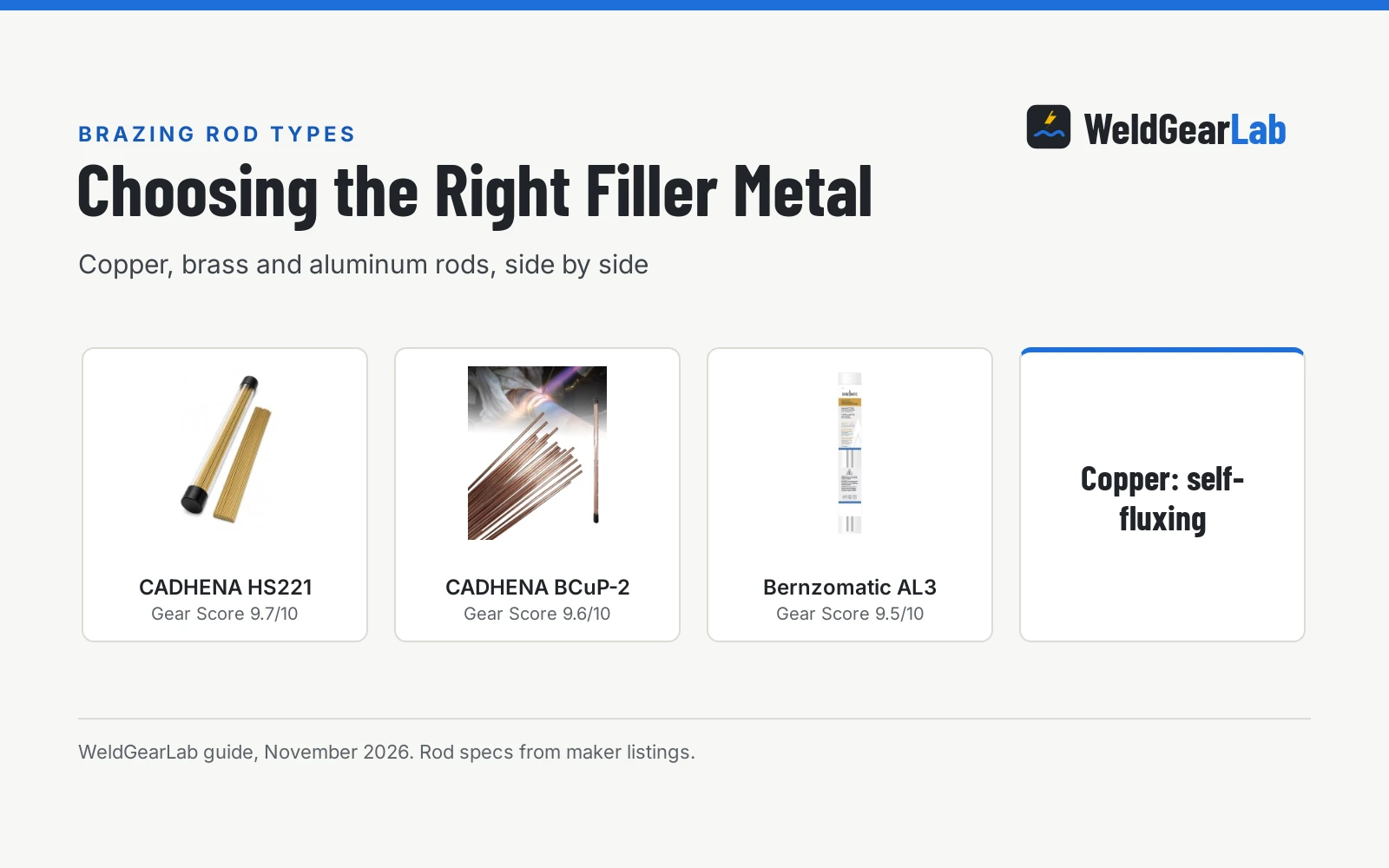
| CADHENA BCuP-2 | CADHENA HS221 | Bernzomatic AL3 | |
|---|---|---|---|
| Base metal | Copper and copper alloys | Brass, copper, steel | Aluminum |
| Pack | 20 rods | 50 rods | 2 rods |
| Diameter | 1.6 mm | 1.6 mm | Not stated |
| Length | 13.78 in | 11.8 in (300 mm) | 12 in |
| Temperature range | 1310 to 1508 F | 1634 to 1661 F | 720 to 750 F |
| Flux | Self-fluxing | Compatible flux when required | Not stated |
| Alloy | Phosphorus copper, P 7% | HS221 brass, Cu 59-61% | Not stated |
Read the table by base metal first, then by temperature: the rod must melt below the base metal and flow into the joint. Brass rods use a compatible flux when required, and copper alloy joints should use silver flux, so check the flux the job needs before lighting the torch.
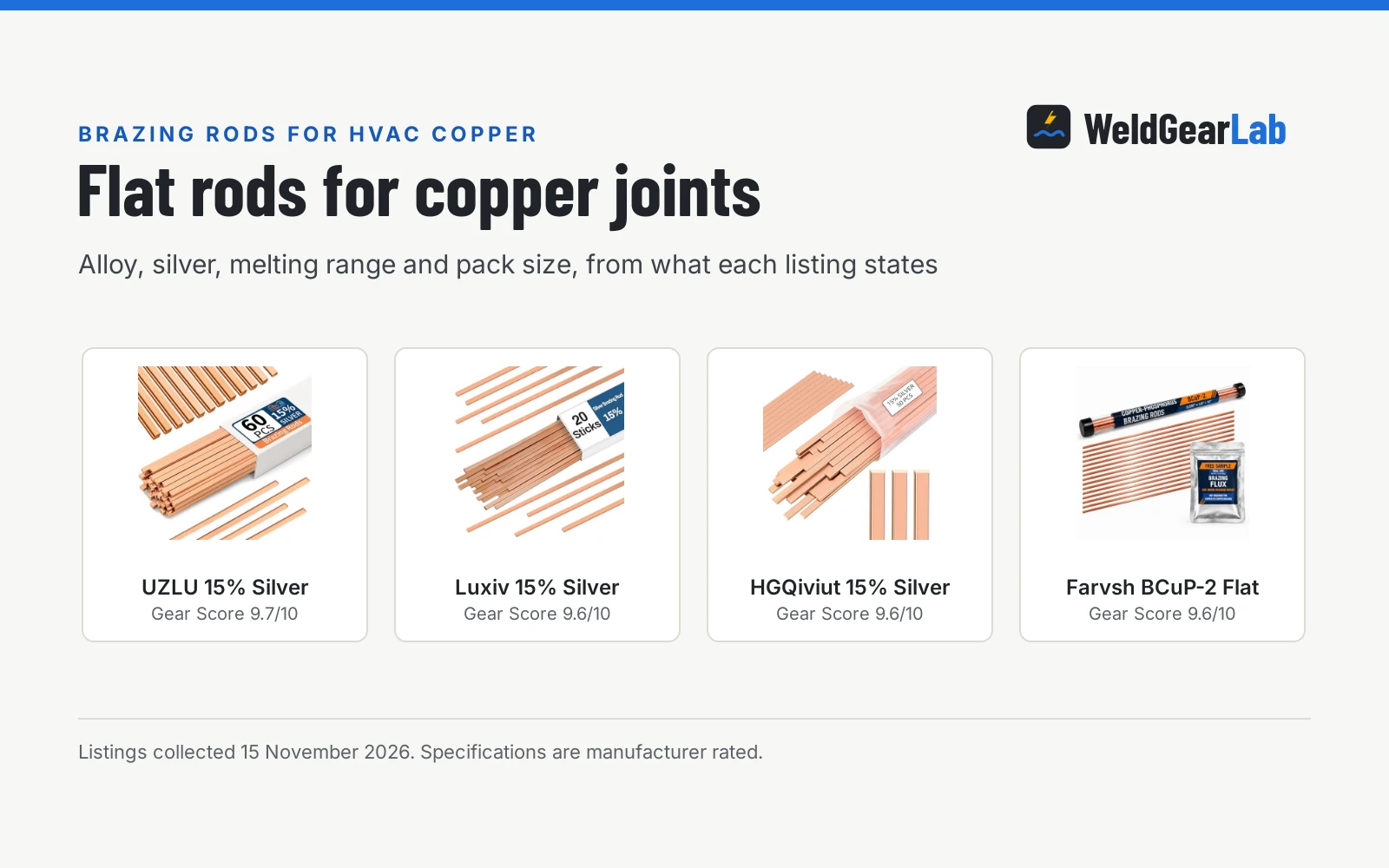
Copper Brazing Rods
Phosphorus copper rods are the copper pipe rod. The CADHENA BCuP-2 rods are self-fluxing, so no separate flux is needed on copper, and the alloy is phosphorus at 7% with copper as the remainder and other elements at 0.15% or less. The pack holds 20 rods, each 1.6 mm in diameter and 13.78 inches long, and the stated brazing temperature range is 1310 to 1508 F. The rods suit copper and copper alloys in motors, copper water pipe and refrigeration work, and the maker notes that silver flux should be used when brazing copper alloys. The pack comes in a PVC tube, which keeps the rods dry and easy to carry.
Brass Brazing Rods
Brass rods are the general shop rod. The CADHENA HS221 pack holds 50 rods, each 1.6 mm in diameter and 11.8 inches long, which the maker gives as 300 mm and more than 49 feet of rod in total. The alloy is HS221 brass: copper at 59 to 61%, silicon at 0.15 to 0.35%, tin at 0.8 to 1.2%, lead at 105 mg/kg and zinc as the remainder. The solidus is 1634 F, which the maker gives as 890 C, and the liquidus is 1661 F, given as 905 C, with a tensile strength of 130 N/mm², a hardness of HB 100 and an elongation of 25%. The rods are made for gas brazing of brass, copper, copper alloys, carbon steel and carbide-tipped tools, and the maker says to use a compatible flux when required. They are not intended for TIG or argon arc welding, so keep them on the torch. Work outdoors or in a well-ventilated area.
Aluminum Brazing Rods
Aluminum rods work at a lower heat than copper or brass rods. The Bernzomatic AL3 rods are two 12 inch rods for repairing aluminum windows, doors, gutters and siding, with a working temperature of 720 to 750 F. The maker states a Brinell hardness of 100, and the package weight is 0.4 pounds. The rods are made in the United States.
Brazing Rod Types for Common Jobs
The rods below cover the jobs in this guide: the copper rods for pipe and HVAC, the brass rods for mixed shop metal, and the aluminum rods for aluminum repairs.
How to Choose the Right Brazing Rod
Start from the base metal, because the rod must match it: phosphorus copper for copper, brass for brass and steel, aluminum for aluminum. Then check the diameter and the length: the copper and brass rods here are 1.6 mm in diameter, and the aluminum rods are 12 inches long. Check the working temperature against the torch and the joint, and check whether the job needs flux: the copper rods are self-fluxing on copper, the brass rods use a compatible flux when required, and copper alloy joints should use silver flux. Keep the work area clear of anything flammable, work outdoors or in a well-ventilated area, and wear eye protection and gloves. Hot metal and filler stay hot after the flame is out, so let the joint cool before handling it.
For more options, see our welding consumables guides.
FAQ for welders
What brazing rod do I use for copper pipe?
Use a phosphorus copper rod such as the BCuP-2 rods here: they are self-fluxing on copper, they come in 20 rod packs at 1.6 mm by 13.78 inches, and their brazing range is 1310 to 1508 F. Use silver flux when brazing copper alloys.
Do brass brazing rods need flux?
Only when required. The HS221 brass rods here use a compatible flux when the job requires it, and the maker says to heat the base metal evenly and use a compatible flux when required. The rods suit brass, copper, copper alloys, carbon steel and carbide-tipped tools.
Can I use brazing rods with a TIG welder?
No, not the brass rods here: the maker states that these copper-zinc rods are not intended for TIG or argon arc welding. Use them with a gas torch for brazing.
What temperature do brazing rods melt at?
It depends on the rod: the copper rods braze at 1310 to 1508 F, the brass rods have a solidus of 1634 F and a liquidus of 1661 F, and the aluminum rods work at 720 to 750 F. Match the rod to the base metal first, then check the temperature.
How many brazing rods come in a pack?
The copper pack holds 20 rods, the brass pack holds 50 rods, and the aluminum pack holds 2 rods. The brass pack gives more than 49 feet of rod in total.
Related: welding rod types, best brazing rods for copper pipe, best low temp brazing rod, best brazing rods for beginners and best brazing rods for home shop. Also see our flux coated vs bare brazing rod, low temperature brazing rods and best brazing rod for stainless.