Best Brazing Rods for Aluminum (2026): 5 Rods for Torch Brazing
Best brazing rods for aluminum: 5 rods compared on working temp, count and flux design, from 728°F no-flux to flux-cored bulk packs.

On this page
Top picks at a glance
As an Amazon Associate I earn from qualifying purchases.
- 1
 Best OverallSimple Welding Rods 30-Pack9.6/10View on Amazon
- 2
 Best Value PackYEJJET 100-Pack Brazing Rods9.6/10View on Amazon
- 3
 Best Warrantyguangfan 100-Pc Brazing Rods9.6/10View on Amazon
- 4
 Best USA MadeAlumaloy 20-Rod Pack9.5/10View on Amazon
Cracked aluminum is the kind of repair that makes you wish for a TIG welder, but a brazing rod and a propane torch can handle plenty of it. The best brazing rods for aluminum let you join aluminum without melting the base metal, working at temperatures far below welding. The five options below, ranked by their listings, cover 20 to 100 rods, working temps from 716°F to 1202°F, and flux-cored versus no-flux designs.
WeldGearLab gets a commission on purchases made through links on this page, and your price stays the same. Read our affiliate disclosure.
Spec sheet comparison
Quick picks
- Best Overall Simple Welding Rods 30-Pack: 728°F working temp, 39,000 psi tensile, multi-metal capability, USA made, 30 rods. Check price on Amazon
- Best Value Pack YEJJET 100-Pack Brazing Rods: 100 flux-cored rods at 1/16 inch, 716-788°F working range, no extra flux needed. Check price on Amazon
- Best Warranty guangfan 100-Pc Brazing Rods: 100 pieces with a stated 90-day return or replacement promise. Check price on Amazon
- Best USA Made Alumaloy 20-Rod Pack: 728°F, 39,000 psi tensile, USA made with no lead, tin or cadmium. Check price on Amazon
Other welders and gear to compare
 Bernzomatic® Aluminum Brazing and Welding RodsCheck price on Amazon
 50 rods Aluminum Brazing Rod 1/16 For Propane TorchCheck price on Amazon
 100 Rods Aluminum Brazing Rod NO NEED Flux 1/13Check price on Amazon
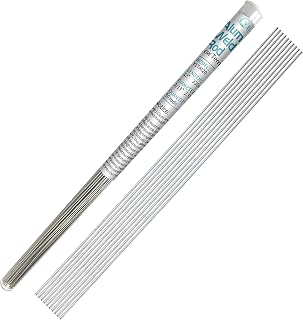 30 Rods Aluminum Brazing Rod NO NEED Flux 1/13Check price on Amazon
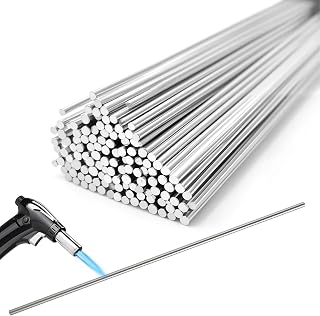 30Pcs Aluminum Welding Rods 2/32"x13" Low TemperatureCheck price on Amazon
The machines
| Rod | Count | Working Temp | Flux | Best For |
|---|---|---|---|---|
| Simple Welding Rods 30-Pack | 30 rods | 728°F | Not required | Multi-metal repairs |
| YEJJET 100-Pack Brazing Rods | 100 rods | 716-788°F | Flux core included | High-volume aluminum |
| guangfan 100-Pc Brazing Rods | 100 pieces | 1112-1202°F | Flux-cored | Warranty-backed bulk |
| Alumaloy 20-Rod Pack | 20 rods | 728°F | Not required | USA-made occasional use |
| cupstart 55-Pc Brazing Rods | 55 pieces | Not stated | Flux-cored | Mid-size flux-cored pack |
22 October 2026
| Product | Gear Score | Perf. /35 | Build /25 | Value /25 | Safety /10 | Warranty /5 |
|---|---|---|---|---|---|---|
| guangfan 100-Pc Brazing Rods | 9.6 | 26 | 19 | 21 | n/a | 3 |
| Simple Welding Rods 30-Pack | 9.6 | 33 | 21 | 20 | n/a | 0 |
| YEJJET 100-Pack Brazing Rods | 9.6 | 30 | 20 | 22 | n/a | 0 |
| Alumaloy 20-Rod Pack | 9.5 | 30 | 20 | 18 | n/a | 0 |
| cupstart 55-Pc Brazing Rods | 9.5 | 28 | 19 | 19 | n/a | 0 |
Displayed scores fall between 9.2 and 9.8: the weighted point total is mapped onto that band in a straight line, so earning more points always lifts the score. Unpowered items with no stated safety features skip the safety line, and their score comes from the 90 points that are left.
Buying guide: best brazing rods for aluminum
Working temperature
Lower is better for thin aluminum. The listings here range from 716°F to 1202°F. The 728°F class (Simple Welding Rods, Alumaloy) and the 716-788°F YEJJET work with less heat input. The guangfan at 1112-1202°F needs more care on thin sections. Match the temp to your torch: propane works for the lower-temp rods, while the higher-temp rods may want MAPP or oxyacetylene.
Flux: cored vs none needed
Three designs here. The Simple Welding Rods and Alumaloy need no flux at all, per their listings. The YEJJET, guangfan and cupstart are flux-cored, with the flux inside the rod. No-flux rods simplify the process; flux-cored rods include the flux so you do not buy it separately. Either way, clean the base metal before brazing.
Rod count and size
Counts run 20 to 100. The 100-packs (YEJJET, guangfan) suit frequent repairs; the 20-rod Alumaloy suits occasional fixes. Sizes are 1/16 inch or 0.08 inch, both for small, precise work. Thicker rods are not listed here.
Multi-metal vs aluminum-only
The Simple Welding Rods listing claims aluminum, brass, copper, bronze and more. The others are aluminum-only per their listings. If you repair mixed non-ferrous metals, the multi-metal rod covers more jobs; if you only do aluminum, the aluminum-only rods are fine.
Understanding working temperature
The working temperature is the temperature at which the rod melts and flows. The listings here show two distinct classes: the 716-788°F group (Simple Welding Rods at 728°F, Alumaloy at 728°F, YEJJET at 716-788°F) and the 1112-1202°F guangfan. The lower-temp rods work with less heat input. The higher-temp guangfan needs more heat, which suits thicker sections but demands more skill on thin material. If you are new to brazing, the lower-temp rods are more forgiving.
Rod diameter and joint size
The listings state 1/16 inch (YEJJET, guangfan) and 0.08 inch (cupstart). The Simple Welding Rods and Alumaloy listings do not state a diameter. Thinner rods (1/16 inch) suit small, precise joints and thin material; they melt quickly and give fine control. For larger joints or thicker material, you feed more rod, which the 100-count packs support. The diameter does not determine strength; the joint design and proper flow do.
Shelf life and storage
The Alumaloy listing states shelf life is indefinite, which is typical for solid brazing rods. Flux-cored rods (YEJJET, guangfan, cupstart) have flux inside that can absorb moisture over time; store them dry. The Simple Welding Rods listing does not state shelf life. In practice, keep all brazing rods in a dry place, and if a flux-cored rod has been stored in humidity, try it on scrap first.
When brazing is not enough
Brazing joins aluminum at lower temperatures than welding, which is its advantage and its limit. The listings position these rods for repairs: boats, gutters, air conditioning lines, transmission cases, and similar. For structural welds that need full penetration, or for steel (which these rods do not join, per the listings), brazing is the wrong process. The Simple Welding Rods listing is explicit: it does not work on steel except galvanized. Match the process to the job.
Reading the listing: what matters
Not all listings state the same specs. The Simple Welding Rods and Alumaloy listings give working temp (728°F) and tensile strength (39,000 psi). The YEJJET gives temp range (716-788°F) and count (100) but no strength. The guangfan gives temp (1112-1202°F), count (100) and a 90-day return promise but no strength. The cupstart gives count (55) and size (0.08 inch) but no temp or strength. When comparing, weight the stated specs heaviest: a listed temp and strength beats a marketing claim. If a listing does not state a figure, assume nothing.
Propane vs MAPP vs oxyacetylene
The Simple Welding Rods listing names propane, MAPP/Map-Pro and oxyacetylene as compatible torches. Propane is the coolest, suitable for the 728°F rods on small parts. MAPP burns hotter, better for larger parts or the 1112°F guangfan. Oxyacetylene burns hotter still, for thick sections. The listing does not state which torch is required, only that these work. Start with propane on the low-temp rods; step up only if the rod will not flow.
Practice on scrap first
Aluminum conducts heat quickly, which makes brazing different from steel. The listings advise heating the base metal, not the rod, and letting the hot metal melt the rod. Practice on scrap of the same thickness before touching the actual repair. Watch for the base metal to reach temp: the rod should flow when touched to the hot metal, not when heated directly by the flame. If the rod balls up instead of flowing, the base is not hot enough.
Before You Strike an Arc
- Clean the aluminum to bare metal before brazing; the listings stress heating the base metal, not the rod.
- Match your torch to the rod’s working temp: the 728°F rods work with propane, the 1112°F rods may need hotter fuel.
- Flux-cored rods still need clean metal; flux does not replace prep.
FAQ for welders
What temperature do aluminum brazing rods melt at?
Per the listings: 728°F for the Simple Welding Rods and Alumaloy, 716-788°F for the YEJJET, and 1112-1202°F for the guangfan. The cupstart listing states low temp but gives no figure.
Do I need flux with these rods?
The Simple Welding Rods and Alumaloy listings state no flux needed. The YEJJET, guangfan and cupstart are flux-cored, so the flux is in the rod. You do not buy separate flux for any of the five.
Can I braze with a propane torch?
For the lower-temp rods, yes per the listings. The Simple Welding Rods listing names propane, MAPP and oxyacetylene. The higher-temp guangfan at 1112°F may need MAPP or hotter. Match the torch to the rod’s working temp.
How strong are brazed aluminum joints?
The Simple Welding Rods and Alumaloy listings both state 39,000 psi tensile strength. The other three listings state no strength figure. The makers claim repairs stronger than the parent metal, but that is the maker’s claim.
Will these work on steel?
No, per the listings. The Simple Welding Rods listing explicitly states it does not work on steel except galvanized. The others are aluminum-only. For steel, you need a different process.
Related: see our best TIG welder for aluminum guide and welding consumables category.
Scoring, line by line

Aluminum Welding Rods Low Temp Flux-Cored Aluminum
100 flux-cored aluminum brazing rods at 1/16 inch, working range 1112-1202°F, with 90-day return promise.
Pros
- 100 pieces, matching the highest count here
- Flux-cored, no separate flux powder needed
- Stated 90-day return or replacement promise
- 1/16 inch size for small work
Cons
- Working range of 1112-1202°F (600-650°C) is much higher than the 728°F leaders
- 1/16 inch size may be small for larger joints
- Aluminum only, not multi-metal
- No tensile strength stated

Simple Welding Rods USA Made
30 aluminum brazing rods with a 728°F working temperature, 39,000 psi tensile strength, no flux needed, USA made.
Pros
- Lowest working temperature here at 728°F (387°C)
- Stated 39,000 psi tensile strength and 60,000-75,000 psi compression strength
- Works on aluminum, brass, copper, bronze and other non-ferrous metals, not just aluminum
- No flux required; works with propane, MAPP or oxyacetylene torches
Cons
- 30 rods in the pack
- No warranty term is stated
- Does not work on steel except galvanized, per the listing
- No rod diameter stated in the listing

100 Rods Aluminum Brazing Rod NO Need Flux 1/16
100 flux-cored aluminum brazing rods at 1/16 inch, working range 716-788°F, no extra flux needed.
Pros
- 100 rods, the highest count here, for extended work
- Low working range of 716-788°F (380-420°C) per the listing
- Flux core included, eliminating separate flux purchase
- 1/16 inch size suits small, precise repairs
Cons
- Aluminum and alloys only, not the multi-metal range of the leader
- No warranty term is stated
- 1/16 inch may be small for larger joints
- Listing does not state tensile strength

20 Rods-USA Made-As Seen on TV
20 USA-made aluminum brazing rods, 728°F melting point, 39,000 psi tensile, no flux needed.
Pros
- 728°F melting point, matching the lowest temp here
- Stated 39,000 psi tensile strength
- USA made, with no lead, tin or cadmium per the listing
- Repairs aluminum, pot metal and galvanized steel
Cons
- 20 rods is the fewest here
- No warranty term is stated
- Listing refers buyers to an instructional video for use steps
- Listing leans on TV marketing language

55pcs Aluminum Brazing Rods Low Temp Flux-Cored
55 flux-cored aluminum brazing rods at 0.08 inch, low temp, no flux required, for aluminum only.
Pros
- 55 pieces, a mid-range count
- Flux-cored with salt-based coating, no extra flux needed
- Low temperature formulation per the listing
- 0.08 inch size for all-position work
Cons
- Aluminum only, not multi-metal
- No warranty term is stated
- No working temperature figure stated
- No tensile strength stated