Best Brazing Flux: 4 Picks for Copper, Brass and Iron
Four brazing fluxes for the home shop, paste, powder and jar types, compared by size, stated temperature range, listed metals and warranty.

On this page
Top picks at a glance
As an Amazon Associate I earn from qualifying purchases.
- 1
 Best OverallHARRIS SSBF59.7/10View on Amazon
- 2
 Best WarrantyFORNEY 372509.6/10View on Amazon
- 3
 Best for IronPETERSON #1 BLUE9.6/10View on Amazon
- 4
 Paste PickFIRE ROSE SSWF79.4/10View on Amazon
The copper joint on the bench needs brazing, not welding: the fit-up is good, the torch is ready, and the only thing between a clean joint and a cold one is the flux. Pick the wrong flux and the filler balls up instead of flowing; pick the right one and the joint wets out in a single pass. The best brazing flux is the one whose temperature range covers your torch work and whose form, paste or powder, matches how you like to apply it. We compared four fluxes by container size, flux form, stated temperature range, listed metals and warranty term, using only what each listing publishes. The Forney states a warranty term; none of the four states a safety certification.
WeldGearLab gets a commission on purchases made through links on this page, and your price stays the same. Read our affiliate disclosure.
Quick picks
- Best Overall HARRIS SSBF5: 5 lb jar, 1050-1800F range stated, Made in USA Check price on Amazon
- Best Warranty FORNEY 37250: 90-day warranty stated, 8 oz tub for copper and brass Check price on Amazon
- Best for Iron PETERSON #1 BLUE: AWS FB3-F, 1200-1600F, for cast iron and steel Check price on Amazon
- Paste Pick FIRE ROSE SSWF7: White paste, 6.7 oz; listing shows no application data Check price on Amazon
The machines
HARRIS SSBF5 Stay Silv Brazing Flux, 5 lb. Jar
A 5 lb jar of Harris Stay Silv black brazing flux with a stated active range of 1050 to 1800F, made in the USA for shops that braze often and want the biggest container here.
Pros
- Stated active range of 1050 to 1800F, the widest temperature span in this group by a clear margin
- 5 lb jar suits a shop that brazes weekly; you will not reorder for a long time
- Made in USA stated on the listing, which matters to buyers who prefer domestic consumables
- Black flux form in a 5 lb jar
Cons
- No warranty term is stated anywhere on the listing
- No application or metals list is stated beyond the words brazing flux
- Black flux hides the joint while white paste lets you watch the puddle form
Forney 37250 Brazing Flux
An 8 oz tub of Forney multi-purpose brazing flux for copper, brass and bronze with a stated 90-day warranty against manufacturer defects.
Pros
- 90-day warranty against manufacturer defects is stated
- Lists copper, brass and bronze as the intended metals, so you know it fits the job
- 8 oz tub applies with a brush or spatula per the listing, simple for beginners
- Unscented formula stated in the spec table, nicer for indoor shop use
Cons
- No temperature range numbers are stated anywhere on the listing
- 8 oz is the smallest full-size container in this group for regular work
- No safety certification is stated on the listing
Peterson #1 Blue Flux, Coarse Powder
A 1 lb can of Peterson #1 Blue coarse-powder flux with AWS classification FB3-F, stated for cast and malleable iron and steel plus brass, bronze and copper torch work.
Pros
- AWS brazing classification FB3-F is stated
- Working temperature stated as 1200-1600F and 650-870C, in both units
- Lists cast and malleable iron and steel, plus brass, bronze and copper
- Coarse powder form, stated as coarser than Peterson #1 fine
Cons
- No warranty term is stated anywhere on the listing
- Powder form needs steady hand application; paste is simpler for beginners
- 1 lb can is smaller than the 5 lb Harris jar for heavy shop use
- No safety certification beyond the AWS classification is stated
GSParts Harris Stay-Silv Silver White Brazing Flux
A 6.7 oz white brazing flux paste sold by FIRE ROSE under the Harris Stay-Silv SSWF7 name, for high-temperature work per the title, with no application data in the bullets.
Pros
- White paste form shows the joint better than black flux while learning
- 6.7 oz size suits occasional brazing without a big commitment
- Title states high-temperature silver brazing use
- Compact 3.5 x 1.85 x 1.77 in package per the spec table
Cons
- Bullets carry no application data, only page formatting code
- No temperature numbers are stated anywhere on the listing
- No warranty term is stated on the listing
- Third-party seller using the Harris Stay-Silv name; verify authenticity
Other welders and gear to compare
 Harris SSBF1 Stay Silv Brazing FluxCheck price on Amazon
 Weldcote Metals Anti-Borax Brazing Flux 1Lb. Brand: WeldcoteCheck price on Amazon
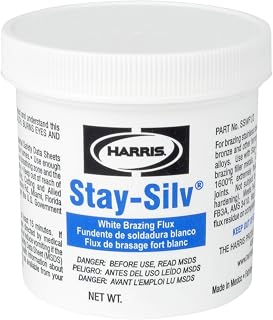 Harris SSWF7 Stay Silv Brazing FluxCheck price on Amazon
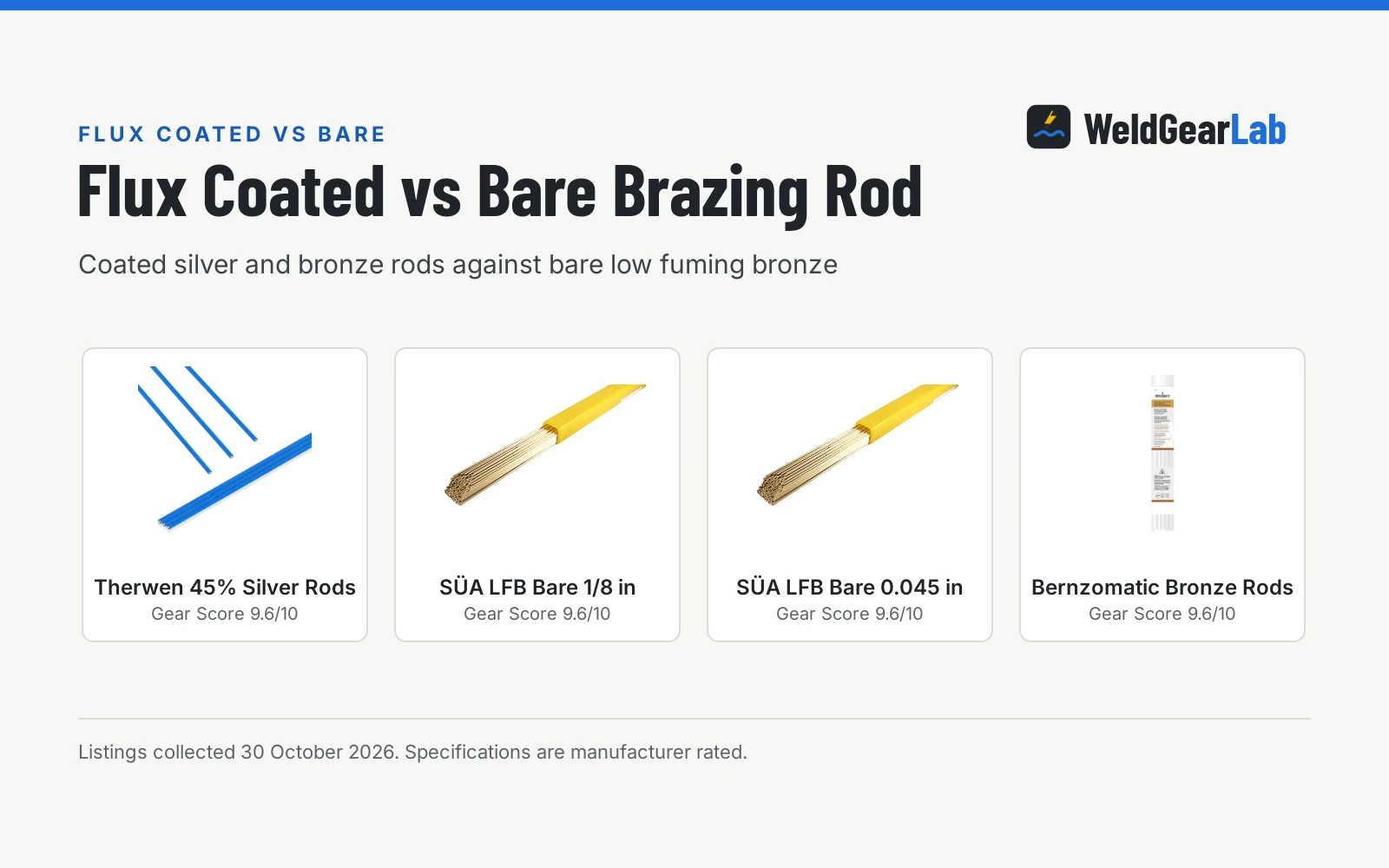
 Bernzomatic® Bronze Flux-Coated Brazing and Welding RodsCheck price on Amazon
 Aluminum Welding Rods Low Temp Flux-Cored Aluminum BrazingCheck price on Amazon
 100 Rods Aluminum Brazing Rod NO Need Flux 1/16Check price on Amazon
Spec sheet comparison
| Flux | Gear Score | Size | Form | Temp range | Metals | Warranty |
|---|---|---|---|---|---|---|
| HARRIS SSBF5 | 9.7/10 | 5 lb jar | Black flux | 1050-1800F | Not stated | Not stated |
| FORNEY 37250 | 9.6/10 | 8 oz tub | Paste | Not stated | Copper, brass, bronze | 90 days |
| PETERSON #1 BLUE | 9.6/10 | 1 lb can | Coarse powder | 1200-1600F | Iron, steel, brass, bronze, copper | Not stated |
| FIRE ROSE SSWF7 | 9.4/10 | 6.7 oz | White paste | Not stated | Not stated | Not stated |
All specs here repeat what the maker rates and the listing prints, copied down 22 October 2026. The Forney states a warranty term; none of the four states a safety certification.
How to choose the best brazing flux
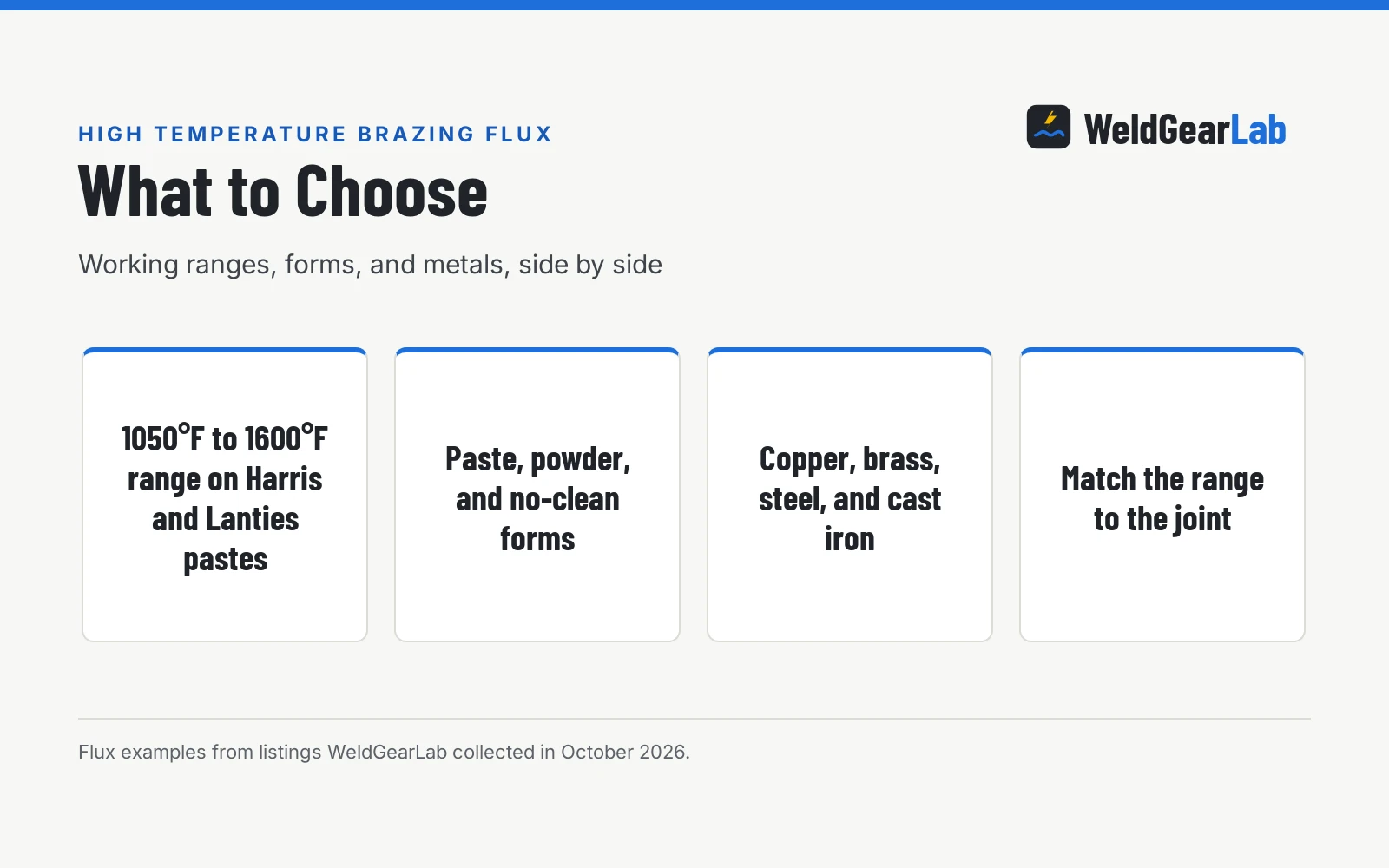
Match the temperature range to the torch
Two listings state numbers. The Harris SSBF5 states an active range of 1050 to 1800F, and the Peterson #1 Blue states a working temperature of 1200-1600F (650-870C). The Forney and FIRE ROSE state no temperature numbers, only general high-temperature wording. Brazing happens below the melting point of the base metal but above the flow point of the filler, so the flux must stay active across your working range; a stated range lets you confirm that before buying. If your work is silver brazing at the high end, the Harris 1800F top end is the highest stated here. A flux that quits below your torch temperature leaves oxides in the joint, which is the classic cause of a joint that looks fine and fails under load. Our brazing torch vs cutting torch guide covers the heat side of the setup.
Paste, powder or jar flux
Form decides how the flux gets onto the joint. The Forney comes as a paste in an 8 oz tub for brush or spatula application, and the FIRE ROSE is a white paste in a 6.7 oz package. The Peterson is a coarse powder in a 1 lb can, coarser than the Peterson #1 fine per its listing. The Harris is a black flux in a 5 lb jar. Paste is the simplest for beginners: brush it on and go. Powder needs a steady hand and consistent coverage; dip the heated rod or sprinkle it on the joint, and keep the can sealed between uses so it stays dry. Black flux hides the joint while white paste lets you watch it; pick white when you are learning to read the puddle. Flux is a consumable, so buy the form you will actually use up rather than the biggest jar on the shelf.
Check the metals list
Two listings name their metals. The Forney names copper, brass and bronze. The Peterson names cast and malleable iron and steel for brazing and welding, plus brass, bronze and copper for torch welding, with AWS classification FB3-F. The Harris and FIRE ROSE name no metals. An AWS classification like FB3-F tells you the flux meets a published brazing standard for those metals; we report it as the maker’s claim. If your job is cast iron repair on the farm, the Peterson’s explicit iron listing matters more than any general claim. Cast iron is finicky: it needs the right flux and a gentle preheat, and a flux rated for it saves a cracked repair. For copper pipe work, see our best brazing rods for copper pipe picks to pair rods with flux.
Size the container to the workload
Sizes run from 6.7 oz to 5 lb. The Harris 5 lb jar suits a shop that brazes weekly; flux keeps, but an open jar still needs a lid and dry storage. The Peterson 1 lb can is a middle ground for regular farm repairs. The Forney 8 oz tub and the FIRE ROSE 6.7 oz paste suit occasional joints without committing to pounds of flux. Watch the spec tables: the Harris table lists 1 lb against the 5 lb jar title, and the Forney table lists 1.6 oz against the 8 oz tub; we trust the titles. Buy for the next year of work, not the next decade, and remember that an open container slowly picks up moisture every time the lid comes off.
Warranty and what it covers
The Forney states a warranty: 90 days against manufacturer defects. The other three state no warranty term, which is normal for a consumable; flux is used up, not worn out. A warranty on flux covers defects in the product as sold, not bad joints, so read the terms before counting on it. At these sizes the warranty is a tiebreaker, not a reason to buy. Keep the receipt and the lot number until the container is empty.
Storage and shelf life
Flux lasts when it stays dry and sealed. The Harris 5 lb jar and the Peterson 1 lb can both need their lids on between jobs; powder clumps in humidity and paste skins over in air. The Forney tub and the FIRE ROSE paste want the same treatment on a smaller scale. None of the listings states a shelf life, so buy for the work ahead, not the decade. If a jar has sat open for years and the flux looks off, replace it; fresh flux is cheap insurance against a failed joint that has to be redone.
Before You Strike an Arc
- Confirm the temperature range covers your filler metal: Harris states 1050-1800F, Peterson states 1200-1600F; the other two state no numbers.
- Check the metals: Forney lists copper, brass and bronze; Peterson lists iron, steel, brass, bronze and copper with AWS FB3-F.
- Pick the form you will use: paste for brush application, coarse powder if you already braze with powder.
- On arrival, check the seal and the stated weight: the Harris and Forney spec tables disagree with their titles on weight, so weigh the jar if it matters.
- Store flux sealed and dry; an open 5 lb jar lasts longer with the lid on between jobs.
FAQ for welders
What temperature range do I need for brazing flux?
It must stay active across your working range, from the moment the joint reaches brazing heat until the filler has flowed. The Harris states 1050 to 1800F and the Peterson states 1200-1600F (650-870C). The Forney and FIRE ROSE state no temperature numbers, so you cannot confirm the match before buying.
Which flux here lists an AWS classification?
The Peterson #1 Blue states AWS brazing classification FB3-F. None of the other three states a classification.
Is paste or powder flux better for beginners?
Paste is simpler: the Forney 8 oz tub applies with a brush or spatula, and the FIRE ROSE is a white paste. The Peterson coarse powder needs consistent application by hand.
Which of these has a warranty?
The Forney states a 90-day warranty against manufacturer defects. The Harris, Peterson and FIRE ROSE listings state no warranty term.
How much flux should I buy?
Match the container to the workload: 5 lb for a busy shop, 1 lb for regular repairs, 8 oz or 6.7 oz for occasional joints. Flux is a consumable, so buy what you will use within the year; an open container that sits for years picks up moisture and works less well.
Related: our best brazing rods for beginners, the best brazing rods for home shop picks, brazing rods vs welding rods and the welding consumables hub.
Scoring, line by line
The Gear Score weighs performance (stated temperature range, metals listed and container size), build (flux form and stated quality), value for the stated specs, safety and warranty. For brazing flux, safety means a stated safety standard on the listing; none of the four states one, so safety scores zero across the group. The Forney states a warranty term of 90 days. How we pick explains the weights.
| Product | Gear Score | Perf. /35 | Build /25 | Value /25 | Safety /10 | Warranty /5 |
|---|---|---|---|---|---|---|
| HARRIS SSBF5 | 9.7 | 32 | 21 | 21 | n/a | 0 |
| FORNEY 37250 | 9.6 | 27 | 20 | 20 | n/a | 2 |
| PETERSON #1 BLUE | 9.6 | 29 | 21 | 20 | n/a | 0 |
| FIRE ROSE SSWF7 | 9.4 | 24 | 19 | 19 | n/a | 0 |
A pick’s weighted total decides where it lands between a 9.2 floor and a 9.8 ceiling, and a bigger total never produces a smaller number. Safety is only scored for powered machines or when a listing names safety features; otherwise it drops out and the score is worked from the other 90 points.