High Temperature Brazing Flux: What to Choose
High temperature brazing flux cleans the joint, shields it from air, and helps filler flow, and the right pick depends on the metal, the working range, and the form.

On this page
Top picks at a glance
As an Amazon Associate I earn from qualifying purchases.
- 1
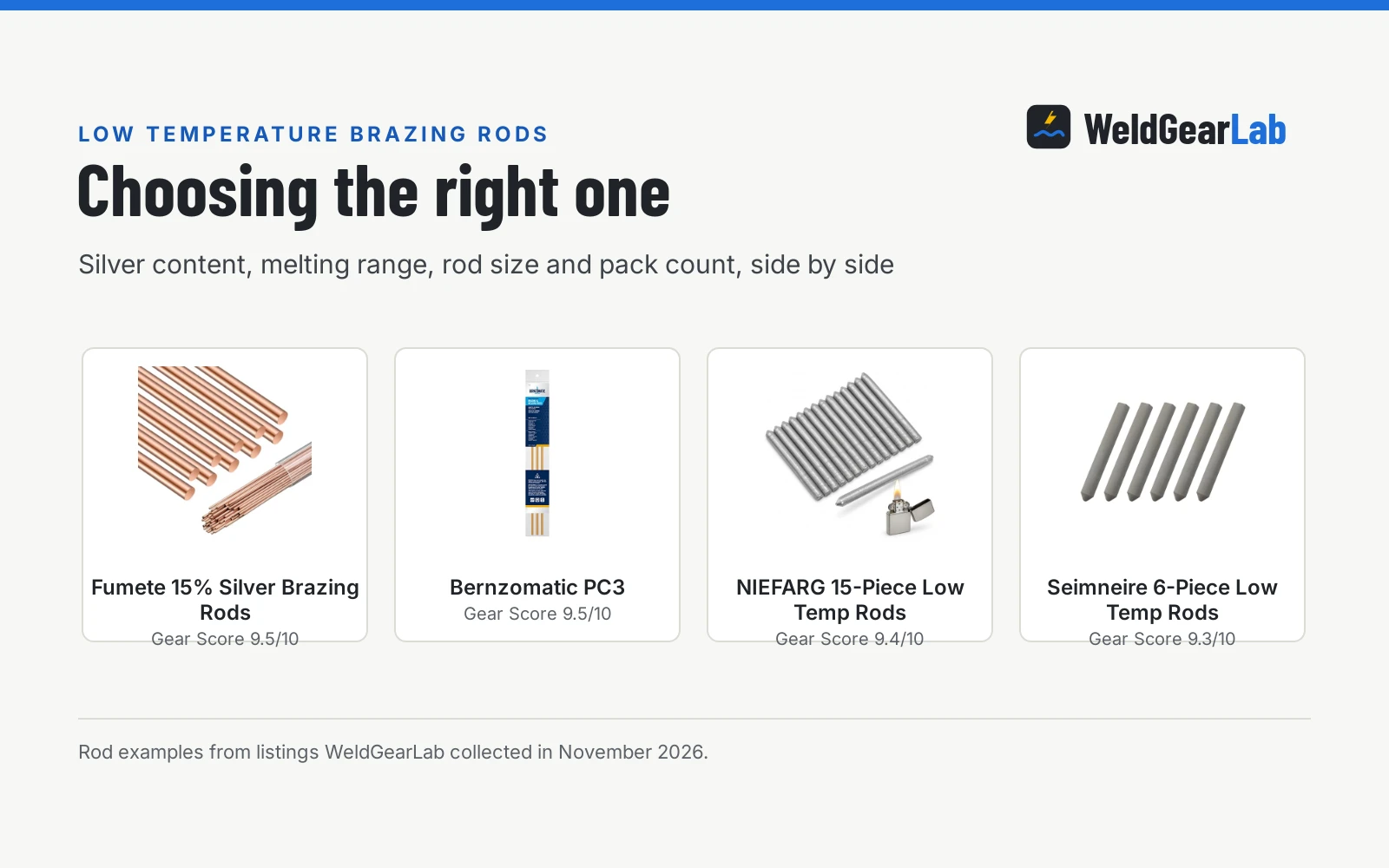
 15 PCS Low Temperature Welding Rods9.4/10View on Amazon
- 2
 Fumete 20 Sticks 15% Silver Brazing Rods9.5/10View on Amazon
- 3
 Bernzomatic PC3 Copper-Phosphorous Brazing/Welding Rods9.5/10View on Amazon
A copper joint that will not wet, a brass fitting that keeps oxidizing, a steel repair that needs filler to flow: that is the job high temperature brazing flux exists for. Flux cleans the metal as it heats, shields the joint from air, and lets filler wet the surface and flow into the gap.
This guide links to our product roundups, where WeldGearLab gets a commission on purchases made through links on this page, and your price stays the same. Read our affiliate disclosure.
What high temperature brazing flux does
Clean metal oxidizes the moment it gets hot, and oxide stops filler from wetting the joint. Flux works while the joint is at heat: it dissolves oxide, keeps air off the clean metal, and lets molten filler spread and pull into the gap. Without flux on an oxidized joint, filler beads up and sits on top of the joint instead of bonding to it.
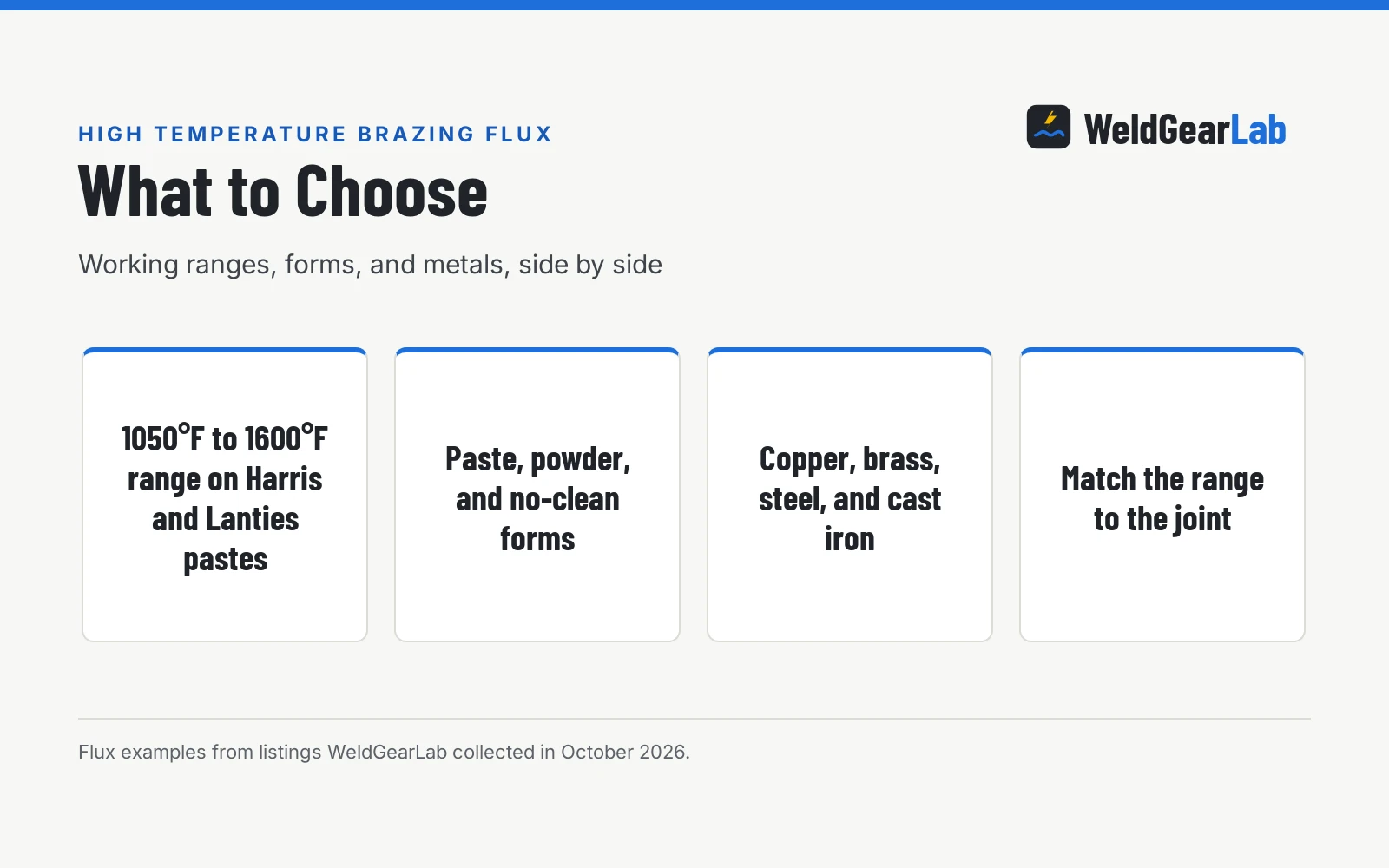
Maker descriptions show the same idea in different words. Lanties describes flux that cleans metal surfaces during heating, prevents oxidation, and keeps silver solder flowing for stronger, cleaner joints. MegaCast lists oxide removal starting at 600°F, with heat resistance up to 1600°F. Harris Stay Silv white paste lists an active range of 1050°F to 1600°F, the window where the flux stays live.
Paste, powder, and no-clean: the forms
Paste is the most common form here. Harris Stay Silv white paste comes in a 6.5 oz bottle, Lanties silver solder paste flux in a 14 oz container, RectorSeal Nokorode paste flux (on Amazon) in a 1.7 oz container, La-Co copper flux paste (on Amazon) in a 4 oz container with a brush in the cap, Harris Stay Silv black paste in a 1 lb jar, and MegaCast Handy Flux paste (on Amazon) in a 1 lb jar. Paste spreads with a brush and stays where it is put. Nokorode includes an acid brush under the lid, and La-Co builds the brush into the cap.
Powder is the other classic form. Hot Max Brazing Flux Powder comes in an 8 oz container and is used for flame brazing with an oxy-acetylene torch or an electric carbon arc torch. Powder suits a shop that brazes often.
No-clean paste suits electronics and small repair work. MG Chemicals 8341 No Clean Flux Paste comes in a 10 mL pneumatic dispenser, complete with plunger and dispensing tip, and its rosin residue is non corrosive, non conducting, and moisture resistant. Essmetuin No Clean Soldering Flux Paste comes in a 10cc bottle with a pushing-type design for smooth flow, and states no need to clean after using. These are no-clean soldering fluxes for electronics, SMD, SMT, and handwork, so save them for the low heat jobs they are made for. See the best brazing flux roundup for the brazing side of the shelf.
Side by side
| Flux | Form | Working range | Metals | Size |
|---|---|---|---|---|
| Harris SSWF7 Stay Silv | White paste | 1050°F to 1600°F | Not stated | 6.5 oz |
| Lanties Silver Solder Paste | White paste | 1050°F to 1600°F | Copper, brass | 14 oz |
| Hot Max 24000 | Powder | 1400°F to 2200°F | Steel, cast iron, brass, bronze | 8 oz |
| MegaCast Handy Flux | Paste | Up to 1600°F | Gold, silver, copper, brass, steel | 1 lb |
| RectorSeal Nokorode 14000 | Paste | Not stated | Copper, brass, tin, zinc, nickel | 1.7 oz |
Ranges are maker stated; MegaCast states heat resistance, not an active range. Sizes are container sizes.
Match the working range to the job
Flux has to stay active until the filler flows. Harris Stay Silv white paste and Lanties list the same active range, 1050°F to 1600°F. Lanties pairs that range with copper and brass; Harris states no metal list for the white paste. MegaCast states heat resistance up to 1600°F rather than an active range, with oxide removal starting at 600°F, for jewelry fabrication and fine metalwork.
Hot Max lists a higher active range, 1400°F to 2200°F (760°C to 1205°C), for flame brazing steel, malleable and cast iron, galvanized metals, brass, and bronze. That range suits heavier work. Pick a flux whose stated range covers the heat the joint will see: a flux that burns off before the filler flows leaves oxide behind, and the joint will not wet.
Match the flux to the metal
Copper and brass are the home ground for silver brazing flux. Lanties lists copper, brass, and other common metals. Harris Stay Silv white paste lists the same 1050°F to 1600°F active range with no metal list stated, so check the filler and the joint against the range. For copper pipe specifically, see the best brazing flux for copper pipe guide.
Steel and cast iron are the Hot Max powder’s ground: it lists steel, malleable and cast iron, galvanized metals, brass, and bronze, and meets AWS A5.31-91 Type FB3J standards as well as MIL-F-16136B, Types A and B standards. MegaCast lists gold, silver, brass, copper, and steel, with a thick paste made for detailed work such as ring resizing and chain repair.
Know what a flux is not for. RectorSeal Nokorode states it is not for use on stainless steel, aluminum, or magnesium, and not for electronic use. Nokorode is a soft soldering paste flux for 95/5 and other common solders, made for copper, brass, tin, zinc, nickel, and sheet lead. La-Co copper flux paste is also a plumbing flux: water soluble, lead free, non-acid, non-toxic, with no zinc chloride, meeting ASTM B813 and ANSI/NSF Std. 61. Harris Stay Silv black paste lists zinc chloride, ethylene glycol, and ammonium chloride, while La-Co states its paste contains no zinc chloride. Match the chemistry to the metal, and do not use a plumbing flux where the joint needs brazing heat.
How to apply it
Start with a clean, close fitting joint. Clean the metal until it is bright, fit the parts so the gap is tight, and then apply a thin, even coat of flux on the joint faces. Paste goes on with a brush. Powder goes on by dusting the joint or by dipping a heated filler rod. Keep the coat thin: a heavy coat leaves more residue to deal with after the joint cools.
Heat the joint, not the flux. Play the flame around the joint until the flux goes active and the metal reaches brazing heat, then feed the filler at the edge of the joint and let it pull in. See the best propane torch for brazing guide. Let the joint cool before moving it, then deal with the residue. La-Co paste is water soluble and leaves no residue in water piping. MegaCast residue rinses away with hot water. MG Chemicals 8341 (on Amazon) and Essmetuin are no-clean, so their residue stays put by design. For other fluxes, brush or rinse the joint clean after it cools.
Fumes, fire, and ventilation
Brazing makes fumes, and the metal in the joint decides how much that matters. Galvanized metal gives off zinc oxide fumes when heated, so keep the work outdoors or under strong ventilation, keep your head out of the plume, and wear a respirator rated for the fumes. Hot Max powder lists galvanized metals among its uses, so this warning applies directly to that flux. Fluxes that list zinc chloride, such as Harris Stay Silv black paste, deserve the same respect: ventilate and wash up after handling. Fire is the other half of the picture: clear dry grass, rags, solvents, and anything flammable from the area before striking the torch, keep a fire extinguisher within reach. Hot flux residue can spit when the joint is chipped or brushed while still hot, so wear eye protection and gloves that suit hot metal.
FAQ for welders
What temperature does high temperature brazing flux work at?
It depends on the flux. Harris Stay Silv white paste and Lanties list an active range of 1050°F to 1600°F. Hot Max powder lists 1400°F to 2200°F. MegaCast lists heat resistance up to 1600°F, with oxide removal starting at 600°F.
Can I use plumbing flux for brazing?
Plumbing flux is made for soft soldering, not brazing. RectorSeal Nokorode is a soft soldering paste flux for 95/5 and other common solders, and La-Co copper flux paste is a plumbing flux that meets ASTM B813. Use a brazing flux with a stated active range that covers the joint temperature, such as Harris Stay Silv white paste.
Do I have to clean flux off after brazing?
It depends on the flux. La-Co paste is water soluble and leaves no residue in water piping, and MegaCast residue rinses away with hot water. MG Chemicals 8341 and Essmetuin are no-clean, so their residue stays put by design. For other fluxes, brush or rinse the joint clean after it cools.
What is the difference between white and black Stay Silv flux?
White and black are two Harris Stay Silv brazing flux pastes with different chemistry. The white SSWF7 comes in a 6.5 oz bottle and lists an active range of 1050°F to 1600°F. The black SSBF1 comes in a 1 lb jar and lists zinc chloride, ethylene glycol, and ammonium chloride as its material type. No active range is stated for the black paste.
Can brazing flux be used on stainless steel?
Not every flux suits stainless steel. RectorSeal Nokorode states it is not for use on stainless steel, aluminum, or magnesium, and not for electronic use. Other fluxes in this guide state their own metal lists, so check the flux for the metal before brazing.
Related: best brazing flux, best brazing flux for copper pipe, best brazing rods for copper pipe, and the welding consumables hub. Also see how to choose a MIG welder and best flux core welder.