What Type of Respirator Does Not Use Cartridges: Powered Air and Supplied Air Explained
A powered air purifying respirator and a supplied air respirator move filtered or supplied air to the face without a cartridge on the facepiece, while a cartridge respirator relies on cartridges mounted on the mask.

On this page
Top picks at a glance
As an Amazon Associate I earn from qualifying purchases.
- 1
 MSA 815366 Advantage GME P100 Multi-Gas Chemical and9.6/10View on Amazon
- 2
 3M Replacement Cartridges for Multi-purpose Respirator9.3/10View on Amazon
- 3
 3M Respirator Cartridge 60069.6/10View on Amazon
Grinding a weld smooth throws dust across the bench, and a mask that pulls hard with every breath slows the work down. The short answer to what type of respirator does not use cartridges is a powered air purifying respirator, often called a PAPR, and a supplied air respirator, which brings air in from a remote source. Neither mounts a cartridge on the facepiece, and the rest of this guide shows how each type moves air, where the filter sits, and how to tell them apart in a listing.
This guide links to our product roundups, where WeldGearLab gets a commission on purchases made through links on this page, and your price stays the same. Read our affiliate disclosure.
What type of respirator does not use cartridges
A powered air purifying respirator uses a battery powered blower to pull air through a filter and push clean air to the facepiece. A supplied air respirator brings air through a hose from a remote source, so the facepiece carries no filter and no cartridge. A cartridge respirator works the other way: the wearer draws air through cartridges mounted on the facepiece with each breath, and the cartridges do the filtering at the face. That difference in where the air comes from is the whole point of the question, and it decides what to look for in a listing.
In a shop, these types suit long grinding sessions and dusty cutting, where a tight mask gets hot and hard to breathe through. Positive pressure from a blower keeps air moving across the face, which helps with fogging and stuffiness on long jobs.
Side by side
| Powered air purifying respirator | Supplied air respirator | Cartridge respirator | |
|---|---|---|---|
| How air reaches the face | A blower moves filtered air to the facepiece | Air is supplied from a remote source through a hose | The wearer pulls air through cartridges by breathing |
| Cartridge on the facepiece | No cartridge on the facepiece | No cartridge on the facepiece | Cartridges mount on the facepiece |
| Filter location | Filter sits with the blower unit | Filtration happens at the supply source | Filter is the cartridge on the mask |
| Power | Battery powered blower | Compressor or cylinder at the source | No power, breathing does the work |
| Face seal | Positive pressure helps keep dust out, and some hoods suit beards and glasses | Positive pressure, with a hood or facepiece | Needs a tight seal on the face |
| Suited for | Welding, grinding and dusty shop work | Work where clean air comes from a remote supply | Short tasks with cartridges rated for the hazard |
| What to check first | Airflow, battery run time and filter type stated by the maker | Hose length, air source and couplings | Cartridge type and fit |
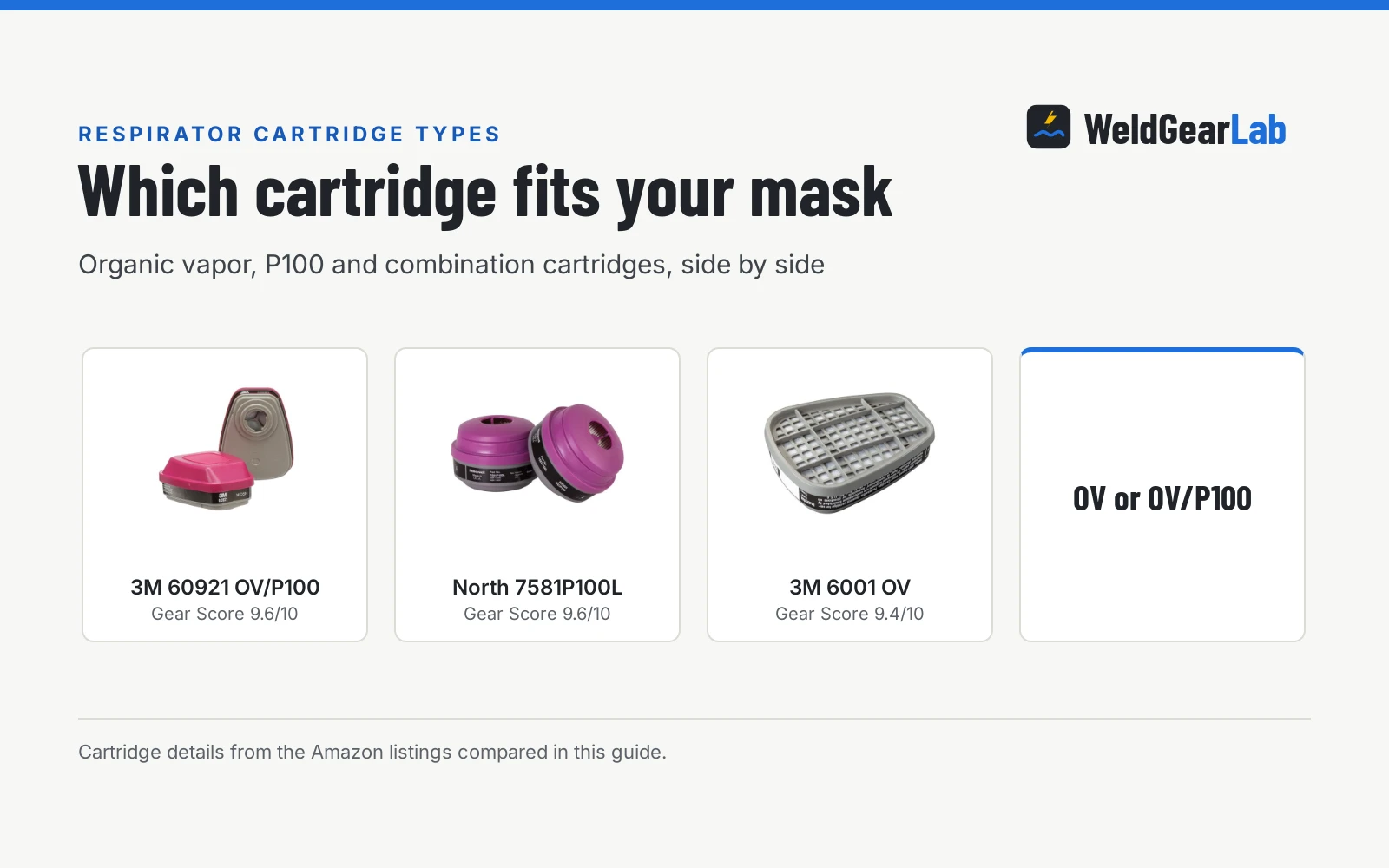
Read the table by air source first, then by power. If the facepiece needs a blower or a hose, it is not a cartridge respirator. The respirator cartridge types for welding fumes guide and the respirator cartridge vs filter guide explain the cartridge side in more detail.
How a powered air purifying respirator works
The blower sits on a belt, in a helmet, or on the facepiece, depending on the unit. On belt-mounted units a hose carries filtered air to the hood or mask, while helmet and face-mounted units build the blower into the headgear with no hose. The filter sits with the blower, so on belt-mounted units the facepiece stays light. A battery powers the blower, and some units add a control to set the airflow.
Every powered air unit filters air at the blower, and a HANUU listing describes three 40mm filter cartridges there, so check where the filter sits and what it is rated for. The facepiece is often a full face mask or a hood with a wide visor. For dusty grinding, see the respirator for grinding metal guide.
How a supplied air respirator works
A supplied air respirator takes air from a remote source and sends it through a hose to a hood or facepiece. There is no blower on the belt and no filter on the facepiece. This type suits work where the air around the bench cannot be cleaned well enough by a filter at the blower.
The hose is the link that matters here. Check its length, its couplings, and how it connects to the air source, and keep the hose clear of hot metal, sharp edges, and grinding sparks. The air source has to deliver clean, breathable air at the pressure and flow the hood calls for. A welding fume extractor vs respirator comparison helps when the choice is between cleaning shop air and bringing clean air to the face.
When a cartridge respirator still fits the job
A cartridge respirator fits short tasks where the hazard is known and the cartridge is rated for it. It needs no battery, no charger, and no hose, so it packs small and suits quick repairs and short grinding passes. The trade is breathing resistance: the wearer pulls every breath through the cartridges. Fit matters more here than with a powered hood, because a gap at the seal lets dusty air past the cartridges.
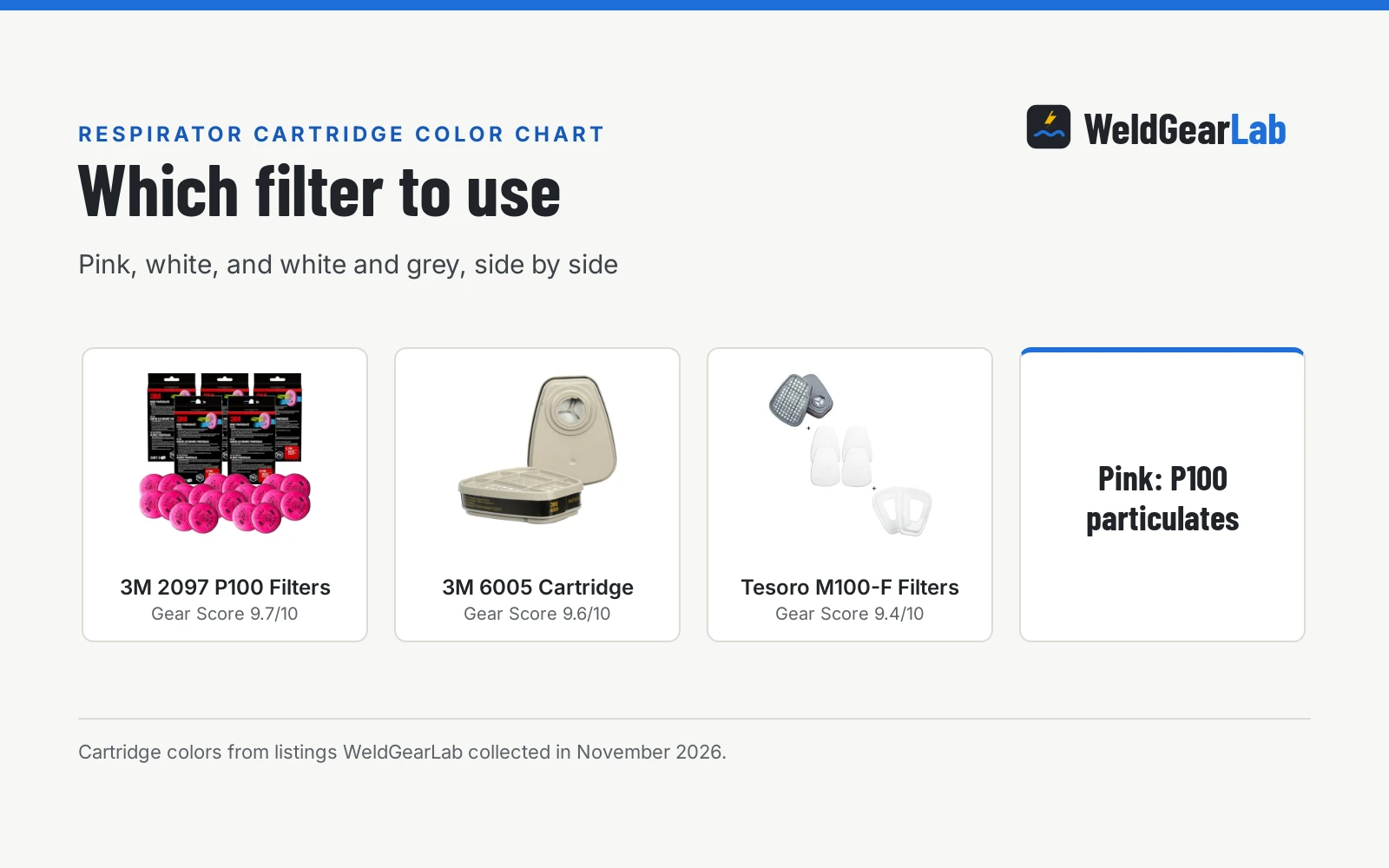
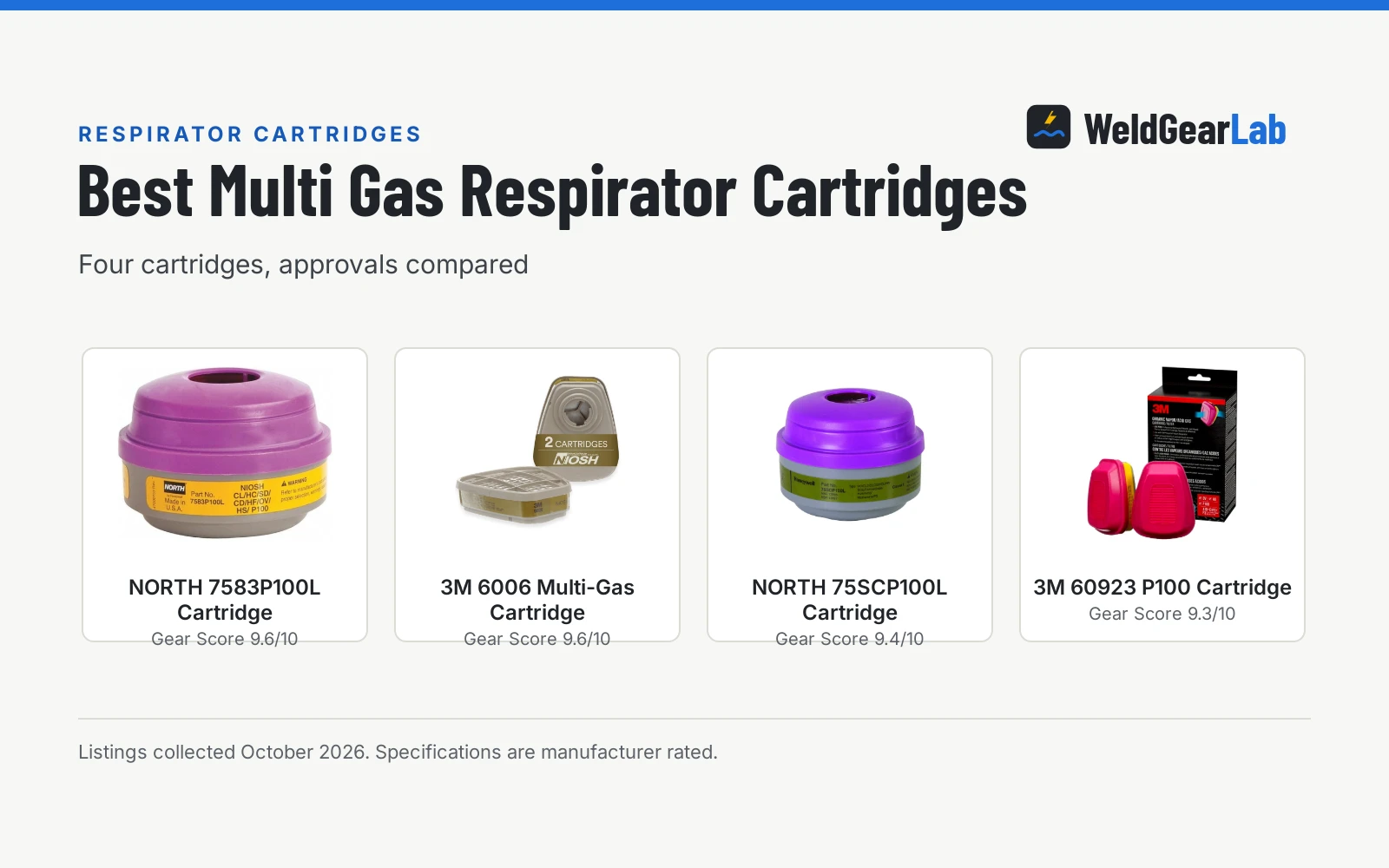
Cartridge choice is a topic of its own, and the wrong cartridge leaves the wearer unprotected even when the mask fits well. The respirator cartridge color chart shows which filter to use for each hazard, and the multi gas respirator cartridges guide covers cartridges for shop air.
How to tell what a respirator uses
Listings mix these types together, so read for the air source first. These checks sort most of them out:
- A blower, a battery, and a hose. A battery powered blower with a hose points to a powered air purifying respirator.
- A filter with the blower. If the filter sits with a blower unit on a belt or in a helmet, the facepiece carries no cartridge.
- Cartridge mounts on the facepiece. Twin round mounts on the mask point to a cartridge respirator.
- A hose to a remote source. A hose that runs to a supply away from the wearer points to a supplied air respirator.
- Stated battery run time. A battery run time stated by the maker belongs to a powered air unit, since a supplied air unit draws from a remote supply.
What the makers state
A HANUU powered air unit states airflow up to 170 L/min from a 12W motor, up to 10 hours of use on a single charge, and a 4.5-hour recharge, with a 59-inch hose and 40mm filters at the blower. A Trend Airshield Pro states twin fine dust filters that filter particulates down to 0.6 microns with 98% efficiency, airflow of 160 L/min at minimum and 200 L/min on a full charge, and at least 8 hours of operation on a full charge. A 3M Versaflo kit states approximately 8-12 hours, a MicroClimate Air3 (on Amazon) states an APF 25 rating and up to 8 hours, and a 3M Powerflow kit states an APF 1000 rating and up to 8 hours of battery service.
Fit and weight vary across the same type. A Trend Airshield Pro states a weight of approximately 2.4 lb and a fit for head sizes from 20-1/2 to 24-1/2 inches. A 3M Versaflo kit states 10.0 pounds for the whole kit, and a 3M Powerflow kit states 1.0 pounds, while the 3M hard hat assembly states 1.5 pounds for the headgear alone.
FAQ for welders
Does a powered air purifying respirator use cartridges?
It mounts no cartridge on the facepiece. The filter sits with the blower unit, and the blower pushes filtered air to the hood or mask. Every powered air unit filters air at the blower, and a HANUU listing describes three 40mm filter cartridges there.
Is a supplied air respirator the same as a powered air purifying respirator?
No. A powered air purifying respirator filters air at the blower and pushes it to the facepiece, while a supplied air respirator brings air through a hose from a remote source. Neither mounts a cartridge on the facepiece, and the difference is whether the air is filtered at the blower or supplied from elsewhere.
Can a powered air respirator suit a welder with a beard or glasses?
Some powered air hoods use positive pressure that does not rely on a tight facial seal, which suits facial hair and eyewear better than a tight fitting cartridge mask. The hood still needs to fit the head, so check the fit range stated by the maker.
How long does a powered air respirator run on a charge?
Run time varies by unit. A HANUU unit states up to 10 hours on a single charge, a MicroClimate Air3 states up to 8 hours, and a 3M Versaflo kit states approximately 8-12 hours. A Trend Airshield Pro states at least 8 hours, and a 3M Powerflow kit states up to 8 hours of battery service.
What to check before buying a respirator without cartridges
Check the stated airflow, the battery run time, the filter type and where it sits, and the hose length against the job. A HANUU unit states a 59-inch hose, which shows how much room the hose gives around the bench. Also check the facepiece fit and the instructions from the maker.
Related: respirator cartridge types for welding fumes, respirator cartridge vs filter, respirator for grinding metal, and the welding safety gear hub.