What Is Anti Spatter Spray: How It Works and When to Use It
Anti spatter spray prevents molten droplets from sticking to MIG gun nozzles and workpiece surfaces, reducing grinding cleanup and protecting shop fabrication setups.

On this page
Top picks at a glance
As an Amazon Associate I earn from qualifying purchases.
- 1
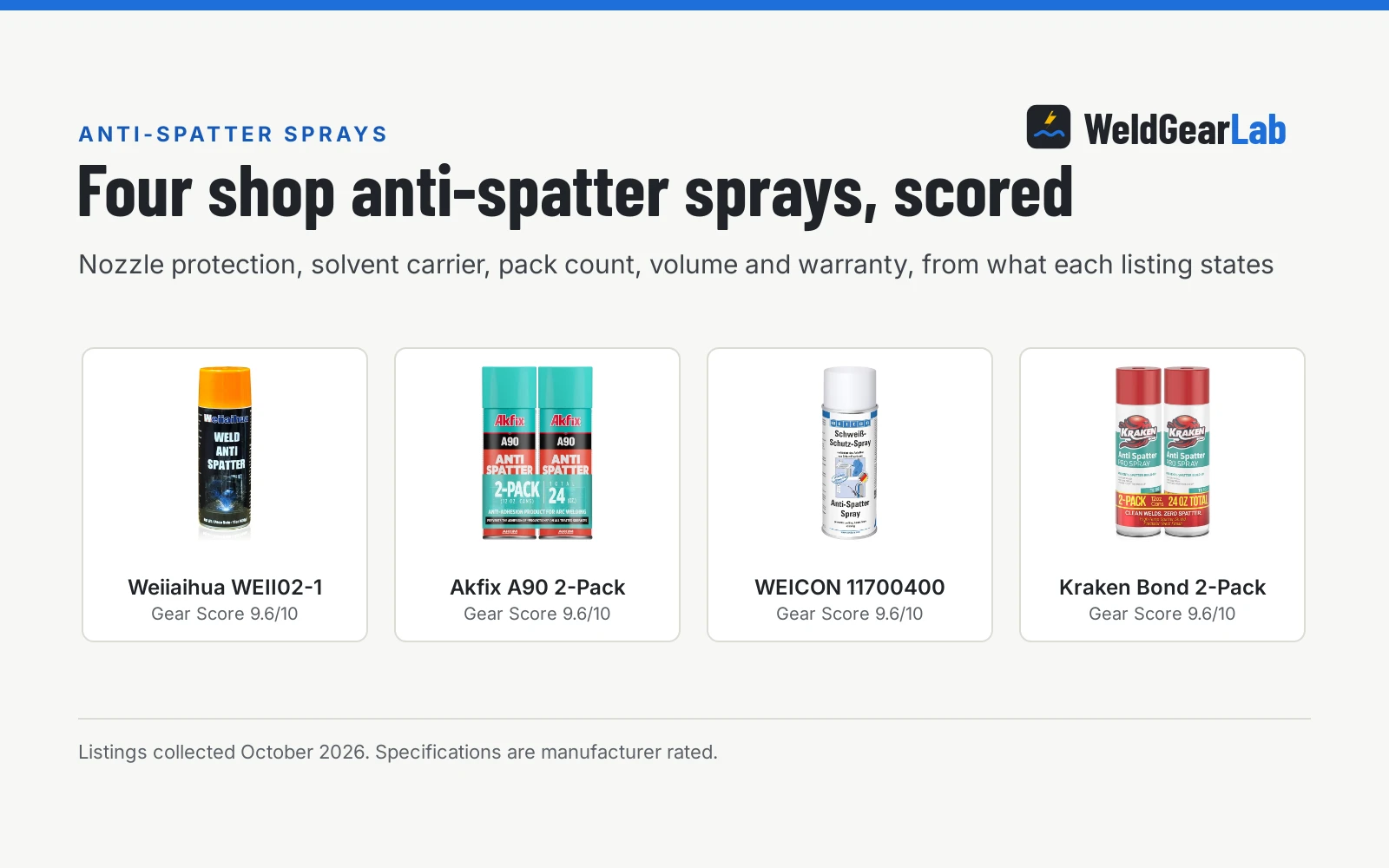
 Anti Spatter Welding Spray for TIG MIG Tip Welding9.6/10View on Amazon
- 2
 Akfix A90 Anti Spatter Welding Spray9.6/10View on Amazon
- 3
 WEICON Anti-Spatter Spray9.6/10View on Amazon
When you finish running a MIG bead on a steel frame or welding bench project, hard little steel bbs often fuse across the workpiece and choke the inside of your gun nozzle. If you wonder what is anti spatter spray, it is a liquid barrier applied to metal surfaces and MIG torch nozzles before welding to keep stray spatter droplets from bonding to the base metal or contact tip. Instead of grinding beads of spatter off your plate or chiseling spatter out of your nozzle shroud, the stray droplets sit loose on the coating and wipe or brush away easily. This guide explains how anti-spatter spray works, how water and solvent formulas differ, and how to apply it cleanly in your shop.
This guide links to our product roundups, where WeldGearLab gets a commission on purchases made through links on this page, and your price stays the same. Read our affiliate disclosure.
What is anti spatter spray and how it works
During wire feed welding, electrical arc forces and turbulent molten puddle movement throw tiny droplets of molten metal away from the joint. These molten droplets, known as spatter, hit nearby cold surfaces and fuse instantly to bare steel plate, table fixtures, and copper torch nozzles. Chipping and grinding those beads off finished work takes time, mars clean metal surfaces, and ruins copper contact tips.
Anti-spatter spray forms a temporary, heat-resistant barrier over the base metal before arc strike. When flying spatter droplets land on the coated surface, the barrier prevents metallurgical adhesion. The droplets freeze against the protective film rather than fusing into the parent metal. After the joint cools, a quick wipe with a shop rag or a light pass with a wire brush knocks the loose bbs away. Adding a can of spray to your welding consumables shelf saves shop time and keeps your equipment running smoothly.
Side by side: spray formulas and nozzle dip
| Water-based spray | Solvent-based spray | Nozzle dip gel | |
|---|---|---|---|
| Primary carrier | Water or plant extract emulsion | Solvent liquid chemical base | Petroleum hydrocarbon or wax paste |
| Protection scope | Workpieces, fixtures, and nozzles | Workpieces, fixtures, and nozzles | Torch nozzles and contact tips only |
| Application timing | Cold metal before arc strike | Cold metal before arc strike | Hot nozzle between welding passes |
| Flammability during application | Non-flammable wet and dry | Flammable wet mist; non-flammable after drying | Non-flammable in standard shop use |
| Drying characteristic | Requires drying time before welding | Rapid flash-off and quick drying | Melts onto hot nozzle without drying wait |
| Pre-paint preparation | Wipes or washes clean with water | Silicone-free allows direct painting; silicone requires degreasing | Not applied to workpiece metal |
| Shop odor | Low odor or mild citrus scent | Solvent vapors require ventilation | Low odor with minimal smoke |
| Silicone content | Typically silicone-free | Available silicone-free or with silicone | Typically silicone-free paste |
Choosing between water-based spray, solvent-based spray, and nozzle dip gel depends on your shop ventilation, your post-weld coating schedule, and whether you need to protect wide workpiece assemblies or just keep torch nozzles clear.
When water-based anti-spatter is the better choice
- Direct painting and coating. Water formulas leave minimal chemical film, making post-weld surface preparation simpler before applying primer, paint, or powder coat.
- Enclosed shop spaces. For indoor work, follow the ventilation directions printed on the product label.
- Bulk shop economy. High-volume fabrication shops often buy bulk liquid rather than aerosol cans. For example, Walter Surface Technologies supplies E-Weld 4 based on natural plant extracts in a 3.78L (1 gallon) container.
- Biodegradable and non-flammable. Water carriers will not ignite around grinding sparks or open arcs, offering calm handling around hot shop benches.
For fabrication in enclosed spaces or applications where you want simple water wash-down before coating, water-based solutions offer an easy-cleaning workflow.
When solvent-based anti-spatter is the better choice
- Fast flash-off time. Solvents evaporate rapidly from cold metal, letting you spray and strike an arc without waiting for moisture to dry.
- Even aerosol coverage. Aerosol delivery produces a light, uniform mist that coats vertical surfaces and complex joint geometries without dripping.
- Proven non-flammable drying. While the wet mist contains flammable carriers during spraying, listings from Akfix, Kraken Bond, and SPRAYMAN confirm their formulas become non-flammable once the solvent evaporates.
- Convenient aerosol packaging. Aerosol cans fit easily on mobile cart shelves. Akfix and Kraken Bond list 12 Oz cans, SPRAYMAN offers 12.3 fluid ounces, and STANLEY provides 8.5 Oz cans.
For fast production welding where you need quick drying on the bench before striking an arc, solvent-based aerosol sprays offer rapid flash-off and quick drying.
How to apply anti-spatter spray step by step
Applying anti-spatter correctly ensures effective protection without creating puddle contamination or weld defects. Follow these practical shop steps:
- Clean the metal surface. Remove loose mill scale, heavy oil, and rust before applying any coating. If joint prep requires grinding, bevel the edges with a tool from our best angle grinder for welding prep guide.
- Shake the aerosol container. Shake the can thoroughly to blend active barrier agents evenly throughout the carrier liquid.
- Spray the workpiece from proper standoff distance. Maintain proper distance so the liquid mists rather than puddles. The STANLEY listing instructs users to spray from 8-10 inches away. The WEICON listing directs welders to spray workpiece surfaces from approximately 25 cm away, covering approximately 10 cm to the right and left of the joint seam.
- Coat the torch nozzle. Lightly coat the inside of the gas nozzle and contact tip to stop spatter buildup. The WEICON listing recommends spraying welding nozzles from approximately 15 cm.
- Allow the carrier to evaporate. Never strike an arc into pooling wet liquid. Let solvent flash off or let water carriers dry before pulling the gun trigger.
- Clear loose spatter after welding. After the joint cools, sweep stray bbs away with a wire brush or shop rag.
Anti-spatter spray vs nozzle dip gel
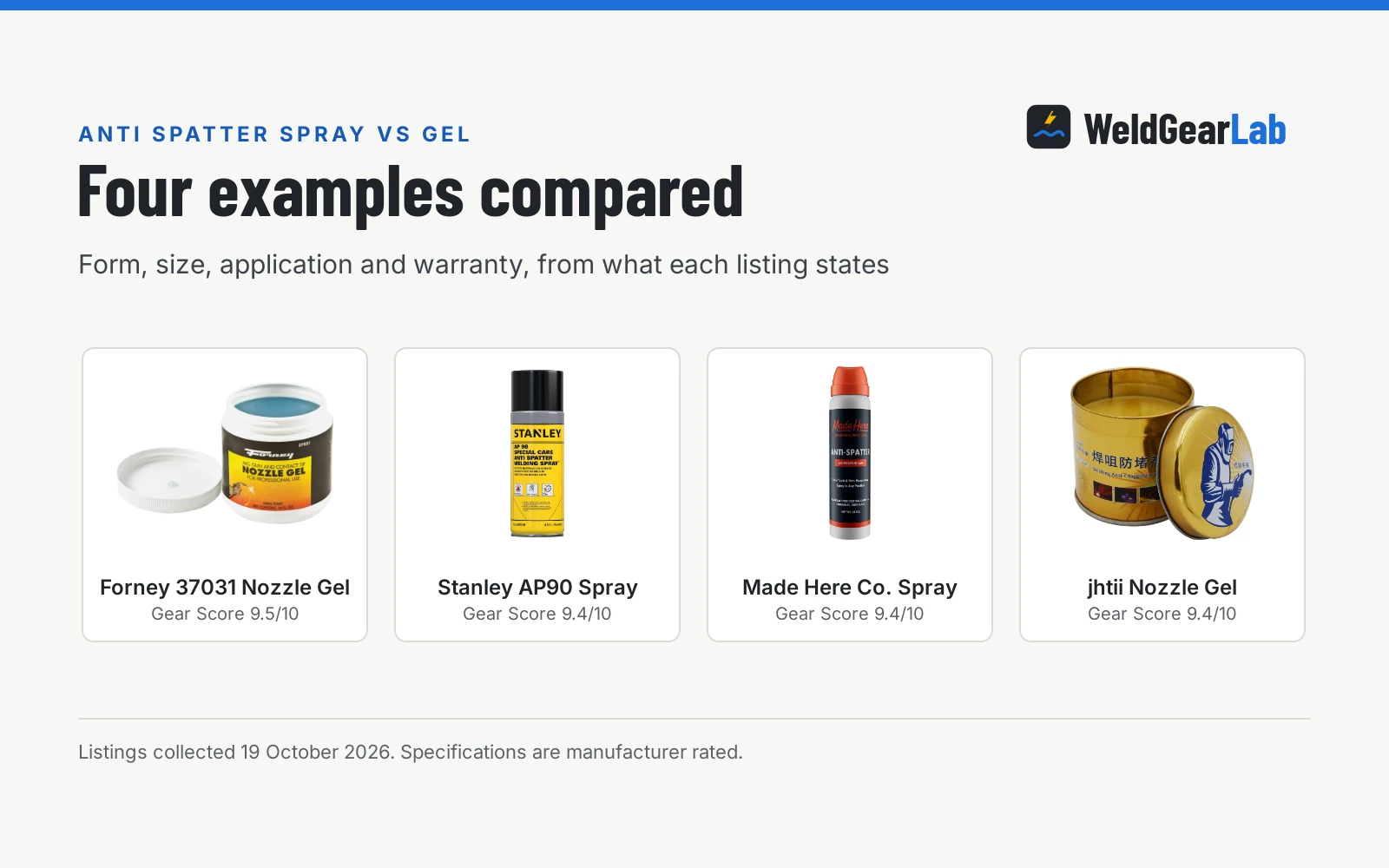
Welders often compare aerosol spray with nozzle dip gel. Both products prevent spatter buildup on MIG torch front ends, but their application methods differ significantly:
- Application scope. Nozzle dip gel is a thick, waxy paste designed strictly for dipping hot torch nozzles. Spray covers broad workpiece areas, welding tables, clamping jaws, and fixtures in addition to torch parts.
- Application temperature. Dip gel requires a hot nozzle so the heat melts the paste around the contact tip and gas diffuser. Spray applies cold straight from the aerosol can before you strike an arc.
- Workpiece compatibility. You cannot apply paste gel across large sheet metal panels or tubing frames. Spray mists smoothly across any flat or curved metal joint.
Most shops keep both on hand: dip gel at the welding bench for routine nozzle maintenance, and spray cans for protecting finished workpieces and large fixtures.
Paint adhesion, weld porosity, and shop safety
While anti-spatter saves grinding time, improper use can introduce finishing headaches or weld flaws. Keep these practical considerations in mind:
Silicone content and paint defects. Formulations containing silicone, such as 12.3 fluid ounce cans from SPRAYMAN and 8.5 Oz cans from STANLEY, create slick surface barriers that can cause fish-eyes, pinholes, and paint peeling if not stripped completely. If parts require painting or powder coating, choose silicone-free sprays. For example, the WEICON listing for its 13.5 fl oz spray specifies a silicone-free formula that permits subsequent painting and coating without special cleaning procedures.
Preventing weld porosity. Avoid spraying directly into the open joint root or groove bevel. If wet spray pools in the weld path, the arc vaporizes the liquid, trapping gas pockets in the molten puddle and causing porosity. Always direct the spray mist along the sides of the joint where spatter lands, keeping the joint root clean. When combining clean spray habits with quality wire from our best MIG welding wire guide, your beads will stay sound and porosity-free. If your wire feeder produces unusual amounts of spatter despite clean prep, consult our guide on why is my MIG welder spattering so much to check drive roll tension and arc voltage.
Shop safety and ventilation. Solvent carriers release chemical vapors during application, and all anti-spatter products generate smoke when hot droplets hit the treated surface. Always weld in well-ventilated areas, keep your helmet out of the rising plume, and wear proper respiratory protection. A rated filter mask from our best respirator for welding fumes guide protects against airborne shop mists and welding fumes. Store aerosol cans away from heat sources and grinding sparks.
FAQ for welders
What does anti spatter spray do?
Anti spatter spray creates a protective boundary layer over metal workpieces and welding gun components. When hot molten droplets fly from the weld pool, the coating prevents them from fusing to the cold metal surface. After the joint cools, stray spatter wipes away with a rag or wire brush instead of needing heavy grinding.
What is the best anti spatter spray for a home shop?
The best choice depends on your shop ventilation and finishing plans. Water-based formulas offer low odor and wash clean with water, making them ideal for poorly ventilated spaces. If you choose a solvent-based spray, select a silicone-free formula so you can paint finished assemblies without special degreasing.
Can you weld directly over wet anti spatter spray?
Never strike an arc directly into pools of wet anti-spatter liquid. Wet fluid can cause severe weld porosity, steam pockets, and excessive smoke as the arc boils the carrier. Always apply a thin mist and let the solvent flash off or allow water to dry before welding.
Does anti spatter spray affect paint and powder coating?
Silicone-based sprays leave persistent residues that cause fish-eyes, bubbling, and paint peeling if not completely stripped with aggressive degreasers. Silicone-free formulas allow reliable paint and powder coat adhesion, often without special cleaning beyond a basic wipe-down. Always verify that your spray is labeled silicone-free if your project requires post-weld painting.
Can you use anti spatter spray inside a MIG gun nozzle?
Yes, spraying inside the nozzle shroud and over the contact tip keeps spatter bbs from bridging the gap between the tip and gas cone. Keeping the nozzle passage clear preserves smooth shielding gas flow and extends the working life of your consumables. Inspect the nozzle regularly and tap out loose spatter during long welding runs.
Related: why is my MIG welder spattering so much, best MIG welding wire, best angle grinder for welding prep, and the welding consumables hub.