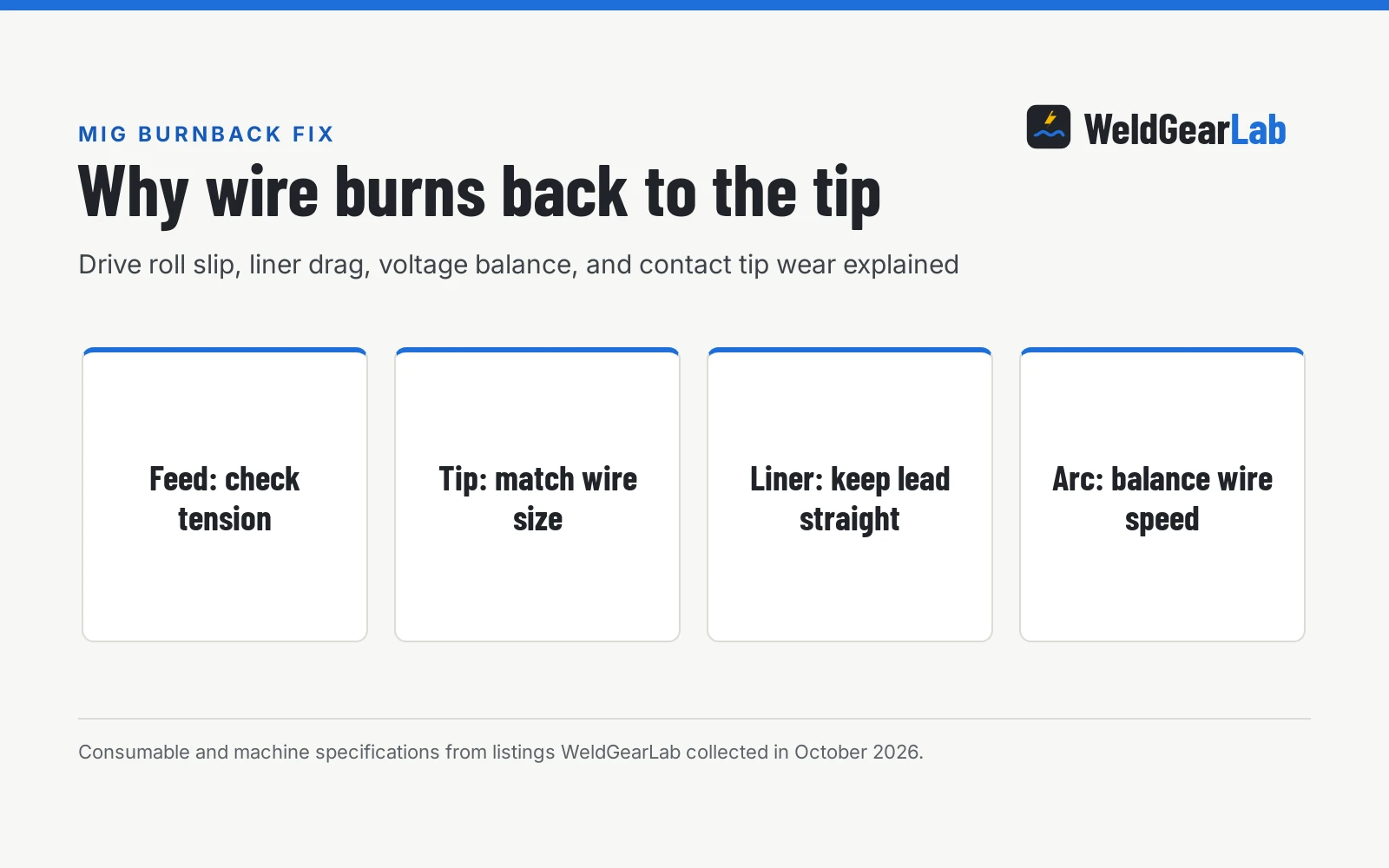
Why Does My MIG Wire Keep Burning Back to the Tip?
MIG wire burns back to the contact tip when wire feed stalls, stickout runs too short, or voltage outpaces wire delivery, but simple setup…

Welding machines for home, farm and small shop work: MIG, TIG, stick and multi-process. We compare them on input voltage, rated output, duty cycle at a stated amperage, and what comes in the box.
MIG wire burns back to the contact tip when wire feed stalls, stickout runs too short, or voltage outpaces wire delivery, but simple setup…
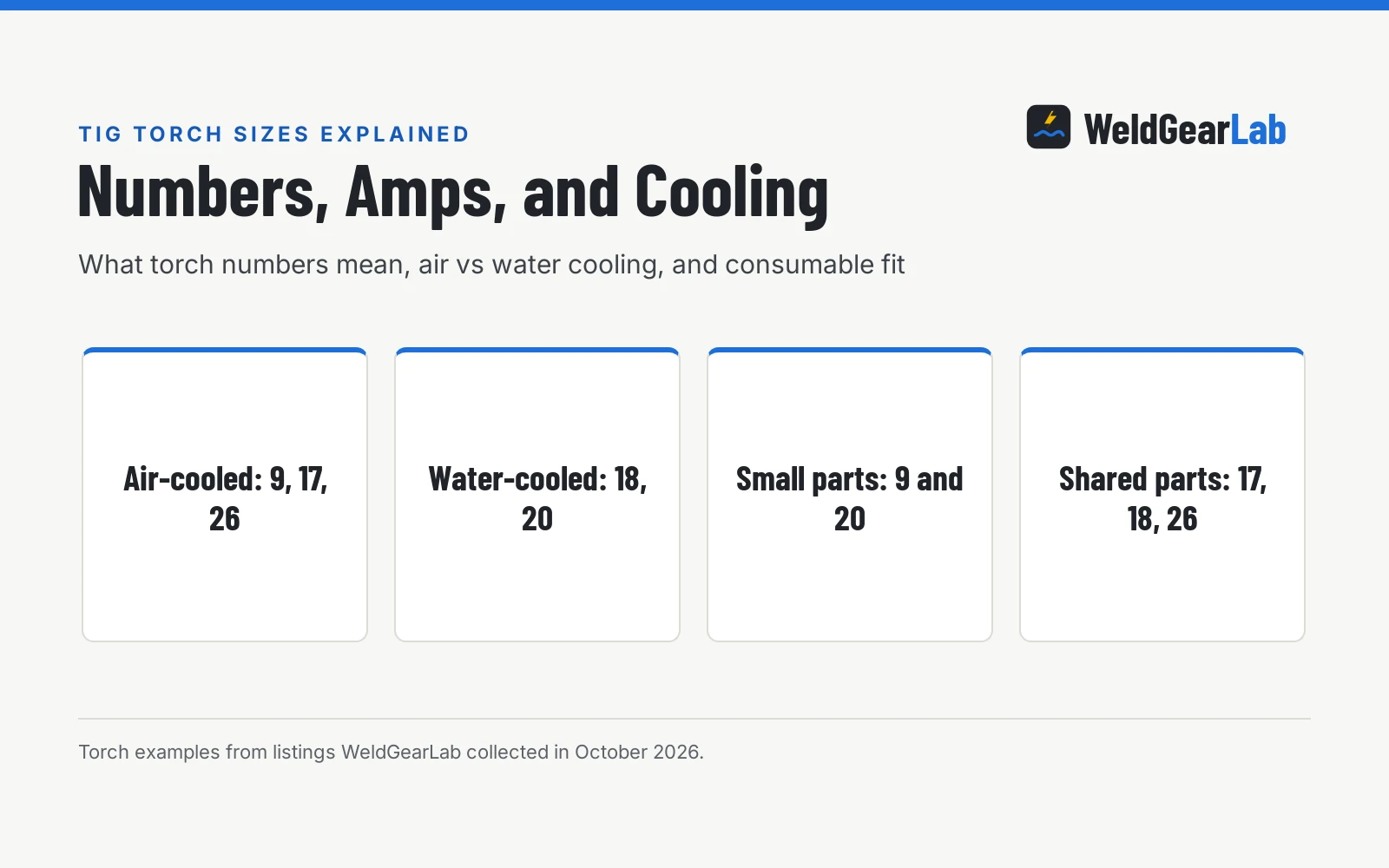
How TIG torch numbers like 9, 17, 20, and 26 indicate physical size, amperage capacity, air or water cooling, and consumable fit for your…
Inverter welders and transformer welders convert electrical power differently, creating major differences in weight, electrical efficiency, duty cycle, arc stability and shop durability.
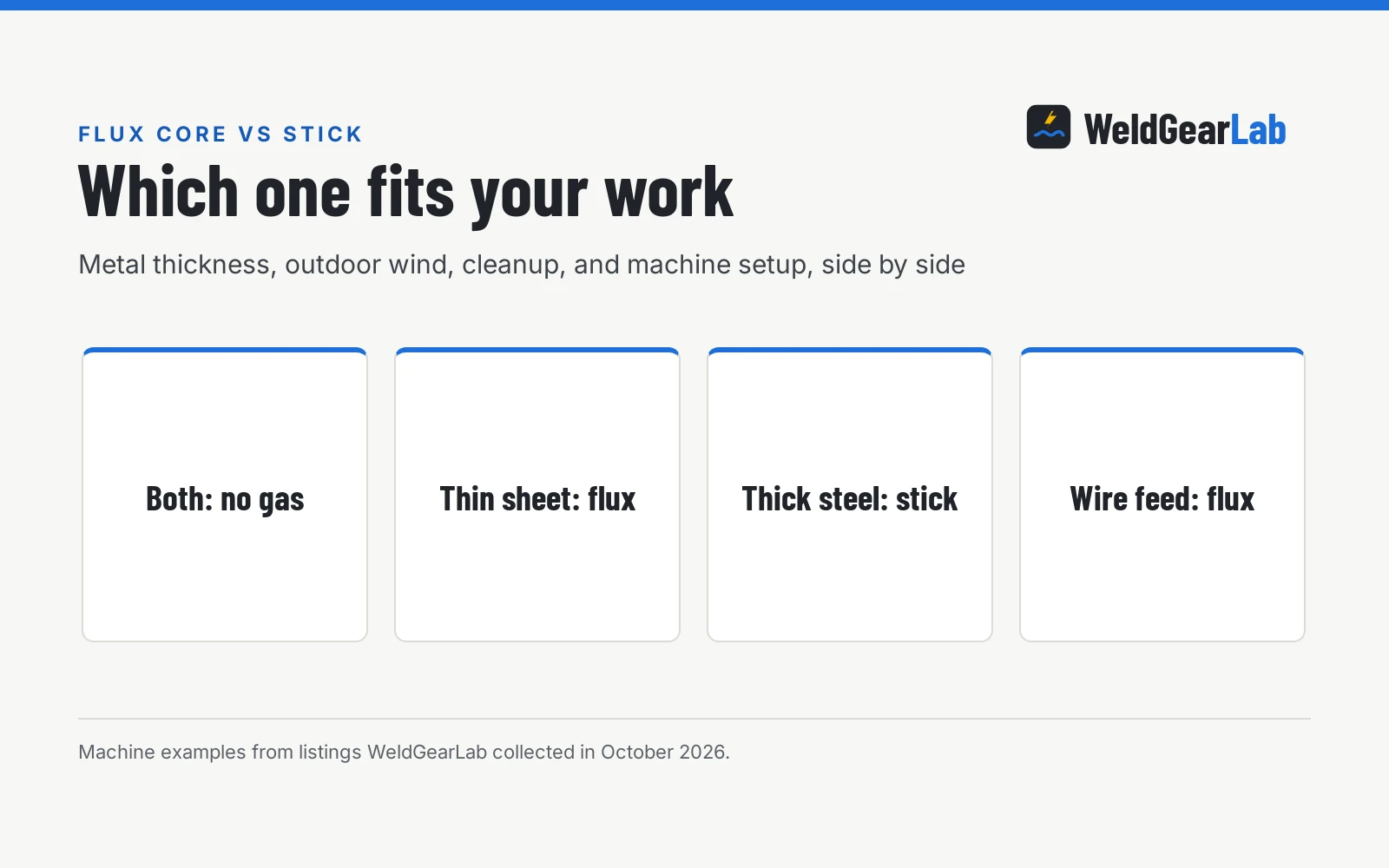
Flux core and stick welding both work outdoors without shielding gas, but they differ on metal thickness, wire feeding, cleanup, and machine setup.
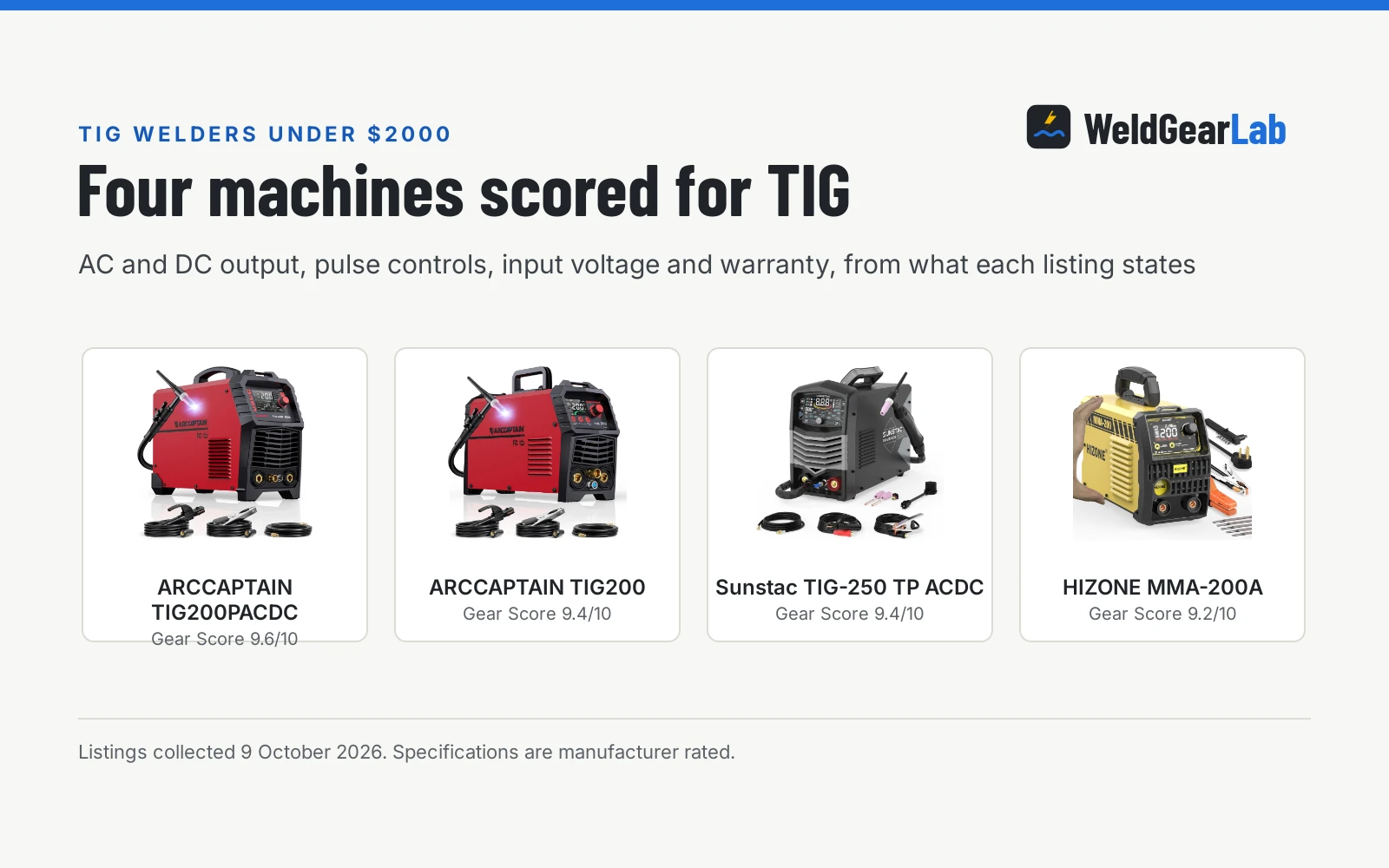
Four welders compared for TIG capability on AC and DC processes, pulse controls, input voltage, what is in the box and warranty.
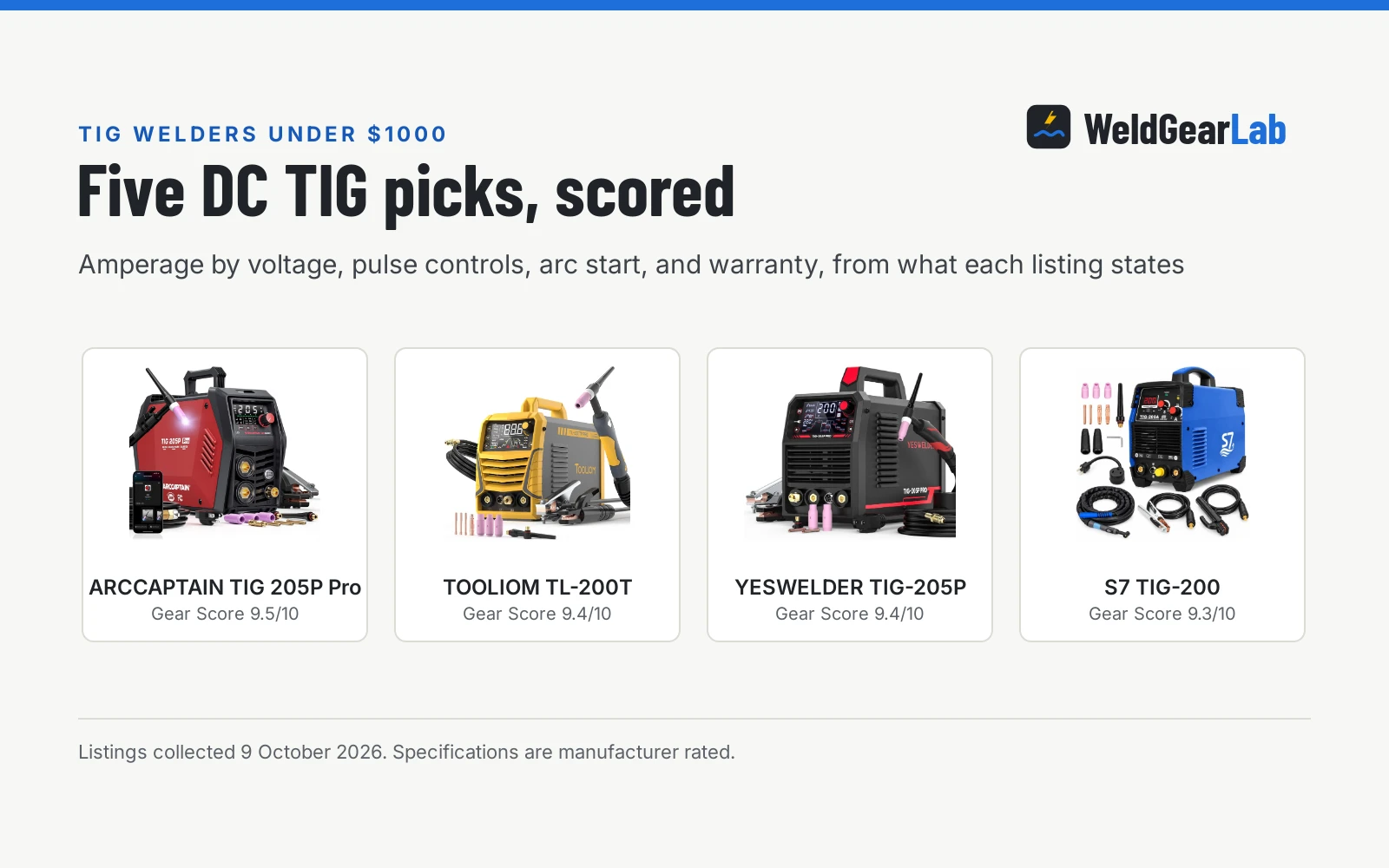
Five DC TIG welders under 1000, compared on output amperage by input voltage, arc start type, pulse and spot modes, foot pedal support and…
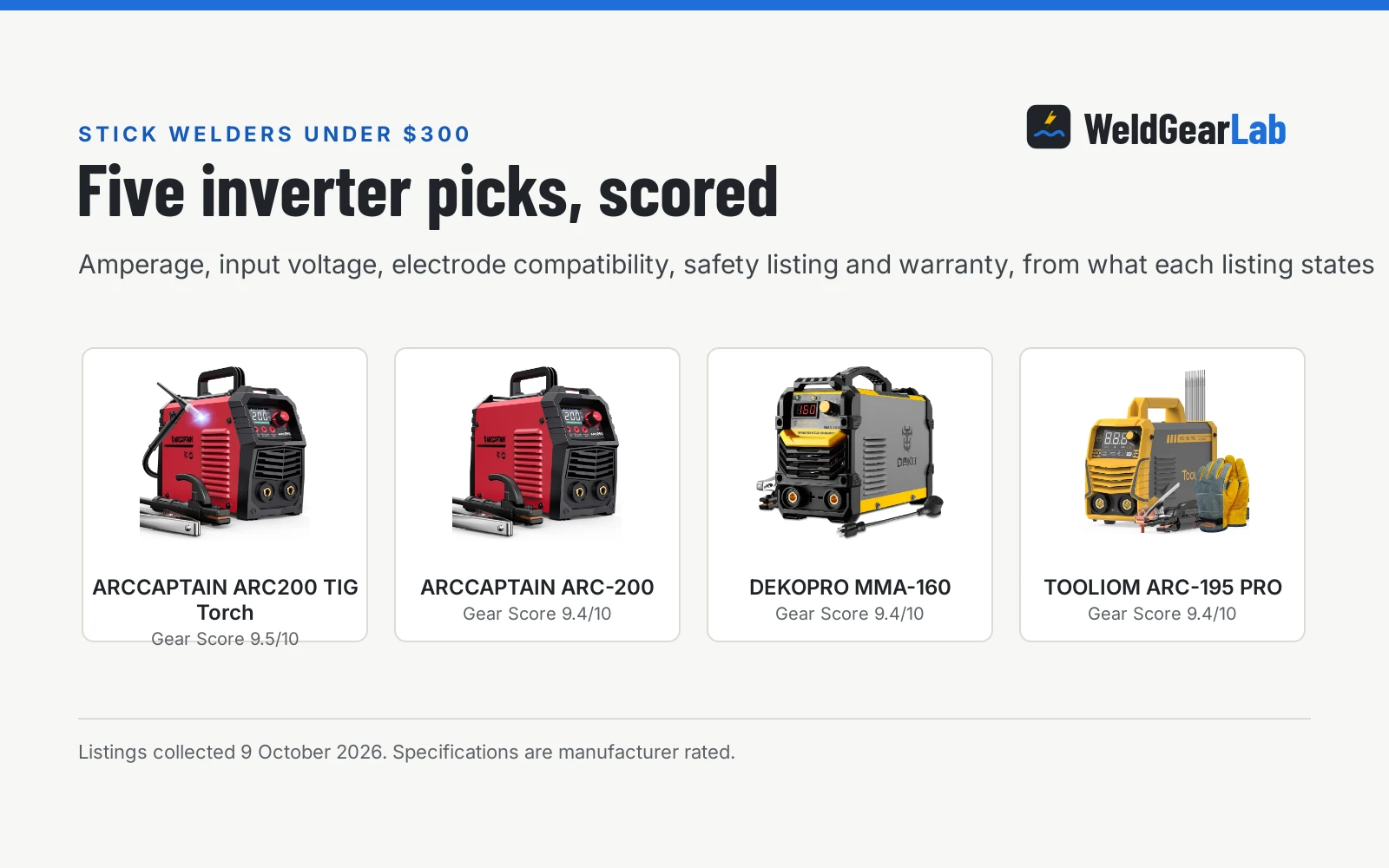
Five stick welders under $300 compared on amperage, dual-voltage input, electrode compatibility, kit components, safety listings and warranty.
Flux core welding and TIG welding serve different metalworking needs, differing across outdoor wind tolerance, metal thickness, bead appearance, shielding gas, and equipment setup.
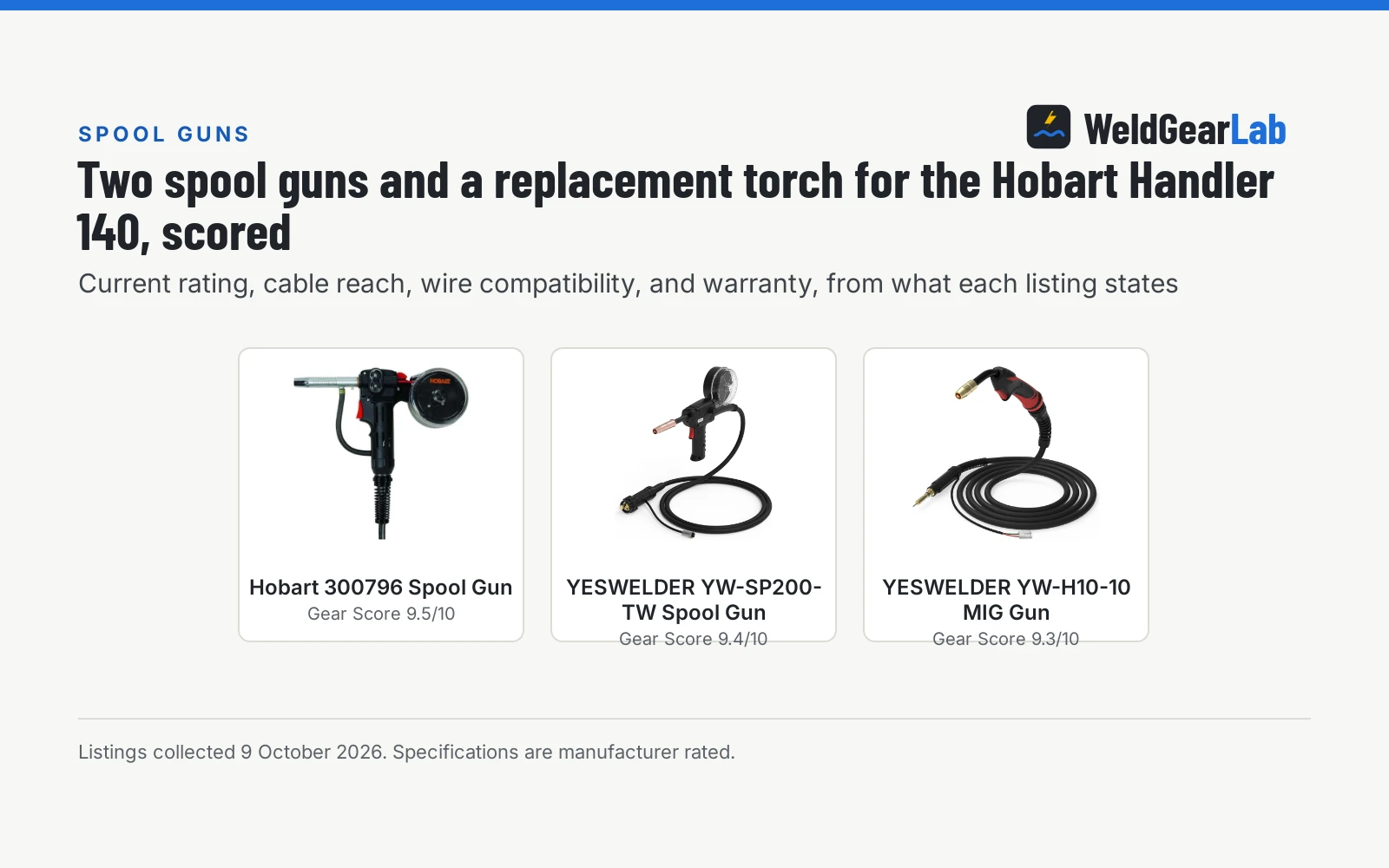
Two spool guns and a direct replacement MIG torch for the Hobart Handler 140, compared on amperage rating, cable reach, wire feeding, connection type,…
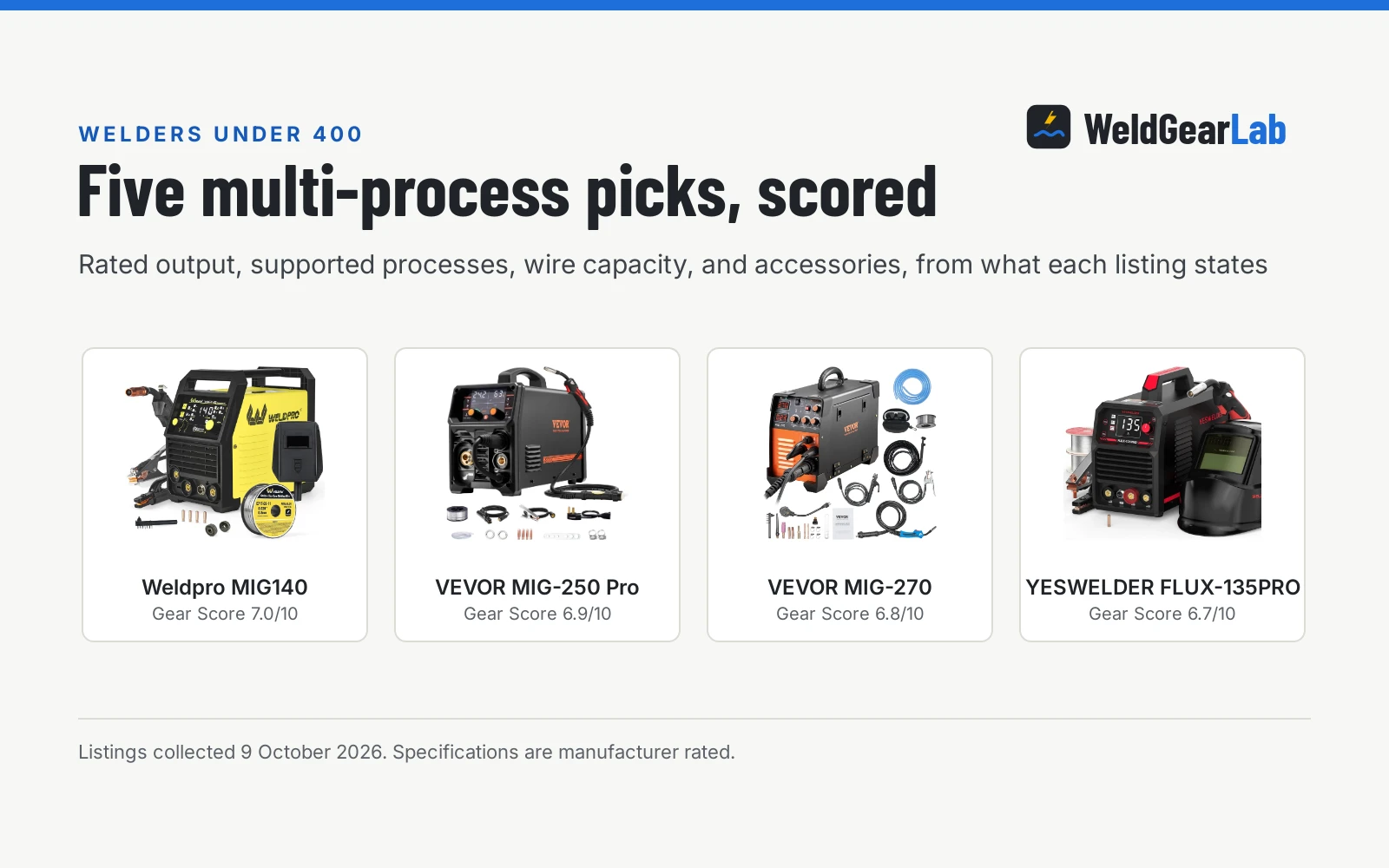
Five welders under 400, compared on stated amperage output, supported welding processes, wire spool capacity, included accessories and warranty terms.