How to Weld Cast Iron with a Stick Welder
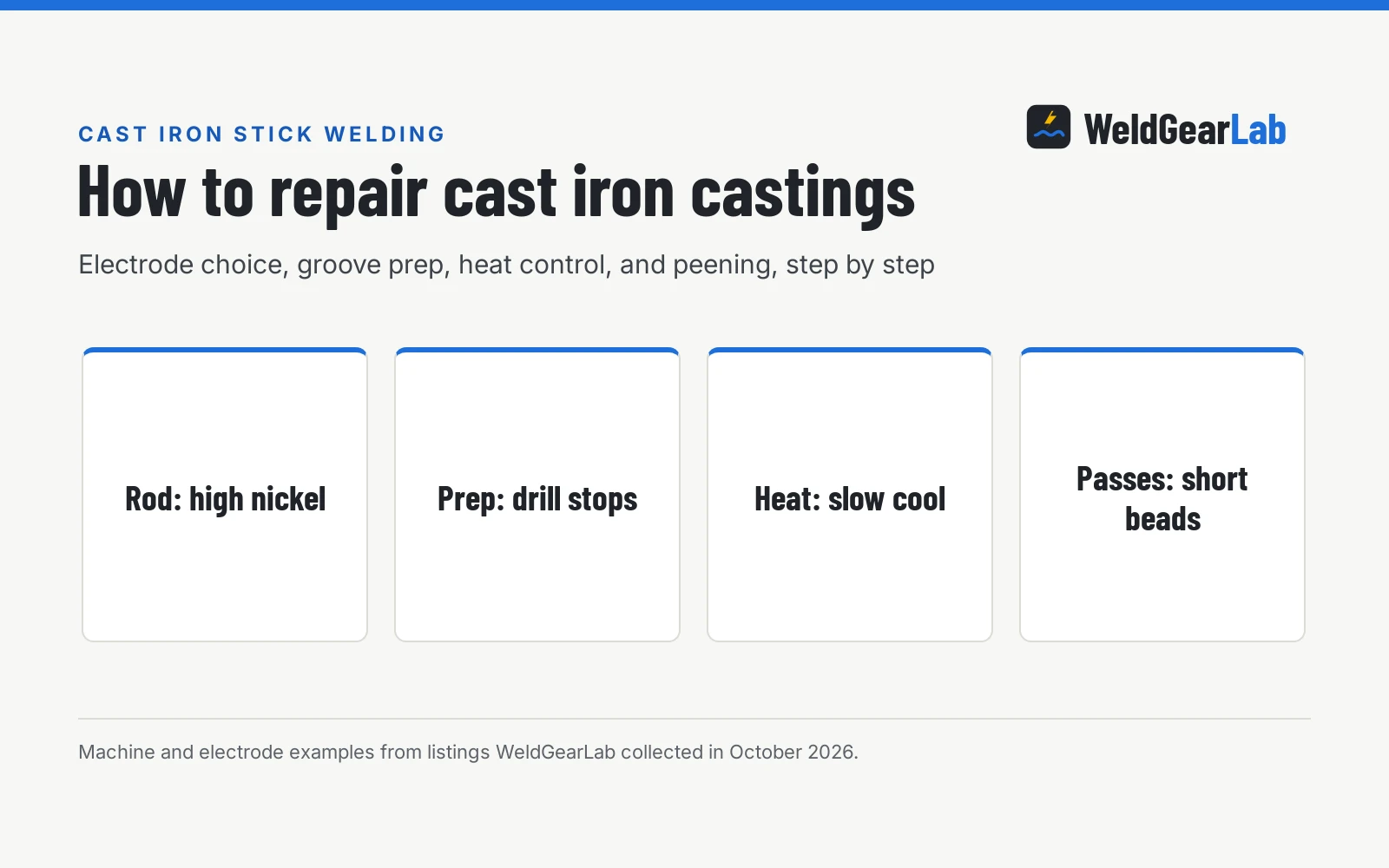
Learn how to weld cast iron with a stick welder using nickel electrodes, proper groove prep, preheating, short stringer beads, and peening to prevent…

Welding machines for home, farm and small shop work: MIG, TIG, stick and multi-process. We compare them on input voltage, rated output, duty cycle at a stated amperage, and what comes in the box.
Learn how to weld cast iron with a stick welder using nickel electrodes, proper groove prep, preheating, short stringer beads, and peening to prevent…
How to stick weld rusty metal by removing loose scale, grounding to clean steel, choosing fast-freeze electrodes, and holding a tight arc for sound…
How to store 7018 stick welding electrodes safely without a rod oven using sealed containers, proper timing, and smart packaging choices for home projects.
Learn how to strike an arc with a stick welder using scratch start and tap start methods, prevent the electrode from sticking, and keep…
Welding rods stick when arc length is too short, amperage is set too low, or striking technique hesitates on cold metal, and here is…
Learn how to dial in the right heat for a 1/8 7018 stick electrode, how welding position shifts your amperage, and how to maintain…
A welding rod amperage chart matches electrode diameter and flux type to machine output, giving starting amp ranges for clean arc strikes and sound…
Stick and MIG welders suit different farm repairs: stick excels outdoors on dirty, thick steel, while MIG delivers cleaner welds on thin shop projects.
A direct comparison of Yeswelder and Hobart MIG welders across listed controls, power options, wire choices and the support terms each model listing states.
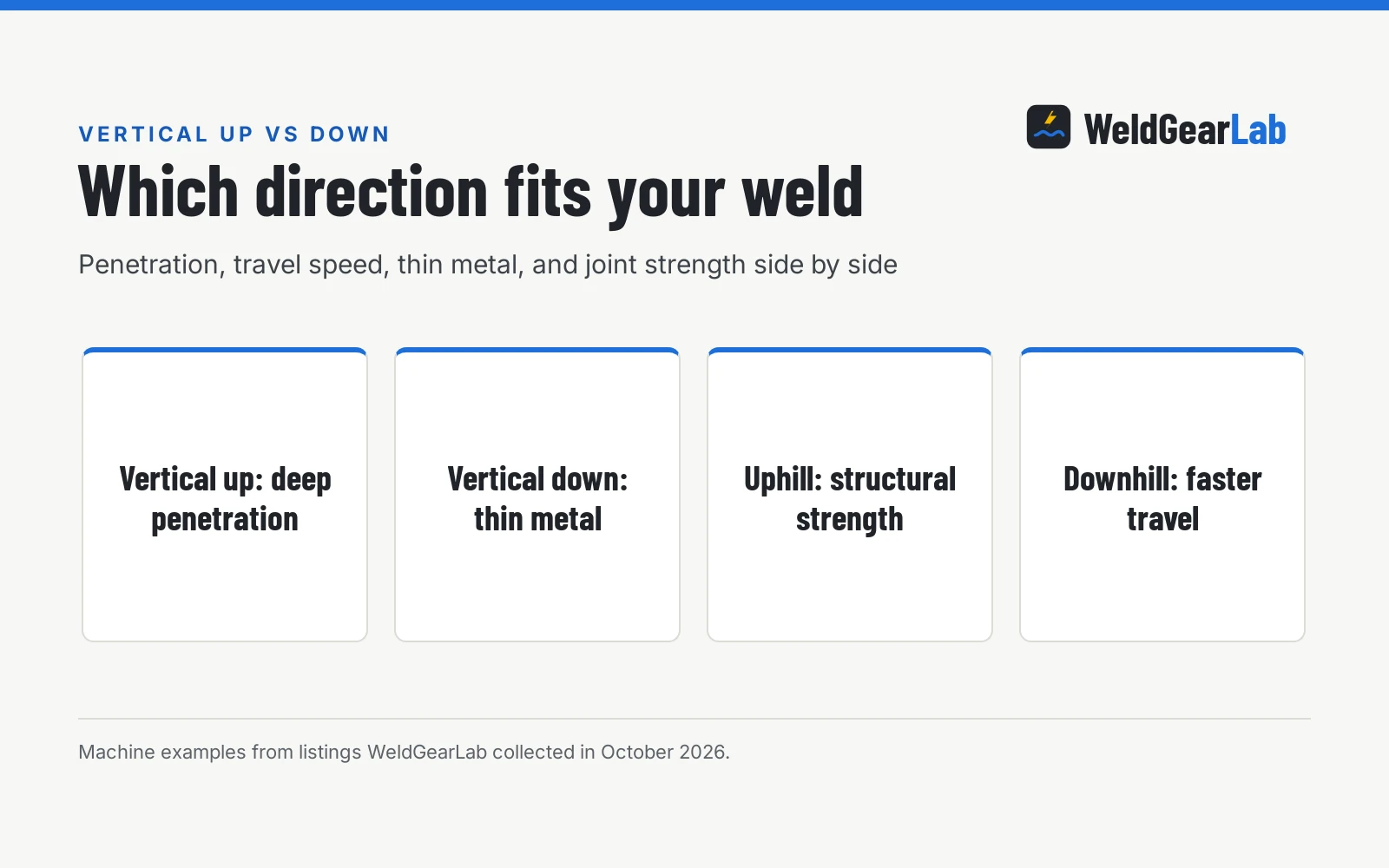
MIG welding vertical up provides deep penetration on thick steel, while vertical down offers fast travel speed and lower heat on thin sheet metal.