Synergic MIG vs Pulsed MIG Welder: Which One Should You Buy?
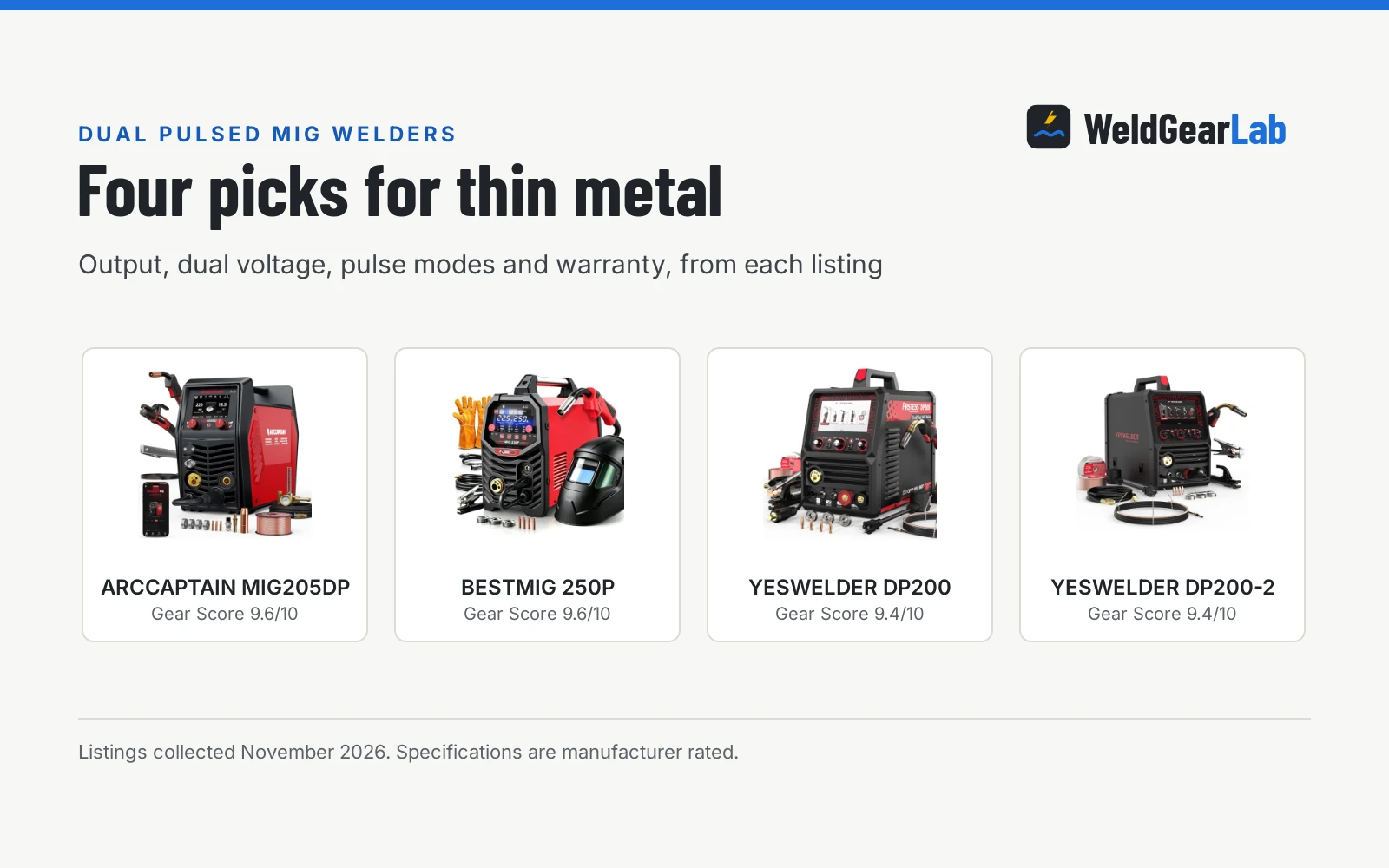
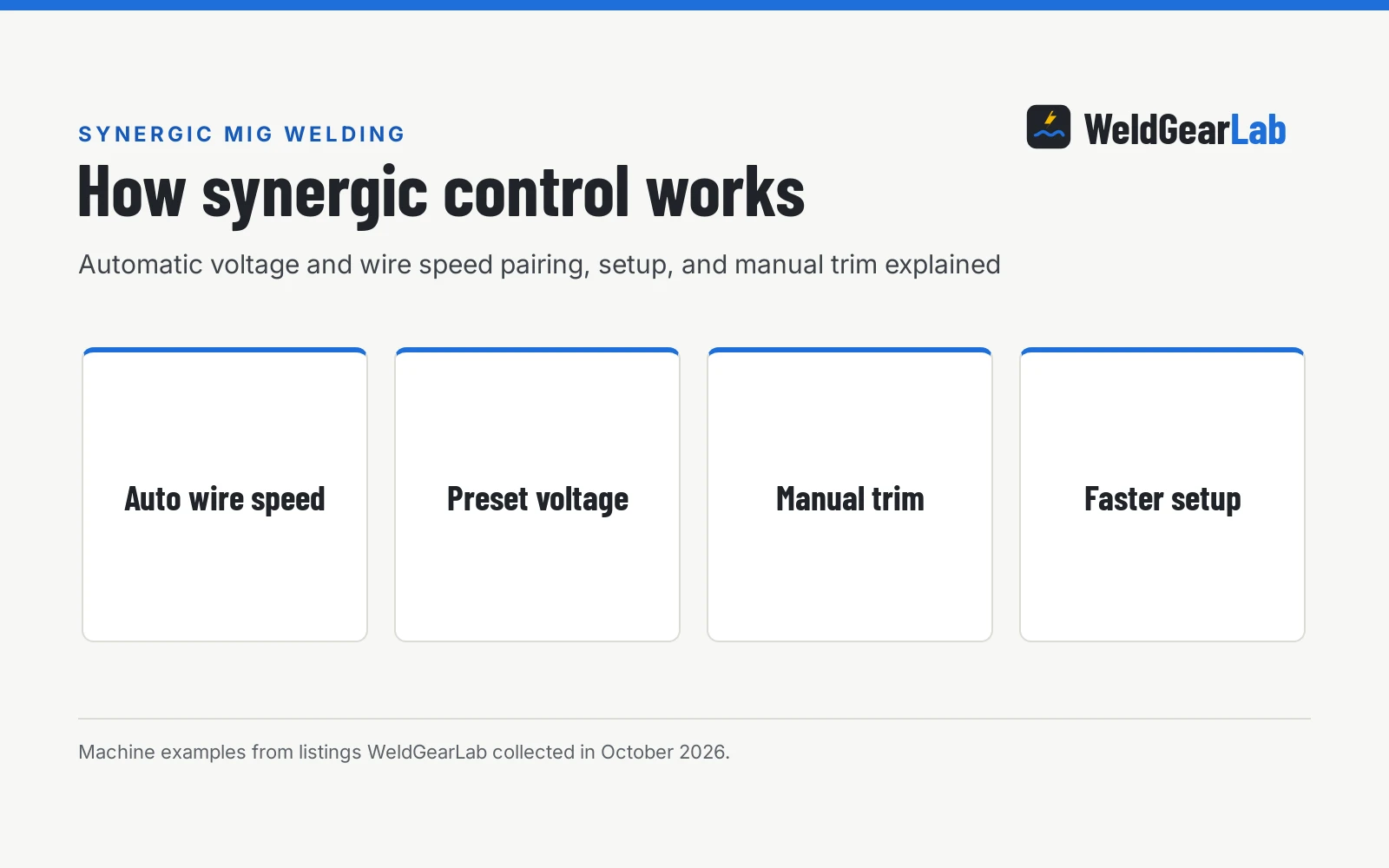
Synergic MIG sets wire speed and voltage from one dial; pulsed MIG pulses the arc to control heat. How they differ, when each fits, and three machines that show both sides.

On this page
Top picks at a glance
As an Amazon Associate I earn from qualifying purchases.
- 1
 HZXVOGEN Gasless Flux Core MIG Welding Wire9.7/10View on Amazon
- 2
 BESTMIG 8 in 1 Aluminum MIG Welder9.6/10View on Amazon
- 3
 YESWELDER Firstess DP200 Welder9.4/10View on Amazon
- 4
 YESWELDER 140A MIG WelderView on Amazon
- 5
 160A 4-in-1 Welding Machine: 110V/220V Dual Voltage MIGView on Amazon
- 6
 VEVOR MIG WelderView on Amazon
- 7
 150A 3-in-1 Synergic MIG Flux Core Spot Welder 120V PortableView on Amazon
- 8
 Mig Welder 200A Synergic Wire Feed Welder Portable WeldingView on Amazon
- 9
 YESWELDER 135A MIG WelderView on Amazon
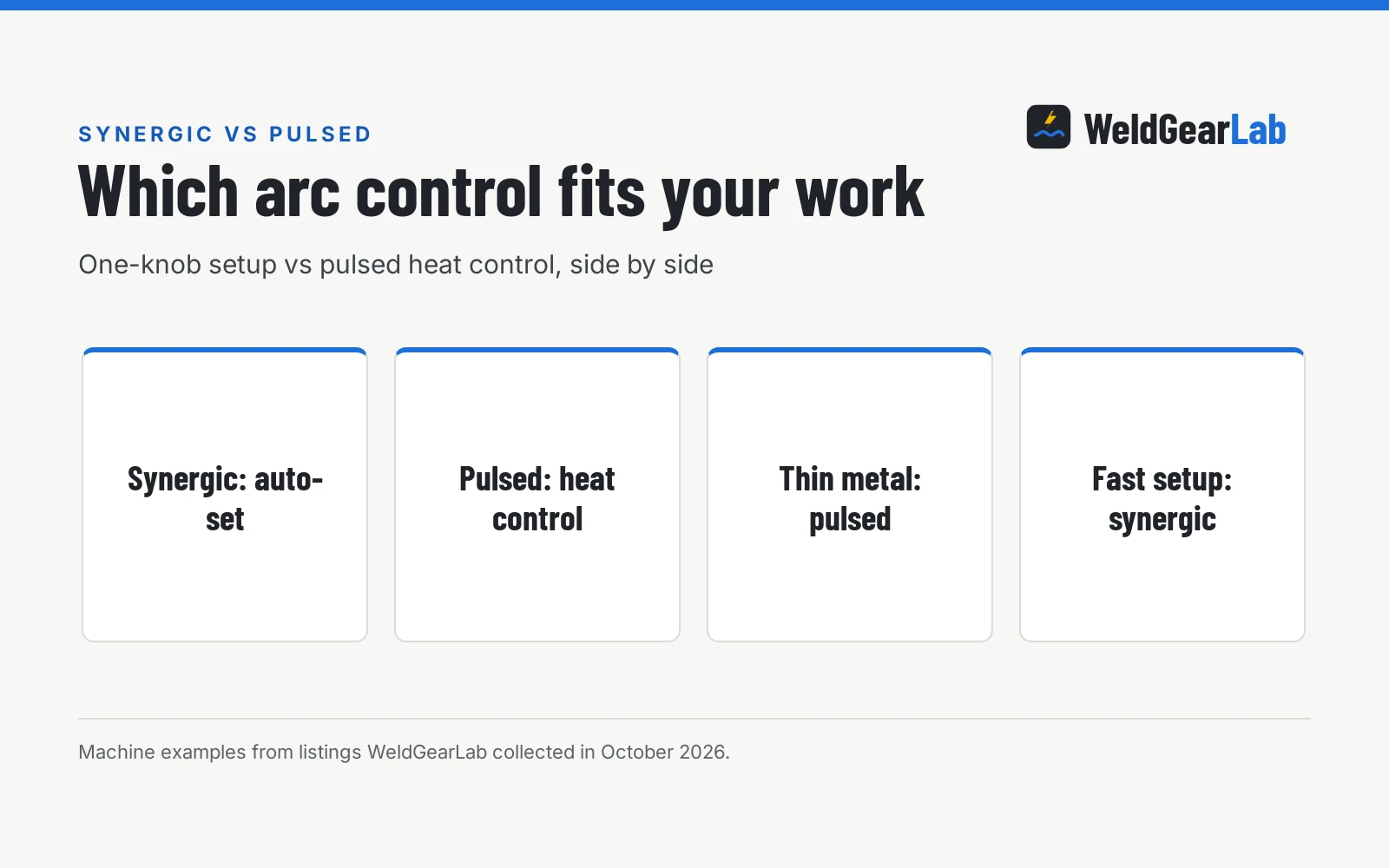
Synergic mig vs pulsed mig welder is a choice between two different answers to the same problem: getting the arc right without constant knob twiddling. Synergic MIG sets wire feed speed and voltage for you from a single dial: you pick the wire size and metal thickness, and the machine recommends the rest. Pulsed MIG instead pulses the arc between a high peak current and a low background current, which drops the average heat and makes thin metal and aluminum easier. If you want fast setup on steel, synergic is the pick; if you weld thin sheet or aluminum, pulsed earns its keep.
Other welders and gear to compare
 YESWELDER 140A MIG WelderCheck price on Amazon
 160A 4-in-1 Welding Machine: 110V/220V Dual Voltage MIGCheck price on Amazon
 VEVOR MIG WelderCheck price on Amazon
 150A 3-in-1 Synergic MIG Flux Core Spot Welder 120V PortableCheck price on Amazon
 Mig Welder 200A Synergic Wire Feed Welder Portable WeldingCheck price on Amazon
 YESWELDER 135A MIG WelderCheck price on Amazon
This guide links to our product roundups, where WeldGearLab gets a commission on purchases made through links on this page, and your price stays the same. Read our affiliate disclosure.
The difference in one paragraph
Both are MIG arc control, but they control different things. Synergic control links wire feed speed to voltage: turn one dial and both move together along a curve the maker programmed. Each of the three machines described in this guide lists it: the TOOLIOM MIG-135 PRO, the YESWELDER MIG-140DS PRO and the Weldpro Omni210. Pulsed MIG leaves wire speed alone and modulates the current itself, alternating short bursts of high peak current with a cooler background current. The average heat drops, the puddle stays controllable, and the bead stacks in overlapping ripples instead of a continuous spray. Of the three machines here, only the Omni210 lists pulse, and it lists it on the AC/DC TIG side.
Side by side
| Synergic MIG | Pulsed MIG | Why it matters | |
|---|---|---|---|
| What it does | Sets wire feed speed and voltage for you from one dial | Pulses the arc between a high peak and a low background current | Synergic cuts setup time; pulsed cuts heat input |
| How you set it | Pick wire size and metal thickness; the machine recommends the rest | Dial in peak current, background current and pulse timing | Synergic is one-knob; pulsed asks more of the operator |
| Fine control | Plus or minus 3V fine-tuning on the TOOLIOM and YESWELDER | Pulse rate and peak time shape the bead | Both can be tuned; synergic starts closer |
| Thin metal | Workable with lower settings and gas | Lower average heat; less burn-through | Pulsed is the classic answer for sheet metal |
| Aluminum | Possible with gas MIG and a spool gun on capable machines | A standard approach for aluminum work | The Omni210 lists AC/DC TIG with pulse |
| Machines described in this guide | TOOLIOM MIG-135 PRO, YESWELDER MIG-140DS PRO, Weldpro Omni210 | None: the Omni210 lists pulse on the TIG side only | All three list synergic MIG; none lists pulsed MIG |
Synergic and pulsed are different controls, and a machine could in principle offer both, but none of the three machines described here lists pulsed MIG. Always follow the settings in the machine’s manual; the synergic curves and pulse ranges here are the makers’ own.
When synergic MIG is the better choice
- Fast setup on steel. Pick the wire size and metal thickness and weld. The TOOLIOM listing says the machine recommends the optimal voltage and wire speed from those two choices.
- Learning without guessing. The TOOLIOM and the YESWELDER both offer plus or minus 3V fine-tuning on top of the automatic setting, so you can nudge the arc and learn what voltage does.
- Shop work on mild steel. Where one setting covers most joints, one-knob control beats dialing two knobs per joint.
- Multi-process value. All three machines here are multi-process: the TOOLIOM runs MIG, Stick and Lift TIG, the YESWELDER adds gas MIG, and the Omni210 runs six processes including spool gun and AC/DC TIG.
When pulsed MIG is the better choice
- Thin sheet. Lower average heat means less burn-through on thin panels, the classic reason to reach for pulse.
- Aluminum. Pulsed arc control is a standard approach for aluminum, where heat runs away fast. Note the distinction: the Omni210 lists AC/DC TIG with pulse, which is pulse TIG, not pulsed MIG, and none of the three machines described here lists pulsed MIG.
- Out-of-position joints. A cooler puddle behaves better overhead and vertical than a hot continuous spray.
- When you already know your settings. Pulse is heat control for operators who do not need setup help.
Synergic MIG vs Pulsed MIG Welder: The Gear
Three machines from the listings, ranked by Gear Score from highest to lowest.
#1: Weldpro Omni210, 200A dual voltage
The Omni210 lists synergic MIG with Auto-Set, and its AC/DC HF TIG side lists pulse; it does not list pulsed MIG. all in a 6-in-1 multi-process machine with up to 200A output on 110V or 220V. The listing includes a KT26 TIG torch, a foot pedal, VRD, hot start and arc force settings, plus over-current, over-load, over-voltage and overheating protection. At 81.8 pounds it is a shop machine, not a carry-around, and the 44 KW wattage figure in the spec table reads like a listing quirk. It is the only machine here that lists pulse, and that pulse is on the AC/DC TIG side, not on the MIG side.
#2: YESWELDER MIG-140DS PRO, 140A dual voltage
The YESWELDER pairs synergic MIG with a manual MIG mode, which is the best of both worlds for learning: start with the automatic setting, then switch to independent wire speed and voltage when you want full control. The synergic mode adjusts wire feed from 80 to 600 inches per minute and auto-matches the voltage, with minus 3V to plus 3V fine-tuning, and a digital display shows live current. It runs gas MIG, flux core, Lift TIG and Stick on 110V or 220V at up to 140A, weighs 22.8 pounds, and lists voltage fluctuation compensation plus over-current, over-load and over-heating protection.
#3: TOOLIOM MIG-135 PRO, 135A 110V
The TOOLIOM is the simple entry: 135A of gasless flux core MIG on a standard 110V socket, with synergic control, a large LCD display and a 3-in-1 MIG, Stick and Lift TIG process set. Select the wire size and metal thickness and it recommends the voltage and wire speed, with plus or minus 3V fine-tuning; it takes 0.030 and 0.035 inch flux core wire and the listing rates it to 1/6 inch mild steel. One listing contradiction to note: the bullets call it 11.24 pounds, while the spec table lists 18.61 pounds; trust the bullets per our listing rules, but expect a portable unit either way. Gloves and wire are included.
How to read a synergic listing
Listings use a few telltale phrases. Look for these before you buy:
- Synergic, Auto-Set or one-knob. The three machines described here state synergic control outright.
- Wire size plus thickness selection. The TOOLIOM asks for wire size and metal thickness, then recommends the setting; that is synergic in action.
- Fine-tune range. Plus or minus 3V on the TOOLIOM and YESWELDER means the automatic curve can be nudged.
- Which process the pulse applies to. The Omni210 lists pulse on the AC/DC TIG side, not the MIG side. If you want pulsed MIG specifically, check the listing names it for MIG.
Fumes, arc flash and hot metal. Whichever arc control you use, the risks are the same: welding fumes, intense arc light and hot workpieces. Weld with good ventilation or outdoors with your head out of the plume, wear a proper welding helmet and gloves, and clear dry grass and anything flammable from the area. See the OSHA welding overview.
FAQ for welders
Can a synergic welder also run manual MIG?
Sometimes. The YESWELDER MIG-140DS PRO lists both a synergic MIG mode and a manual MIG mode with independent wire speed and voltage. The TOOLIOM and Weldpro listings describe their synergic modes without naming a separate manual mode, so check the listing for your machine.
Is pulsed MIG the same as pulse TIG?
No. Pulsed MIG pulses the MIG arc; pulse TIG pulses the TIG arc. Both lower heat input, but they are different processes. The Omni210 lists its pulse on the AC/DC TIG side.
Do I need pulsed MIG for auto body work?
Not necessarily. Synergic MIG with fine-tuning handles steel panels, and gas MIG on thin sheet is a proven combination. Pulsed control helps most on the thinnest sheet and on aluminum.
Does synergic control work with flux core wire?
Yes. The TOOLIOM MIG-135 PRO is a gasless flux core machine with synergic control: select the wire size and thickness and it recommends the setting.
What voltage do these machines need?
The TOOLIOM runs on 110V only. The YESWELDER and the Weldpro Omni210 are dual voltage, 110V or 220V, so they can move from a household socket to a 220V shop circuit.
Related: best flux core welder and how to choose a MIG welder.