Rotary Phase Converter vs VFD for Welder: Which One Powers Your Shop?
Rotary phase converters, digital converters and VFDs compared for powering 3-phase welders and shop machines: sizing, weight, speed control and stated warranties.

On this page
Top picks at a glance
As an Amazon Associate I earn from qualifying purchases.
- 1
 ARCCAPTAIN 180A MIG Welder 110V 220V 6 in 1 Multiprocess9.7/10View on Amazon
- 2
 DPS Digital Phase Converter 2HP My-PS-2View on Amazon
- 3
 American Rotary Phase Converter AR5 5 HP 1 to 3 Three PHView on Amazon
- 4
 American Rotary Phase Converter AR10-10HP 1 to 3 Three PHView on Amazon
- 5
 American Rotary Phase Converter AR20-20 HP 1 to 3 Three PHView on Amazon
- 6
 Single Phase to 3 Phase Converter,10HP 220V 3 PhaseView on Amazon
Rotary phase converter vs VFD for welder comes down to what you are powering. A rotary phase converter is a motor-generator style box that turns single-phase wall power into three-phase power for a 3-phase welder or shop machine, like the American Rotary AR5 that starts up to a 2.5 HP load at 93 lb. A VFD (variable frequency drive) converts single-phase to three-phase electronically and adds motor speed control, like the VEVOR 3HP unit that takes 220-240V single-phase in and outputs 3-phase at 0-400Hz, but it drives a 3-phase motor, not a welder directly. Pick a rotary converter for a 3-phase welder or a whole shop of 3-phase machines; pick a VFD for a single 3-phase motor you also want to speed-control.
Other welders and gear to compare
 DPS Digital Phase Converter 2HP My-PS-2Check price on Amazon
 American Rotary Phase Converter AR5 5 HP 1 to 3 Three PHCheck price on Amazon
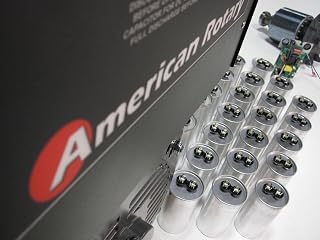 American Rotary Phase Converter AR10-10HP 1 to 3 Three PHCheck price on Amazon
- American Rotary Phase Converter AR20-20 HP 1 to 3 Three PHCheck price on Amazon
 Single Phase to 3 Phase Converter,10HP 220V 3 PhaseCheck price on Amazon
WeldGearLab gets a commission on purchases made through links on this page, and your price stays the same. Read our affiliate disclosure.
Rotary phase converter vs VFD for welder: side by side
| Rotary phase converter | VFD | |
|---|---|---|
| What it does | Makes 3-phase power from single-phase with a spinning idler motor | Makes 3-phase power electronically, plus speed control |
| Listed examples | American Rotary AR5 5HP (starts 2.5HP/7A, 93 lb); AR10 10HP (starts 5HP/14A, 140 lb); AR20 20HP (starts 10HP/28A, 280 lb) | VEVOR 3HP 2.2kW/10A (2.6 lb); VEVOR 10HP 7.5kW/34A (7.7 lb); LAPOND 20HP 15kW/55A |
| Speed control | No speed control | Yes: 0-400Hz on most listed VFDs, 0-1000Hz on the ATO |
| Size and weight | Heavy: 93 to 280 lb for the listed rotaries | Light: 2.6 to 7.7 lb for the listed VFDs |
| Best for | Multiple 3-phase machines on one converter | One motor, especially with speed control needs |
Ratings in this table are the makers’ own claims taken from each product page (19 October 2026).
What a rotary phase converter does
A rotary phase converter is an idler motor that, once spinning, generates the third phase your 3-phase welder or machine needs. The American Rotary listings size them by the motor they start: the AR5 is a 5HP unit that starts up to a 2.5HP (7 amp) 208-240V light load at 93 lb, the AR10 is a 10HP unit starting up to 5HP (14 amp) at 140 lb, and the AR20 is a 20HP unit starting up to 10HP (28 amp) at 280 lb. The trade-off is weight, 93 to 280 lb for the listed units, and a spinning idler motor that runs while the converter is powered. The payoff is that one converter can feed several 3-phase machines: the AR listings describe combination loads, and the AR10 listing names welding equipment among its uses alongside CNC machines and industrial motors. The American Rotary listings state no output frequency figure, so this guide gives none for rotary converters; the frequency figures in this guide, 0-400Hz and 0-1000Hz, belong to the VFD listings only.
What a VFD does
A VFD rectifies the single-phase input to DC and inverts it back to three-phase AC, and it varies the frequency to control motor speed. The VEVOR listings span 3HP (2.2kW, 10A, 2.6 lb) to 10HP (7.5kW, 34A, 7.7 lb), both taking 220-240V single-phase in and outputting 3-phase 220-240V at 0-400Hz. The LAPOND 20HP unit lists 15kW and 55A in a 12.8 by 8 by 8 in box, and the XCFDP 2HP unit lists 1.5kW and 8A. Beyond phase conversion you get soft start and stop, speed adjustment and protections like overcurrent and overload, which the VEVOR and LAPOND listings both state. The catch: the listings size each VFD to a motor, and the XCFDP listing warns the motor should not exceed twice the VFD’s power rating.
The digital middle ground
The DPS digital phase converter sits between the two: a solid-state box, not a spinning motor and not a speed controller. The DPS My-PS-2 is sold as a 2HP unit, but its listing rates it for a 1HP (0.75kW), 3A motor, at 6A and 200-240V, UL-listed, weighing 9.6 ounces in a 3.23 by 1.97 by 3.82 in box, with a stated 1-year warranty against manufacturing defects. It runs one motor (“1 DPS per 1 Motor Only” per the listing), with no speed control. For a single 3-phase motor that just needs three-phase power in a tiny package, it is the compact answer.
Matching one to your welder
- One 3-phase welder: size a rotary converter to the welder’s input. The AR5’s 2.5HP (7 amp) start rating shows how the listings size by load, not by the converter’s nameplate alone.
- One 3-phase motor you want to speed-control: a VFD is the only choice of the three, with 0-400Hz output on most listed units (0-1000Hz on the ATO).
- A shop full of 3-phase machines: a rotary converter feeds them all; the VFD listings describe driving a motor each, so plan one drive per motor.
- Check the warranty: the DPS states 1 year, the LAPOND states 1 year manufacturer, the HUANYANG states six months, and the XCFDP states 18 months. The American Rotary listings state no warranty term in the data.
Common mistakes
- Buying a VFD to power a welder: every VFD listing here is sold for motor speed control, so match a rotary or digital converter to the welder and save the VFD for a motor.
- Undersizing the converter: size to the motor’s starting load, not its running load. The AR5 starts 2.5HP despite its 5HP nameplate.
- Assuming one drive runs several motors: the DPS listing states “1 DPS per 1 Motor Only”, and none of the VFD listings describes running multiple motors from one drive.
- Ignoring the input voltage: the listings here take single-phase input from 200 to 240V. A shop without that needs an electrician first.
FAQ for welders
Can a VFD run a welder?
A VFD runs a 3-phase motor, not a welder directly: every VFD listing here is sold for motor speed control. If your welder needs 3-phase input, a rotary or digital phase converter is the matching tool, supplying three-phase power without speed control.
Rotary or VFD for a home shop?
For one 3-phase welder, a rotary or digital converter. For one 3-phase motor you want to speed-control, a VFD: lighter and smaller per the listed weights. For several 3-phase machines, a rotary converter feeds them all from one box.
How do I size a phase converter?
By the motor’s starting load. The AR5 is a 5HP converter that starts up to a 2.5HP load; the AR10 starts up to 5HP; the AR20 starts up to 10HP. Buy headroom, not the bare minimum.
Do VFDs work on lower household voltage?
The listings here take single-phase input from 200 to 240V. Check the listing’s input voltage before you buy; a shop without that needs different planning.
Which listings state a warranty?
The DPS states 1 year against manufacturing defects, the LAPOND states 1 year manufacturer, the HUANYANG states six months, and the XCFDP states 18 months with tech support. The American Rotary and VEVOR listings state no warranty term in the data.
More welding guides
See our single-phase MIG welders guide.