Nickel vs Steel Welding Rod: Which One Should You Buy?
Nickel rods weld cast iron with soft, machinable beads; steel rods weld steel. Four nickel rods for cast iron repair, ranked by listing detail.

On this page
Top picks at a glance
As an Amazon Associate I earn from qualifying purchases.
- 1
 1-Lb ER308L Stainless Steel 308 TIG Welding Rod 3/32"x36"9.7/10View on Amazon
- 2
 1-Lb ER316L Stainless Steel 316 TIG Welding Rod 3/32"x36"9.7/10View on Amazon
- 3
 ER70S-6 1/8" x 16" 5LB Mild Steel TIG Welding Wire Filler Rod9.7/10View on Amazon
- 4
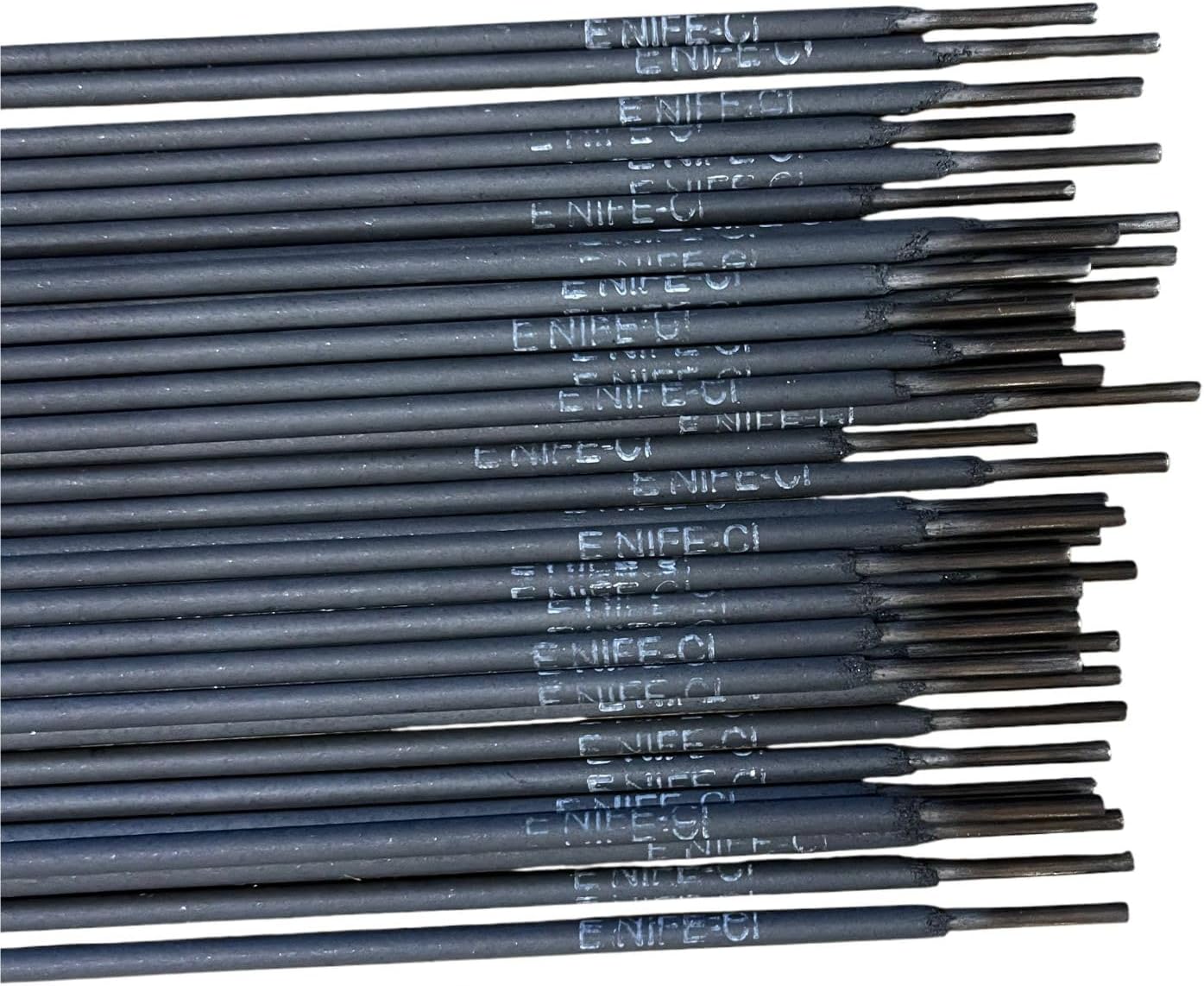
 ENiFe-CI Nickel-Iron Welding Rods 3/32"x12"View on Amazon
- 5
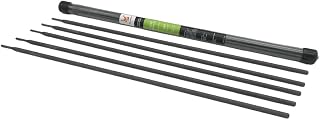
 ENiFe-CI 5pcs 55-Percent Nickel Cast Iron Welding ElectrodeView on Amazon
- 6
 ENiFe-CI Nickel-Iron Cast Iron Welding RodsView on Amazon
- 7
 Nickel 99 Cast Iron Welding Electrode Repair & MaintenanceView on Amazon
- 8
 Nickel 55 Cast Iron Welding Electrode Repair & MaintenanceView on Amazon
- 9
 ENiClView on Amazon
Nickel vs steel welding rod: which one should you buy? If the job is cast iron, an engine block, a manifold or a broken casting, the nickel rod wins: its soft, machinable bead is far less likely to crack the casting. If the job is steel, use a steel rod for steel. This guide explains the difference and ranks the four nickel rods below by listing detail.
Other welders and gear to compare
 ENiFe-CI Nickel-Iron Welding Rods 3/32"x12"Check price on Amazon
 ENiFe-CI 5pcs 55-Percent Nickel Cast Iron Welding ElectrodeCheck price on Amazon
 ENiFe-CI Nickel-Iron Cast Iron Welding RodsCheck price on Amazon
 Nickel 99 Cast Iron Welding Electrode Repair & MaintenanceCheck price on Amazon
 Nickel 55 Cast Iron Welding Electrode Repair & MaintenanceCheck price on Amazon
 ENiClCheck price on Amazon
This guide links to our product roundups, where WeldGearLab gets a commission on purchases made through links on this page, and your price stays the same. Read our affiliate disclosure.
The difference: nickel vs steel welding rod in one paragraph
Cast iron cracks when welded with steel rod because the weld cools into a hard, brittle zone next to the casting. Nickel rod solves this: the weld metal stays soft and machinable, so it moves with the casting instead of fighting it. Steel rod is for steel; nickel rod is for cast iron. The four rods in this guide are all nickel, for cast iron repair; the steel side is described from the comparison below.
Side by side
| Model | Type | Diameter | Process | Standards |
|---|---|---|---|---|
| Fox Alloy ENiFe-CI | Nickel-iron | 3/32 in | Stick | AWS A5.15 |
| Fox Alloy ENi-CI | 99% nickel | 1/8 in (title); 3/32 in (spec) | Stick | AWS A5.15 |
| Blue Demon ERNI99 | 99% nickel | 1/8 in | TIG | Not stated |
| HYW Nickel 99 | 99% nickel | 3/32 in | Stick | Not stated |
All four listings below are nickel rods; this guide has no steel rod listing, so the steel side is described from the comparison above. All specs here repeat what the maker rates and the listing prints.
When nickel is the better choice
Any cast iron repair: cracked engine blocks, exhaust manifolds, pump housings, broken mounting ears. The Fox Alloy ENiFe-CI listing names gray and nodular cast iron and cast iron-to-steel joining, with higher resistance to solidification cracking than standard nickel electrodes. The ENi-CI and Nickel 99 listings promise machinable welds, which matters when the repair must be drilled, tapped or milled afterward. Nickel also suits thin cast iron parts, where the ENi-CI listing says to weld cold or slightly preheated.
When steel is the better choice
Any steel fabrication: frames, brackets, trailers, general repair. Using nickel rod on steel is not wrong, but machinability and crack resistance are for cast iron repair, not for a steel joint. If the base metal is steel, reach for the steel rod.
The four nickel rods in this guide, ranked
Fox Alloy ENiFe-CI. The listing describes 15 pieces of 3/32 in by 12 in nickel-iron rod, 0.6 lb, meeting AWS A5.15, EN ISO 1071 and GB/T10044. It claims crack-resistant electrodes for gray and nodular cast iron, with stronger weld metal and higher resistance to solidification cracking than standard nickel electrodes. It is the most complete listing here: piece count, size, weight and three standards named.
Fox Alloy ENi-CI. The listing describes 5 pieces of 99% nickel rod for cast iron, meeting AWS A5.15, EN ISO 1071 and GB/T10044, with soft machinable weld metal for cold or slightly preheated work. One contradiction: the title says 1/8 in while the spec table says 3/32 in diameter; the title wins, but check before buying. It weighs 6.4 oz and comes in a box.
Blue Demon ERNI99. The listing describes a 1 lb tube of 1/8 in by 36 in TIG rod, ERNI99, for DCEN, with machinable welds and overlay and build-up use. It is the only TIG rod here; the others are stick electrodes. The listing is thinner than the Fox Alloy pair, with no standards named.
HYW Nickel 99. The listing describes 5 lbs of 3/32 in nickel 99 electrodes for cast iron production and repair, with excellent machinability. It is the bulk buy of the group and the thinnest listing: two bullets, no standards, no process detail beyond stick. It ranks last on listing detail, not on the rod itself.
How to read a rod listing
The AWS classification tells you what the rod is: ENi-CI is 99% nickel, ENiFe-CI is nickel-iron, and both meet AWS A5.15 for cast iron. The diameter decides the amperage range, so a title/spec mismatch like the ENi-CI’s 1/8 in against 3/32 in is worth catching before you set the machine. Machinable means the bead can be drilled and tapped afterward, which is the whole point of nickel on cast iron. For TIG work, the Blue Demon ERNI99 is the only pick here; the rest are stick electrodes.
Storing nickel rod
Nickel electrodes cost too much to waste on moisture. Keep them in the box or a rod tube, off the concrete floor, and out of the damp corner of the shop. The Fox Alloy ENi-CI listing ships its 5 pieces in a box; keep that box closed between jobs. Damp rod welds poorly whatever the classification.
FAQ for welders
Can I weld cast iron with a steel rod?
You can strike an arc, but the weld usually cracks. Cast iron needs the soft, machinable bead that nickel gives; steel rod cools too hard next to the casting. For a lasting cast iron repair, use nickel.
What is the difference between ENi-CI and ENiFe-CI?
ENi-CI is 99% nickel with the softest, most machinable bead. ENiFe-CI is nickel-iron: stronger weld metal and higher resistance to solidification cracking, per the Fox Alloy listing, which names it for high-strength gray and nodular cast iron. Pick ENi-CI for machinability, ENiFe-CI for strength.
Can I TIG weld cast iron with these rods?
With the right rod, yes. The Blue Demon ERNI99 is a TIG rod for DCEN; the other three listings are stick electrodes. Do not run a stick electrode in a TIG torch.
Do I need to preheat cast iron?
The ENi-CI listing says to weld cold or slightly preheated, which is nickel’s advantage: less preheat than steel rod demands. Follow the rod maker’s guidance for the specific casting and its thickness.
Why save nickel rod for cast iron?
These listings are for cast iron repair electrodes, not for steel rod. The guide recommends nickel rod for cast iron and steel rod for steel, based on the base metal.
Related: best TIG rod for motorcycle frames and the welding consumables hub.