How to Use Rust Converter on Metal
How to use rust converter on rusted metal, from loose-rust prep through thin coats and drying, with 4 products compared by size, form and dry time.

On this page
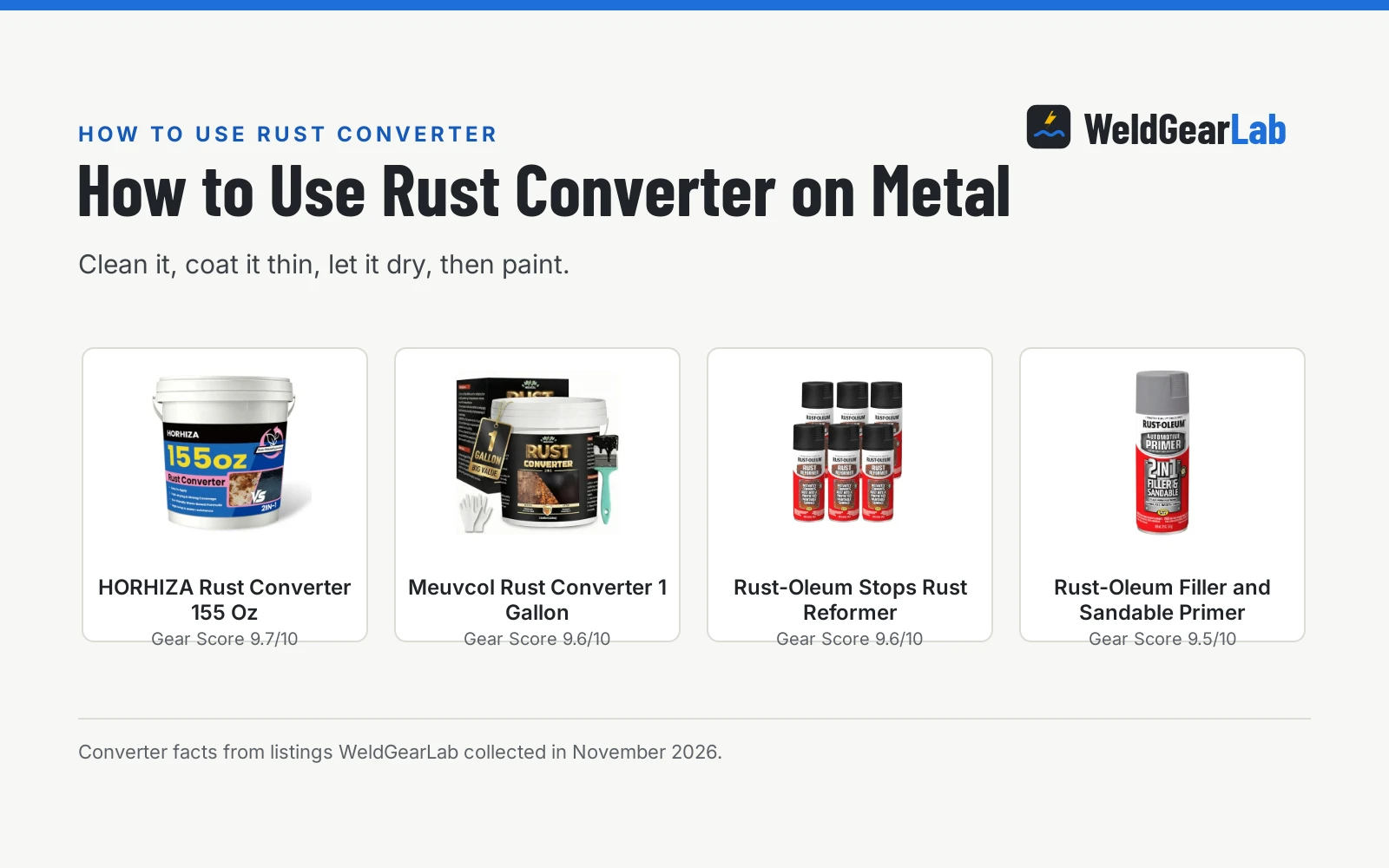
Top picks at a glance
As an Amazon Associate I earn from qualifying purchases.
- 1
 2 in 1 Rust Converter & Metal Primer9.7/10View on Amazon
- 2
 2-in-1 Rust Converter & Metal Primer9.6/10View on Amazon
- 3
 Rust-Oleum Stops Rust Reformer Black Spray Paint9.6/10View on Amazon
- 4
 Rust-Oleum Automotive Stops Rust Filler & Sandable9.5/10View on Amazon
A rusted frame rail or fender edge can still have good metal under the scale, and grinding it back to bare steel takes time and thins the part. How to use rust converter is simple in outline: clean off the loose rust, brush or spray on thin coats, let the coating dry, then paint over it. The products below handle the coating step, each in a different form and size.
This guide links to our product roundups, where WeldGearLab gets a commission on purchases made through links on this page, and your price stays the same. Read our affiliate disclosure.
2 in 1 Rust Converter & Metal Primer
A water-based 2-in-1 rust converter and metal primer in a 155 Fl Oz size, brushed on in thin coats for cars, marine, industrial and chassis work.
Pros
- Water-based formula with low odor, cleaned up with water
- Works as both converter and primer, so no separate primer coat is listed
- 155 Fl Oz size suits large jobs such as chassis and trailers
- UV, chemical and abrasion resistance stated for harsh environments
Cons
- Needs 24 hours to dry
- Brush-on only, with no spray option stated
- Large 155 Fl Oz size is more than a small repair needs
- Black finish only, so the topcoat carries the final color
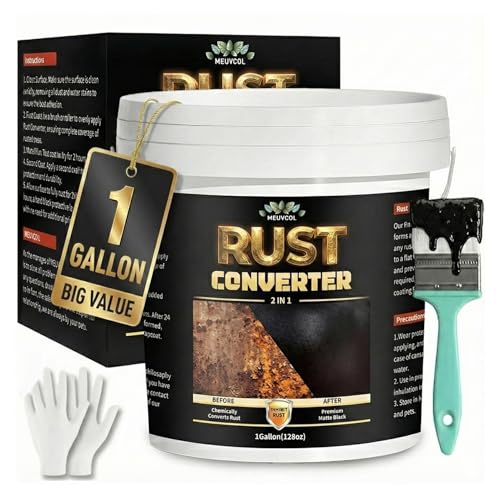
2-in-1 Rust Converter & Metal Primer
A single-component, ready-to-use rust converter and primer in a 1 Gallon size, brushed on in thin coats for automotive, farm, marine and construction work.
Pros
- 1 Gallon size suits large jobs such as trucks, farm and marine work
- Single-component and ready to use, with no mixing stated
- Creates a flat finish on both rusted and bare metal
- Heat resistance stated in the listing
Cons
- Needs 24 hours to dry and form a protective film
- Brush-on only, with no spray version in the listing
- No warranty term is stated in the listing
- Black finish only, so the topcoat carries the final color
Rust-Oleum Stops Rust Reformer Black Spray Paint
A black spray that converts rust into a flat black, paintable surface, sold as a 6 pack of 10.25 Ounce cans with any-angle spray.
Pros
- Converts rust to a flat black, paintable surface without sanding to bare metal
- Dries tack free in 20-40 minutes
- Any-angle spray works in any direction, even upside down
- 6 pack suits several parts or repeat jobs
Cons
- Needs 24 hours before a topcoat goes on
- Each can is 10.25 Ounce, so large areas need more than one can
- No warranty term is stated in the listing
- Black finish only, so the topcoat sets the final color
Rust-Oleum Automotive Stops Rust Filler & Sandable
A gray oil based filler and sandable spray primer in a 12 Ounce can that covers up to 10 sq ft and dries to the touch in 10 minutes.
Pros
- Fills minor surface imperfections and sands smooth
- Covers up to 10 sq ft from a 12 Ounce can
- Dries to the touch in 10 minutes and can be recoated then
- Comfort tip sprays from any angle
Cons
- Made to sit under a topcoat, so it adds a step before paint
- 12 Ounce can covers up to 10 sq ft, so large panels need more cans
- Gray only, so the topcoat sets the final color
- Fills minor surface imperfections only
How to use rust converter, step by step
The products here share the same outline: prep, coats, dry, then paint.
- Clean the surface. Remove loose rust and debris, wipe off grease and oil, and wipe the metal dry.
- Apply thin coats. Brush the converter on in thin coats, or spray it from the can. The gallon converter calls for a minimum of two thin coats, and the 155 Fl Oz jug calls for 2-3 thin coats. The comfort tip sprays from any angle, even upside down.
- Let it dry. Allow 24 hours for the converter coating to dry and form a protective film; the filler primer dries faster, as noted below.
- Paint over it. Once dry, the converted surface is a flat black, paintable surface ready for a topcoat. The filler primer instead gives a gray base coat that fills minor surface imperfections and sands smooth before the topcoat goes on.
The spray reformer dries tack free in 20-40 minutes, but it still needs 24 hours before a topcoat. The filler primer dries to the touch in 10 minutes, when it can be recoated.
Side by side
| Form | Size | Dry time | Color | |
|---|---|---|---|---|
| HORHIZA Rust Converter 155 Oz | Water-based, brush on | 155 Fl Oz | 24 hours | Black |
| Meuvcol Rust Converter 1 Gallon | Single-component, brush on | 128 Fl Oz | 24 hours | Black |
| Rust-Oleum Stops Rust Reformer | Oil based spray | 10.25 Ounce, pack of 6 | 24 hours before topcoat | Black |
| Rust-Oleum Filler and Sandable Primer | Oil based spray | 12 Ounce | 10 minutes to touch | Gray |
Dry time is the same across the brush-on converters, so form and size decide the pick. The sprays are quicker to touch: the reformer is tack free in 20-40 minutes, and the filler primer is dry to the touch in 10 minutes. The reformer still needs the stated wait before a topcoat.
Spray or brush-on: which form fits the job
The two brush-on converters come in the largest sizes here, a 1 Gallon jug and a 155 Fl Oz jug, and both call for thin coats applied with a brush. They suit frames, trailers and fences, the kind of large work where a brush reaches every edge.
The two sprays come in smaller cans, a 12 Ounce primer and 10.25 Ounce cans in a 6 pack, and they suit brackets, panels and parts you can hold or reach with a can. The reformer sprays from any angle, even upside down, which helps on the underside of a part.
The products in this guide
The products below handle the coating step: the three converters turn rust into a paintable surface and the filler primer gives a sandable base coat instead, and the form and size decide which one fits the job.
What to check before you topcoat
- Dry time. The converter coating has had 24 hours to dry and form a protective film.
- Finish. The converted surface reads as a flat black, paintable surface; the filler primer reads as a sanded gray base coat.
- Prep. Loose rust, debris, grease and oil are off the metal, and the surface was wiped dry.
- Primer. Where the surface needs filling, the filler primer sands smooth and gives top coat adhesion for the paint that follows.
For more options, see our metal fab tools guides.
FAQ for welders
How long does rust converter take to dry?
The three converters here state 24 hours to dry and form a protective film. The spray reformer dries tack free in 20-40 minutes, but still needs 24 hours before a topcoat. The filler primer dries to the touch in 10 minutes, when it can be recoated.
Can you paint over rust converter?
Yes. The reformer converts rust into a flat black, paintable surface, and the filler primer gives a rust resistant base coat with top coat adhesion. Let the coating dry for the stated time first, 24 hours for the three converters here, then paint over it.
Do I need to remove all the rust first?
No, not down to bare metal. The reformer listing states its formula saves the time and effort of sanding rust all the way down to bare metal. What you do remove is loose rust and debris, plus grease and oil, and you wipe the surface dry before you coat it.
How many coats of rust converter should I apply?
The brush-on converters state the count: the gallon converter calls for a minimum of two thin coats, and the 155 Fl Oz jug calls for 2-3 thin coats. Let the converter coating dry for 24 hours after the last coat.
Does rust converter work on bare metal?
The gallon converter states it creates a flat finish on both rusted and bare metal, and the 155 Fl Oz jug states it applies directly to rusted or clean metal. The spray reformer is listed for rusty metal surfaces.
Related: best rust converter for auto body, rust remover vs rust converter for car, and best spray on rust remover.