Ear Muffs Safety: Choosing Hearing Protection for the Shop
Ear muffs safety comes down to the stated rating, a seal that holds, and a muff that fits the wearer and the work.

On this page
Top picks at a glance
As an Amazon Associate I earn from qualifying purchases.
- 1
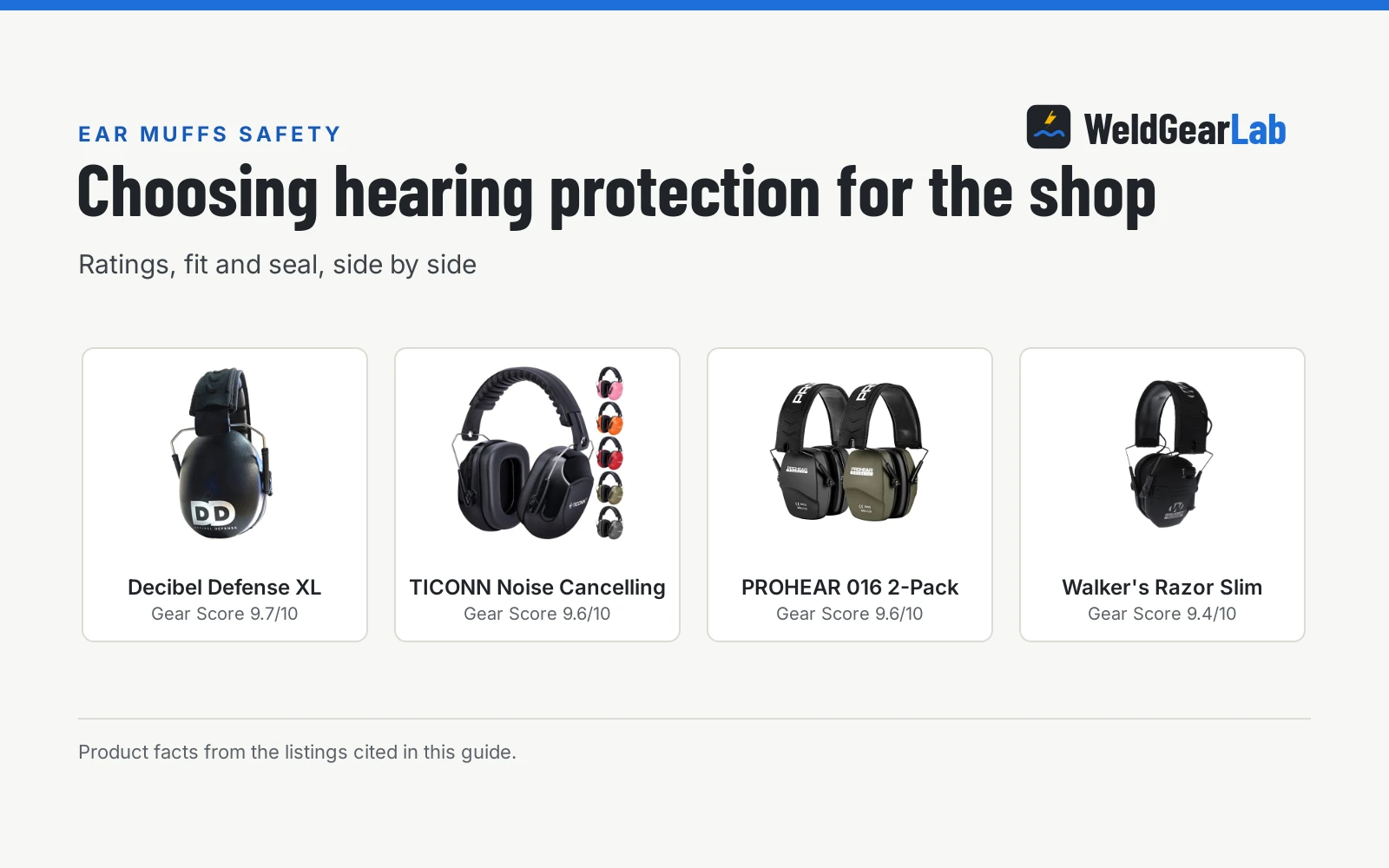
 DECIBEL DEFENSE Ear Protection9.7/10View on Amazon
- 2
 TICONN Noise Cancelling Ear Muffs for Adults9.6/10View on Amazon
- 3
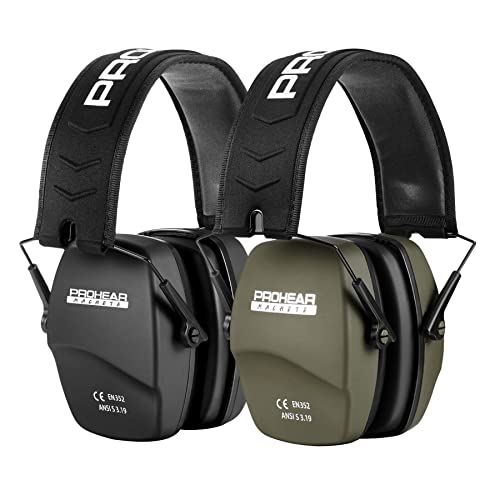 PROHEAR 016 Shooting Ear Protection Earmuffs 29.6/10View on Amazon
- 4
 Walker's Razor Slim Electronic Muff, Black9.4/10View on Amazon
Grinding a bead smooth, running a cut-off wheel, or knocking a bent bracket back into shape fills a small shop with noise that does not let up. Ear muffs safety is the question of which muffs keep that noise down to a level the ears can live with, and how to tell a real rating on the box from a vague claim. This guide reads the listings, compares their stated ratings, and shows what to check before the first use.
This guide links to our product roundups, where WeldGearLab gets a commission on purchases made through links on this page, and your price stays the same. Read our affiliate disclosure.
DECIBEL DEFENSE Ear Protection
A passive muff with the highest stated NRR here at 37 dB, in an extra-large size with a padded headband and a foldable frame.
Pros
- States 37 dB NRR, the highest stated NRR in this guide
- Passive design needs no batteries or electronics
- Padded headband and soft dBTech foam for long wear
- Folds for storage and fits larger heads in XL
Cons
- No warranty term is stated, only a satisfaction promise
- Snug fit is intentional, so the first fit can feel tight
- XL is only available in black
TICONN Noise Cancelling Ear Muffs for Adults
A foldable muff with memory foam cushions, an adjustable headband and stated resistance to drops, cold and heat.
Pros
- States NRR 26 dB and meets ANSI S3.19-1974 and CE EN 352-1
- Soft memory foam cushions and an adjustable headband
- ABS shell with a reinforced metal frame
- Folds for carrying and storage
Cons
- No warranty term is stated
- Black is the only color stated
- Soft foam cushions need a good seal to hold the stated rating
PROHEAR 016 Shooting Ear Protection Earmuffs 2
Two low-profile muffs in one pack, with a stated NRR of 26 dB, a folding frame and a bag for carrying.
Pros
- Two muffs in the pack, in black and green
- States NRR 26 dB and SNR 31 dB
- Cites ANSI S3.19-1974 and CE EN 352-1
- Folding design with a bag for carrying
Cons
- No warranty term is stated
- Light build at 0.46 lb, with a composite housing rather than a metal frame
- Low-profile cut-out cups suit rifles and shotguns first, per the listing
- Size is listed as Large, with no smaller size stated
Walker's Razor Slim Electronic Muff, Black
An electronic muff that amplifies safe sounds and compresses loud ones, with a stated NRR of 23 dB and an audio input jack.
Pros
- Two hi-gain microphones amplify safe sounds
- Sound-activated compression quiets loud noise
- Audio input jack turns the muffs into headphones
- Slim ear cups with a padded metal wire frame headband
Cons
- States the lowest NRR here at 23 dB
- No safety standard is stated in the listing
- Warranty is listed only as Manufacturer Warranty, with no term stated
Ear muffs safety: ratings, fit and seal
The rating on the box is the starting point. The listings here state NRR figures of 23 dB, 26 dB and 37 dB, and two of them also state SNR figures of 31 dB and 33 dB. NRR and SNR are different ratings, so a muff that lists both gives two figures for the same cups, and the figures should be read side by side rather than mixed.
A rating means little without a seal. The Decibel Defense listing ties protection to cups that fully cover the ears, and the TICONN and PROHEAR listings tie fit to an adjustable headband and padding that holds the cups in place. Fit is the part the buyer controls: adjust the headband, seat the cups over the ears, and check that the seal holds when the head moves.
Side by side
| NRR | Pack | Certification | |
|---|---|---|---|
| Decibel Defense XL | 37 dB | 1 | ANSI S3.19, CE EN 352-1 |
| TICONN Noise Cancelling | 26 dB | 1 | ANSI S3.19-1974, CE EN 352-1 |
| PROHEAR 016 2-Pack | 26 dB | 2 | ANSI S3.19-1974, CE EN 352-1 |
| Walker’s Razor Slim | 23 dB | 1 | Not stated |
The Decibel Defense muff carries the highest stated NRR here at 37 dB, while the TICONN and PROHEAR muffs state 26 dB and the Walker’s states 23 dB. The TICONN, PROHEAR and Decibel Defense listings cite a stated standard, while the Walker’s listing states none.
The gear: ear muffs for shop noise
Grinding, cutting and hammering are the shop jobs that call for the muffs below, each one ranked by Gear Score with the strongest stated rating first.
How to choose ear muffs for the shop
Start with the rating, then match the muff to the work. A passive muff needs no batteries and works whenever it is on the head, while an electronic muff amplifies safe sounds and compresses loud ones. The Walker’s Razor Slim is the electronic pick here, with two hi-gain microphones and a volume knob on the outside.
- Rating. Compare NRR figures across listings, and note when a listing also states an SNR figure.
- Fit. Look for an adjustable headband and cups that slide, like the metal sliders on the Decibel Defense muff, and a size that matches the wearer: Regular fits most adults and teens ages 10 and up, while XL adds extension for larger heads.
- Weight. The PROHEAR listing states 0.46 lb, the Walker’s states 0.95 lb, and the Decibel Defense states 12 oz, all with padded headbands and cushioned cups.
- Storage. Folding muffs store easily, and the PROHEAR pack includes a bag for carrying.
- Standard. Look for a stated standard such as ANSI S3.19 or CE EN 352-1 in the listing, and treat a listing with no stated standard as a gap.
Fit checks before the first use
Check the fit before the muff goes to work. Slide the cups until they fully cover the ears, and check that the seal holds with the headband seated. A snug fit is intentional on the Decibel Defense muff, and the listing says to stretch the muffs gently over the box overnight if they feel too tight.
Check the moving parts as well: the volume knob on the Walker’s, the fold on the TICONN and PROHEAR muffs, and the sliders on the Decibel Defense muff. If a cup will not stay in place, or the seal breaks when the head turns, adjust the headband before starting work.
Noise and the shop. Muffs lower the noise that reaches the ears; they do not remove it. Keep the muffs on for the whole loud job, from the first cut to the last grind, and store them where the cushions keep their shape and the headband stays clean.
FAQ for welders
What NRR should ear muffs have for shop work?
The listings in this guide state NRR figures from 23 dB to 37 dB, with the highest figure on the Decibel Defense muff. No single figure suits every shop, because the rating sits beside fit, seal and the length of the loud work. Compare the stated NRR across listings, then run the fit checks above before choosing.
Do ear muffs need a safety certification?
A stated standard gives the rating something to stand on. The TICONN, PROHEAR and Decibel Defense listings cite ANSI S3.19 and CE EN 352-1, while the Walker’s listing states no standard. A muff with no stated standard can still list an NRR, as the Walker’s does at 23 dB, but the buyer has less to check it against.
Are electronic ear muffs good for the shop?
The Walker’s Razor Slim amplifies safe sounds through two hi-gain microphones and uses sound-activated compression for loud noise, with a volume knob on the outside and an audio input jack. That suits work where hearing sounds around the shop between loud bursts matters. A passive muff such as the Decibel Defense needs no batteries and works whenever it is on the head, which suits long loud jobs.
Do ear muffs fit with a welding helmet?
The listings here describe slim and low-profile cups: the Walker’s has extra slim ear cups, and the PROHEAR has low-profile cut-out cups. Slim cups sit closer to the head, which leaves more room beside a helmet. Check the fit with the helmet on before starting work, and adjust the headband until the cups seal.
How should ear muffs be stored?
The TICONN, PROHEAR and Decibel Defense muffs fold for carrying and storage, and the PROHEAR pack includes a bag for carrying. Store the muffs where the cushions keep their shape and the headband stays clean. A muff that has lost its seal, or a cushion that has gone flat, needs replacing before the next loud job.
Related: best ear muffs for welding, ear muffs vs ear plugs for welding, best ear muffs for hard hat, and the welding safety gear hub. Also see the welding safety gear checklist for beginners.