Best Hobby Welding Helmet (2026): 5 Picks Scored for Shop and Garage Fabrication
Five hobby welding helmet options for garage fabrication, compared on shade range, switching speed, shell durability, safety ratings and warranty.
 By WeldGearLab Editorial
Updated October 9, 2026
By WeldGearLab Editorial
Updated October 9, 2026
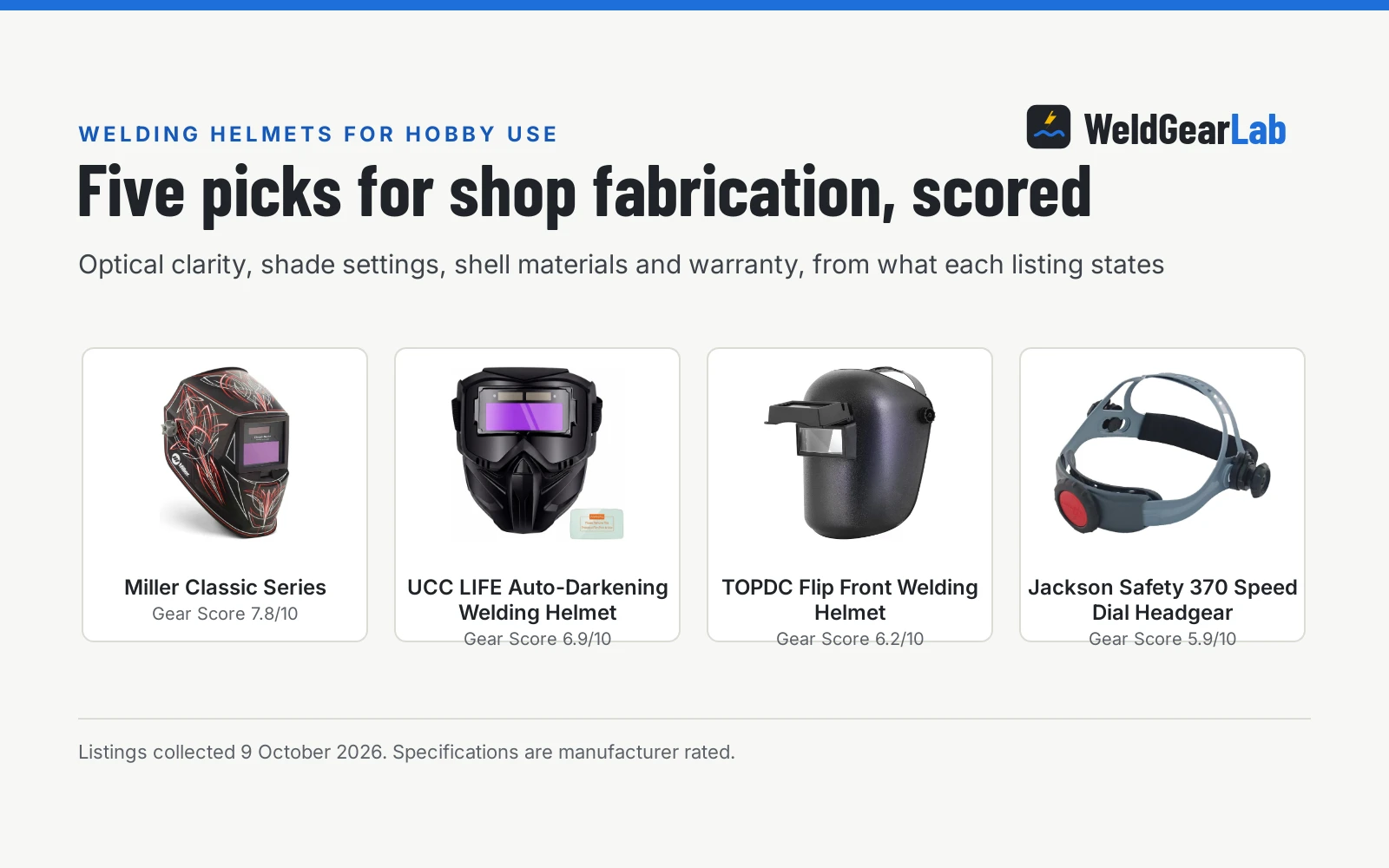
Finding the best hobby welding helmet means balancing optical protection, switching speed, viewing area, and suspension comfort without overspending on features your garage shop will not use. For light DIY repairs, home fabricators need clear visibility before striking an arc and dependable protection against ultraviolet and infrared radiation. We compared five listings on variable shade ranges, switching speed, shell materials, third-party safety standards, and stated warranties.
As an Amazon Associate I earn from qualifying purchases. WeldGearLab earns a commission when you buy through links on this page, at no extra cost to you. Read our affiliate disclosure.
Quick picks
- Best Overall Miller Classic Series: ClearLight optics with variable weld shades 8-13, cut shades 5-8, grind shade 3, ANSI Z87.1+ and CSA safety standards, and a 3.0 light state. Check price on Amazon
- Best Value Auto-Darkening UCC LIFE Auto-Darkening Welding Helmet: A 0.1ms auto-darkening transition with True Color optics, 4.0mm hard PVC shell, and modes for TIG, MIG, ARC, and grinding. Check price on Amazon
- Best Flip-Front TOPDC Flip Front Welding Helmet: A fixed shade 11 flip-front design with a 3.86 x 1.62 in viewing area for simple switching between welding and grinding. Check price on Amazon
- Best Replacement Headgear Jackson Safety 370 Speed Dial Headgear: Ratcheting 370 Speed Dial headgear with an oversized knob, three-position lens slider, washable sweatband, and Made in USA construction. Check price on Amazon
Compare the picks
| Model | Gear Score | Helmet Type | Viewing Area / Lens | Shade Range | Switching Speed | Safety Standards | Warranty |
|---|---|---|---|---|---|---|---|
| Miller Classic Series | 7.8/10 | Auto-darkening helmet | 6 sq in, ClearLight | Weld 8-13, cut 5-8, grind 3 | 1/23,000 s | ANSI Z87.1+, CSA, CE | Not stated |
| UCC LIFE Auto-Darkening | 6.9/10 | Auto-darkening helmet | Not stated, True Color | Not stated | 0.1ms | Not stated | Not stated |
| TOPDC Flip Front | 6.2/10 | Flip-front passive helmet | 3.86 x 1.62 in (bullets), 3.86″x1.61″ (title) | Fixed shade 11 | Not applicable (passive) | Not stated | Not stated |
| Jackson Safety 370 Speed Dial | 5.9/10 | Replacement headgear only | Not applicable (headgear only) | Not applicable | Not applicable | Not stated | Not stated |
| YESWELDER Replacement Headgear | 5.6/10 | Replacement headgear only | Not applicable (headgear only) | Not applicable | Not applicable | Not stated | Not stated |
Specifications are manufacturer rated, as published on each listing and collected 9 October 2026. Where a listing states a figure two ways, the table shows both.
The picks
| Award | Product | Gear Score About the Gear ScoreThe Gear Score runs from 0 to 10 and weighs performance (35%), build (25%), value (25%), safety (10%, where it applies) and warranty (5%), using only what the manufacturer and the listing publish. How we pick › | |
|---|---|---|---|
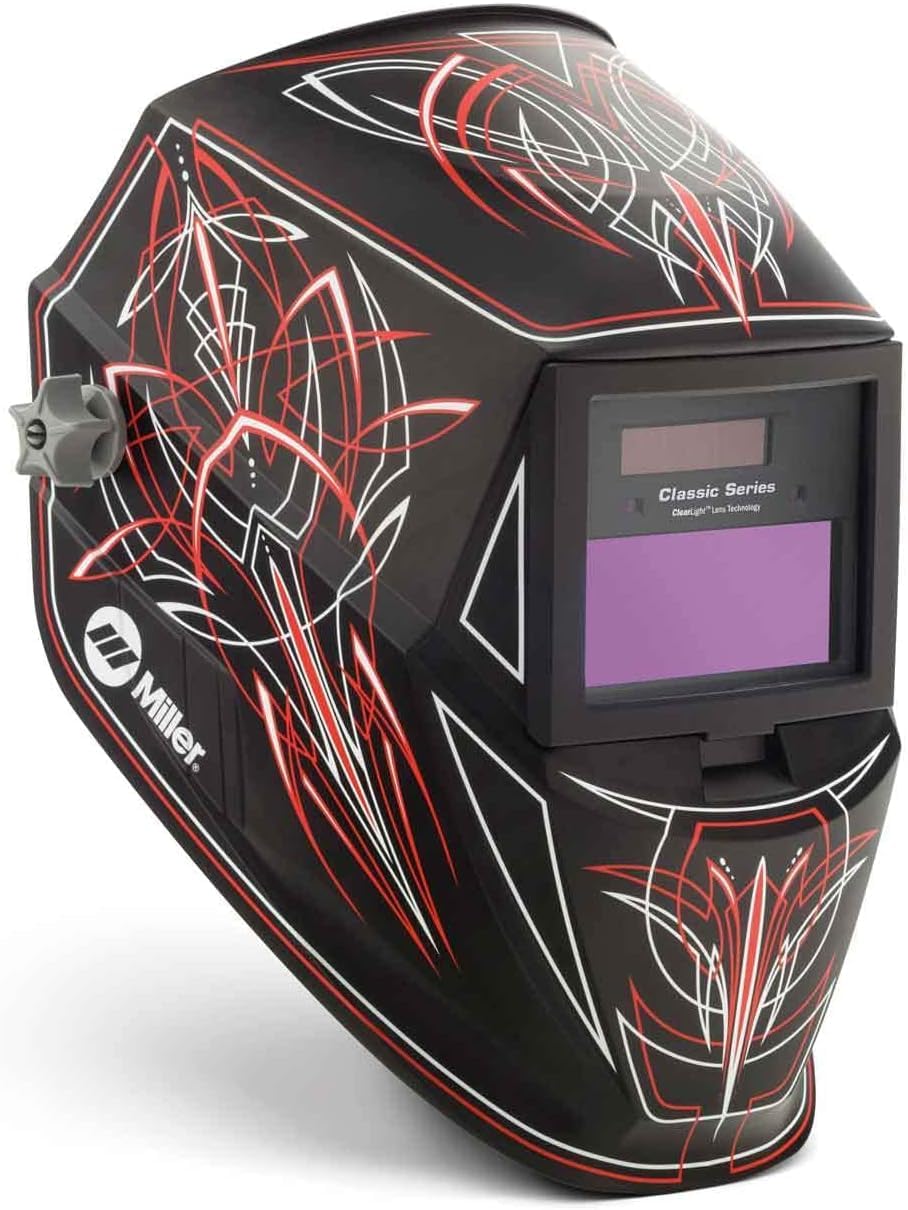 Miller Classic Series Welding Helmet, ClearLight™
|
7.8/10 | Check price on Amazon | |
 Auto-Darkening Welding Helmet
|
6.9/10 | Check price on Amazon | |
 TOPDC Welding Helmet 3.86"x1.61"
|
6.2/10 | Check price on Amazon | |
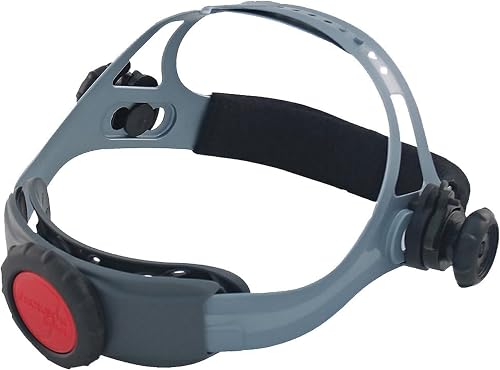 Jackson Safety 370 Speed Dial Replacement
|
5.9/10 | Check price on Amazon | |
 YESWELDER Welding Helmet Headgear Head Band Hood
|
5.6/10 | Check price on Amazon |
Miller Classic Series Welding Helmet, ClearLight™
An auto-darkening welding helmet with ClearLight optics, variable weld shades 8-13, cut shades 5-8, grind shade 3, and ANSI Z87.1+ and CSA safety ratings.
Pros
- ClearLight lens with weld shades 8-13, cut shades 5-8, and grind shade 3
- Two arc sensors with 1/23,000 second switching speed and sensitivity down to five amps
- Meets ANSI Z87.1+, CSA and CE standards with a 3.0 light state
- Digital controls for shade, delay, and sensitivity adjustments
Cons
- Viewing area is 6 square inches, which is smaller than wide-view hoods
- Listing states only two arc sensors
- No replacement outer or inner protection lenses named in the listing
- No warranty term is stated in the listing
Auto-Darkening Welding Helmet
An auto-darkening welding helmet featuring a 0.1ms switching speed, True Color optics, a 4.0mm hard PVC shell, and a designated rating for home and hobby use.
Pros
- Lists a fast 0.1ms auto-darkening transition speed
- Shell is built from 4.0mm heavy-duty hard PVC
- True Color optical view with an anti-fog lens coating and breathable vent system
- Rated for multiple processes including TIG, MIG, ARC welding, and grinding
Cons
- No ANSI Z87.1, CSA, or CE safety standard is stated in the listing
- No warranty term is stated in the listing
- Viewing area dimensions and numerical shade ratings are not stated
- Listing explicitly notes it is for hobby and home use only, not for professional industrial welding
TOPDC Welding Helmet 3.86"x1.61"
A passive flip-front welding mask with a fixed shade 11 filter lens, a 3.86 x 1.62 in viewing window, and an adjustable suspension system.
Pros
- Flip-front design allows quick switching between clear viewing and shade 11 without lifting the hood
- Passive shade 11 filter lens needs no batteries, sensors, or electronic charging
- Compatible with common processes including TIG, MIG, MMA, and plasma cutting
- Lenses are removable for cleaning and adjustment
Cons
- Viewing area stated as 3.86 x 1.62 in in the bullets and 3.86"x1.61" in the title
- No ANSI Z87.1, CSA, or CE safety standard is stated in the listing
- No warranty term is stated in the listing
- Fixed shade 11 cannot be adjusted for low-amperage TIG or higher-amperage welding
Jackson Safety 370 Speed Dial Replacement
A replacement ratcheting headgear system featuring an oversized adjuster knob, a three-position lens slider, and Made in USA construction.
Pros
- Patented 370 Speed Dial ratcheting mechanism with an oversized adjuster knob that operates with gloves on
- Built-in three-position slider adjusts distance between eyes and helmet lens
- Engineered detents lock hood in up and down positions to eliminate helmet creep
- Moisture-wicking sweatband is machine washable and made in the USA
Cons
- This is replacement headgear only; welding helmet shell and lens are sold separately
- Provides no eye or face protection against welding arcs on its own
- No ANSI Z87.1, CSA, or CE safety standard is stated in the listing
- No warranty term is stated in the listing
YESWELDER Welding Helmet Headgear Head Band Hood
A replacement headband assembly constructed from PE material with a butterfly rear support, engineered hood detents, and wide YESWELDER series compatibility.
Pros
- Engineered detents securely lock hood in both up and down positions to eliminate helmet creep
- Butterfly-shaped rear support with breathable padding cushions the back of the head
- Upgraded ratchet knob allows quick angle and headband size adjustments with gloves on
- Broad compatibility across YESWELDER hoods including L500A, L600A, M800H, and Q800D series
Cons
- This is replacement headgear only; helmet shell and lens are not included
- Provides no eye or face protection against welding arcs on its own
- No ANSI Z87.1, CSA, or CE safety standard is stated in the listing
- No warranty term is stated in the listing
How we scored them
Each model is scored out of 100 on performance, build, value, safety standards and warranty, using the weights defined on our site. A specification the listing does not publish scores zero, which is why the Miller helmet, with confirmed ANSI Z87.1+ and CSA safety ratings, earns the top score.
| Product | Gear Score | Perf. /35 | Build /25 | Value /25 | Safety /10 | Warranty /5 |
|---|---|---|---|---|---|---|
| Miller Classic Series | 7.8 | 30 | 21 | 19 | 8 | 0 |
| UCC LIFE Auto-Darkening Welding Helmet | 6.9 | 27 | 20 | 22 | 0 | 0 |
| TOPDC Flip Front Welding Helmet | 6.2 | 22 | 19 | 21 | 0 | 0 |
| Jackson Safety 370 Speed Dial Headgear | 5.9 | 20 | 20 | 19 | 0 | 0 |
| YESWELDER Welding Helmet Headgear | 5.6 | 19 | 19 | 19 | 0 | 0 |
Buying guide: how to choose the best hobby welding helmet
Auto-darkening versus passive flip-front filters
A primary decision when choosing a welding hood is whether to select an electronic auto-darkening filter or a passive glass filter. An auto-darkening helmet uses light sensors to switch from a light state to a dark shade within fractions of a millisecond when the arc strikes. This allows you to position your electrode or MIG torch with the hood lowered, reducing neck strain and misaligned starts. Passive helmets, like the TOPDC flip-front model, use a fixed shade glass lens without electronics. You flip the hinged filter assembly upward to inspect parts through a clear protective lens, then flip it down before striking an arc. Passive designs require no batteries, but auto-darkening lenses provide greater convenience for beginners and precision fabrication.
Viewing area and optical clarity
Viewing area determines how much of your joint and surrounding workpiece you can observe without turning your neck. The Miller Classic Series lists a 6-square-inch viewing area with ClearLight technology, which enhances color recognition and contrast across weld puddles. The TOPDC passive mask publishes a viewing area of 3.86 x 1.62 in in its bullet points. Larger viewing windows provide better peripheral awareness, but they also expose larger lens surfaces to spatter and scratches. If you weld in tight positions under vehicles or trailers, ensure the viewing window aligns comfortably with your natural line of sight.
Arc sensors and switching speed
Auto-darkening helmets rely on photosensors to detect the arc flash. Miller includes two arc sensors with a 1/23,000 second switching speed, rated for TIG welding down to five amps or below. The UCC LIFE helmet advertises an ultra-fast 0.1ms transition speed. Faster switching speeds help prevent eye strain from brief light bursts before the liquid crystal darkens. For out-of-position welding where clamps or pipes might obstruct a sensor, multiple sensors help ensure the cartridge darkens reliably.
Headgear comfort and shell construction
Welding hoods rest on your head for extended periods, making suspension design critical for reducing fatigue. Upgraded ratcheting headgear, such as the Jackson Safety 370 Speed Dial with its oversized knob and three-position lens slider, allows precise adjustment even while wearing welding gloves. Detents that lock the hood securely in raised and lowered positions prevent helmet creeping. Shell materials also matter: UCC LIFE uses a 4.0mm hard PVC shell to resist sparks and impact, while traditional nylon and polyamides balance spatter resistance with light overall weight.
Safety certifications and warranty terms
Not every helmet on the market carries third-party safety verification. The Miller Classic Series explicitly states compliance with ANSI Z87.1+, CSA, and CE standards, confirming high-impact protection and certified ultraviolet and infrared filtration. Other budget listings omit safety listings entirely. In our scoring system, missing safety standards result in zero safety points. None of the listings in this roundup publish a qualifying concrete warranty term with formal coverage details, so all five models receive zero warranty points.
Welding helmet safety. Electric welding arcs emit hazardous ultraviolet and infrared radiation capable of causing rapid retinal damage and arc eye burns. Never weld without appropriate shade protection matched to your process and amperage. Regularly inspect cover lenses for spatter pitting, and replace cracked shells immediately. For complete workshop protection, pair your welding hood with flame-resistant clothing and dedicated safety gear such as our best welding gloves for MIG.
Frequently Asked Questions
How does an auto-darkening welding helmet work?
An auto-darkening helmet contains photosensors that detect the sudden light burst when an electric arc is struck. A digital control circuit immediately triggers a liquid crystal display filter, switching the lens from a light resting shade to a protective dark shade in a fraction of a millisecond. Solar cells or lithium batteries provide the electrical power for the shutter mechanism.
How do you set a welding helmet correctly?
Adjust the ratcheting headband knob so the suspension fits snugly around your skull without pinching. Set the tilt angle and the eye-to-lens distance sliders so your eyes align naturally with the center of the viewing area. If your helmet features variable controls, select the appropriate shade number for your process and amperage, and adjust delay and sensitivity knobs to suit ambient shop lighting.
What shade is recommended for hobby welding?
The Miller Classic Series covers variable weld shades from 8 through 13, cut shades 5 through 8, and grind shade 3 with a 3.0 light state. The TOPDC mask uses a fixed shade 11 filter lens. For hobbyists, variable shades between 8 and 13 allow matching darkness to different processes, whereas a fixed shade 11 is set for general fabrication.
What is the difference between a welding helmet and replacement headgear?
A welding helmet is a complete protective assembly comprising an outer shell, viewing window, filter lens, and suspension headgear. Replacement headgear, such as the Jackson Safety 370 Speed Dial or YESWELDER headgear, includes only the internal ratcheting headband and pivot hardware. Replacement headgear carries no protective shell or filter lens and cannot protect against arc flash by itself.
Can a hobby welding helmet be used for grinding and plasma cutting?
Yes, provided the helmet offers appropriate shade modes or a clear inspection window. The Miller Classic Series includes dedicated cut shades 5 through 8 and a grind shade 3 with a 3.0 light state. The TOPDC flip-front mask allows lifting the shade 11 filter lens to view grinding work through an internal clear lens. Never grind with an auto-darkening filter active unless it is switched to a dedicated grind mode.
Related: welding helmets, welding safety gear, best auto darkening welding helmet, best welding gloves for MIG, and our guide to the best welder for beginners.
About the author
WeldGearLab Editorial is the editorial team behind WeldGearLab. We research product listings, specifications, safety listings and warranty terms, score every pick with the published Gear Score method, and correct errors when readers report them. We do not run our own shop trials; see How We Pick for exactly how picks are made.