Best Center Finder Tool (2026): 4 Pipe and Layout Picks
Four center finder tools for pipe and round stock, compared on pipe fit, dial range, magnets, build and warranty.

On this page
Top picks at a glance
As an Amazon Associate I earn from qualifying purchases.
- 1
 Best OverallStrong Hand MPCH2509.7/10View on Amazon
- 2
 Widest Pipe RangeAnblak Pipe Center Finder9.6/10View on Amazon
- 3
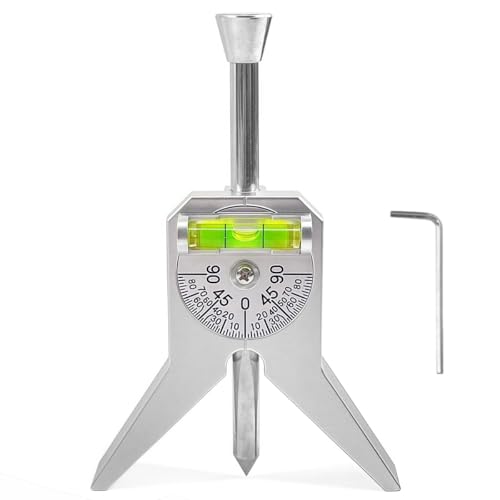 Smallest Pipe FitQZQUFJ Pipe Center Finder9.6/10View on Amazon
- 4
 Flat Stock PickFibraze Center Finder9.5/10View on Amazon
A pipe joint that fits up clean starts with a mark you can trust. Set the centerline wrong and the branch lands off, the saddle gaps, and the weld fights you all the way down the joint. A best center finder tool holds on the pipe, reads level, and puts the punch mark where the center is.
This roundup compares four center finder tools on what each listing states: pipe fit, dial range, magnets, build, and what travels in the box. Three mark pipe center points with a dial protractor, and one is a flat ruler for round stock and right-angle layout.
WeldGearLab gets a commission on purchases made through links on this page, and your price stays the same. Read our affiliate disclosure.
Quick picks
- Best Overall Strong Hand MPCH250: A 360 degree dial in 2.5 degree steps, built-in magnets, an anodized aluminum body and a hard case, for pipe 2 inches and larger. Check price on Amazon
- Widest Pipe Range Anblak Pipe Center Finder: Fits pipes from 1-1/2 to 6 inches with a 2.75 inch centering head, magnets and a center punch. Check price on Amazon
- Smallest Pipe Fit QZQUFJ Pipe Center Finder: Works on pipes 1/2 inch and larger, with a 4-inch Y base, a dial in 2.5 degree steps and a center punch. Check price on Amazon
- Flat Stock Pick Fibraze Center Finder: A flat aluminum ruler for center and 45/90-degree positioning on circular workpieces, with an imperial scale. Check price on Amazon
The machines
Strong Hand Tools Magnetic Pipe Centering Head
A magnetic centering head for pipe 2 inches and larger, with a 360 degree bubble protractor, an anodized aluminum body and a hard case.
Pros
- A 360 degree dial graduated in 2.5 degree steps, with a vial for level accuracy
- Built-in magnets hold it at any angle on steel pipe
- Anodized aluminum body for protection against the elements
- Hard case included for protection between jobs
Cons
- Pipe must be 2 inches or larger, so smaller pipe is out
- The dial moves in 2.5 degree steps, which limits fine angle settings
- Magnets grip magnetic metal only, so other pipe materials need a different hold
- No center punch is stated, so marking needs a separate punch
Magnetic Pipe Center Finder Tool
A magnetic Y-shape pipefitter gauge with an adjustable dial bubble protractor, a 2.75 inch centering head and a center punch, for pipes from 1-1/2 to 6 inches.
Pros
- Fits pipes from 1-1/2 to 6 inches, the widest stated range here
- Built-in magnets free both hands while you mark
- Integrated center punch and flexible marking column
- Anodized aluminum body resists corrosion
Cons
- Pipes under 1-1/2 inches or over 6 inches fall outside the stated fit
- Magnets grip magnetic metal only, so other pipe materials need a different hold
- No case is stated
- No warranty term is stated
Pipe Center Finder Punch Tool and Marker Tool
A pipe center finder and marker for pipes 1/2 inch and larger, with a 4-inch Y base, a dial in 2.5 degree steps and a center punch.
Pros
- Fits pipes 1/2 inch and larger, the smallest stated fit here
- Dial reads in 2.5 degree steps from -90 to +90 degrees
- Includes an inch scale, an inch chart and a tangent chart
- Center punch and hex key included for marking and adjustment
Cons
- No magnet is stated, so a hand holds it on the pipe while you mark
- Body material is named only as heat-resistant, with no alloy stated
- The dial stops at +90 and -90 degrees, so it cannot read a full circle
- No hard case is stated
Center Finder Tool Aluminum Alloy Imperial Circle
A flat aluminum alloy center finder with an imperial scale and 45/90-degree edges, for center and right-angle positioning on circular workpieces.
Pros
- Combines center positioning with 45/90-degree edges in one flat tool
- Imperial scale with a center line for hole positioning
- Aluminum alloy body resists rust and wear
- No extra tools are needed to align and mark
Cons
- No magnet is stated, so it cannot hold itself on steel pipe
- No dial protractor, so angles come only from the fixed 45/90-degree edges
- No center punch is stated, so marking needs a separate punch
- No warranty term is stated
Other welders and gear to compare
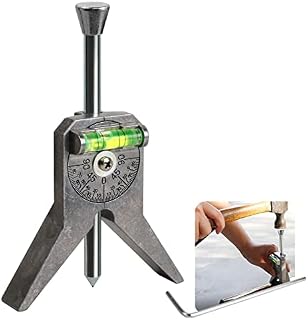 Anblak Pipe Center FinderCheck price on Amazon
 TOOLCOOL Circle Center Finder Tool Lathe Centering MarkingCheck price on Amazon
 Circle Center Finder Tool Aluminum Right Angle RulerCheck price on Amazon
 AltitudeCraft Magnetic Pipe Center Finder Punch Tool for 1-10Check price on Amazon
 Magnetic Pipe Center Finder ToolCheck price on Amazon
 Round Center Finder Compass Woodworking Circle Tool ClearCheck price on Amazon
Spec sheet comparison
| Model | Gear Score | Pipe fit | Dial | Material | Size | Extras | Warranty |
|---|---|---|---|---|---|---|---|
| Strong Hand MPCH250 | 9.7/10 | 2 in and larger | 360 degree, 2.5 degree steps | Anodized aluminum | 4.4 x 6 x 1.4 in | Hard case, magnets | None stated |
| Anblak Pipe Center Finder | 9.6/10 | 1-1/2 to 6 in | Adjustable dial bubble | Anodized aluminum | 2.75 in head | Magnets, center punch | None stated |
| QZQUFJ Pipe Center Finder | 9.6/10 | 1/2 in and larger | -90 to +90 degrees, 2.5 degree steps | Heat-resistant materials | 4 in Y base | Center punch, hex key, charts | None stated |
| Fibraze Center Finder | 9.5/10 | Circular workpieces | 45/90 degree edges | Aluminum alloy | 5.91 x 3.54 x 0.1 in | Imperial scale | None stated |
All specs here repeat what the maker rates and the listing prints, copied down 19 November 2026.
Buying guide: how to pick the best center finder tool
Pipe fit range
Pipe fit decides whether the tool seats on the work at all. The QZQUFJ fits pipes 1/2 inch and larger, the Strong Hand needs pipe 2 inches or larger, and the Anblak fits pipes from 1-1/2 to 6 inches. The Fibraze takes a different path: it is a flat ruler that aligns on circular workpieces, so it suits dowel positioning, picture frame corners and tile cutting as well as pipe marking. A center finder head earns its place next to a square and a tape in a layout kit.
Dial and protractor
The Strong Hand dial turns a full 360 degrees in 2.5 degree steps, with a vial for level accuracy. The QZQUFJ dial reads in 2.5 degree steps from -90 to +90 degrees and adds an inch scale, an inch chart and a tangent chart. The Anblak dial is an adjustable bubble protractor, and the Fibraze skips the dial entirely for fixed 45/90-degree edges. Match the dial to the angles you mark most: a full circle for top and bottom dead center, or a fixed square edge for right-angle work.
Magnets and marking
Magnets hold the tool on steel pipe while both hands stay free. The Anblak and the Strong Hand both have built-in magnets, while the QZQUFJ and the Fibraze state none. For marking, the Anblak has an integrated center punch and a flexible marking column, and the QZQUFJ has a center punch you push to a fixed point and tap with a hammer. Check the magnet grip on clean steel before you trust a mark.
Build and what travels with it
The Anblak and the Strong Hand use anodized aluminum, and the Fibraze uses aluminum alloy; the QZQUFJ names only heat-resistant materials. Only the Strong Hand states a hard case in the box, so the other three travel loose unless you add your own. The Strong Hand head measures 4.4 by 6 by 1.4 inches and weighs 0.77 lb, and the Fibraze ruler measures 5.91 by 3.54 by 0.1 inches.
Use as directed. Wear eye protection when you tap a center punch with a hammer, and keep fingers clear of the punch point. Clamp the pipe so it cannot roll while you mark, and check that a magnet holds before you trust a line. See the OSHA machine guarding page and the Safety Disclaimer.
Before You Strike an Arc
- Check the magnet grip on clean steel before marking; scale and paint can weaken the hold.
- Set the dial to level and read it twice before you punch the mark.
- Confirm the Y base seats on the pipe size in front of you before you trust the centerline.
- Keep the punch, hex key and hard case with the tool so the kit is complete on the next job.
- Clamp the pipe so it cannot roll while you mark.
FAQ for welders
What pipe sizes do these center finders fit?
The QZQUFJ fits pipes 1/2 inch and larger, the Anblak fits pipes from 1-1/2 to 6 inches, and the Strong Hand needs pipe 2 inches or larger. The Fibraze is a flat ruler for circular workpieces rather than a pipe gauge, so it has no stated pipe range. Pick the fit that covers the pipe you mark most.
Do any of these center finders have magnets?
Two do: the Anblak and the Strong Hand both state built-in magnets that hold the head on steel pipe. The QZQUFJ and the Fibraze state no magnets, so a hand holds them in place while you mark. Magnets grip steel pipe; check the hold on clean metal before you trust a line.
How do you mark a centerline with a center finder?
Set the Y base on the pipe and adjust the dial to the angle you need. With the QZQUFJ, adjust the hexagonal nut with the hex key, push the center punch to the fixed point, and tap it with a hammer to mark. With the Anblak, the integrated punch and marking column do the same job. Wear eye protection and keep fingers clear of the punch.
What is the difference between a pipe center finder and a flat center finder?
A pipe center finder seats a centering head on round pipe and reads angles on a dial protractor. A flat center finder, like the Fibraze here, is a ruler that aligns on circular workpieces with a center line and 45/90-degree edges. Choose the pipe finder for pipe runs and the flat ruler for dowels, frames and round stock.
Which center finder here comes with a case?
Only the Strong Hand states a hard case in the box. The other three state no case, so they travel loose unless you add your own. A case keeps the dial vial and the punch safe between jobs.
Related: best 6 inch combination square, best tape measure with fractions, best precision straight edge, and the measuring and layout hub.
Scoring, line by line
Each tool is scored on performance, build, value, safety listing and warranty, with the weights published on the How We Pick page. Center finder tools state no electrical safety listing, so every tool here scores zero on that criterion; the ranking comes from the other four.
| Product | Gear Score | Perf. /35 | Build /25 | Value /25 | Safety /10 | Warranty /5 |
|---|---|---|---|---|---|---|
| Strong Hand MPCH250 | 9.7 | 30 | 22 | 21 | n/a | 0 |
| Anblak Pipe Center Finder | 9.6 | 28 | 21 | 21 | n/a | 0 |
| QZQUFJ Pipe Center Finder | 9.6 | 28 | 20 | 20 | n/a | 0 |
| Fibraze Center Finder | 9.5 | 26 | 20 | 20 | n/a | 0 |
A pick’s weighted total decides where it lands between a 9.2 floor and a 9.8 ceiling, and a bigger total never produces a smaller number. Where safety does not apply (unpowered gear with no listed safety features), it is left out and the remaining 90 points make up the score.