Best Welding Apron for Blacksmithing (2026): 5 Shop Picks Scored
Five welding aprons for blacksmithing compared on stated dimensions, cowhide leather thickness, harness comfort, pocket layouts and split-leg protection.

On this page
Top picks at a glance
As an Amazon Associate I earn from qualifying purchases.
- 1
 Best Overalleletecpro 42 x 249.7/10View on Amazon
- 2
 Best Split-LegQeeLink Split Leg9.6/10View on Amazon
- 3
 Best Mid-Length LeatherLeaSeek 24 x 369.5/10View on Amazon
- 4
 Lightweight Cotton PickHobart 7706869.2/10View on Amazon
When you pull orange iron from the gas forge or lay down hot stick passes on heavy plate, flying scale and slag will chew through everyday shop clothes. Finding the best welding apron for blacksmithing means choosing heavy cowhide or treated fabric that shields your chest and thighs without binding your stride at the anvil. This guide compares five shop aprons on stated dimensions, material thickness, harness style, pockets and published specifications.
WeldGearLab gets a commission on purchases made through links on this page, and your price stays the same. Read our affiliate disclosure.
Quick picks
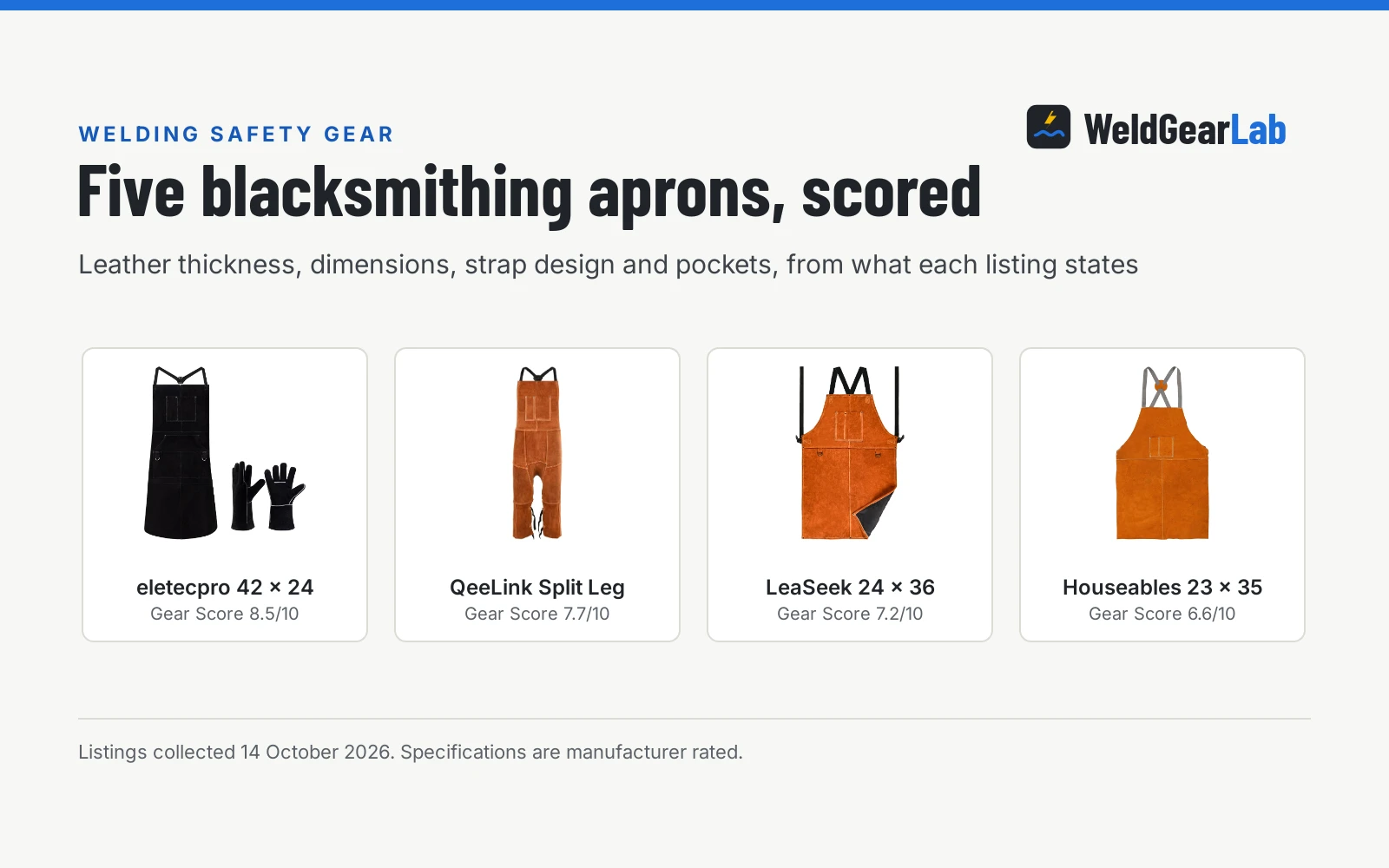
- Best Overall eletecpro 42 x 24: Full 42 x 24 inch coverage, stated cow split leather thickness over 2.0 mm, padded cross-back harness and 6 pockets. Check price on Amazon
- Best Split-Leg QeeLink Split Leg: Split-leg chap style protects each leg separately for straddling benches and working at the anvil. Check price on Amazon
- Best Mid-Length Leather LeaSeek 24 x 36: A 24 x 36 inch cowhide apron with cross-back straps adjustable from M to XXXL. Check price on Amazon
- Lightweight Cotton Pick Hobart 770686: A 10.08-ounce flame-retardant cotton bib for light shop work and grinding where heavy cowhide is too warm. Check price on Amazon
The machines


eletecpro Genuine Cowhide Leather Welding Apron
A 42 x 24 inch cowhide split leather apron stating leather thickness over 2.0 mm, with padded cross-back straps, 6 pockets and quick-release buckle.
Pros
- States cowhide split leather thickness above 2.0 mm
- Full coverage at 42 inches long by 24 inches wide
- Cross-back harness with removable shoulder pads and quick-release buckle
- Six storage pockets and four tool loops
Cons
- Heaviest leather apron in this group at 2.6 pounds
- Bullet text mentions 14-inch gloves but the spec table lists only one item
- No warranty term stated in the listing
- No safety standards or certifications listed
QeeLink Leather Welding Apron Split Leg
A split-leg cowhide bib apron and protective chaps design with buckle straps, three pockets and independent leg coverage for mobile forge work.
Pros
- Split-leg chap construction allows unrestricted leg movement at the anvil
- Full cowhide leather build protects thighs and shins independently
- Three front pockets for tongs, marking soap and small tools
- Adjustable buckle strap system
Cons
- Leather thickness is not stated
- No warranty term stated in the listing
- No safety certifications stated

LeaSeek Leather Welding Apron
A 24 x 36 inch heavy-duty cowhide leather bib apron featuring cross-back straps adjustable from M to XXXL and two utility pockets.
Pros
- Heavy-duty cowhide leather construction
- Cross-back harness spreads weight off the neck
- Adjustable sizing stated from M to XXXL
- Two chest and waist utility pockets
Cons
- Leather thickness and apron weight are not stated
- Product care lists machine wash, which ruins cowhide
- No warranty term stated in the listing

Leather Apron for Men, Welding & Blacksmithing
A 23 x 35 inch leather bib apron with traditional leather tie straps, two utility pockets and stated applications from forging to torch work.
Pros
- Heavy-duty leather construction for spark and flame resistance
- Hand wash only care specification avoids leather washing errors
- Two pockets for marking tools and accessories
- Leather tie straps
Cons
- Tie straps pull on neck and waist rather than using a cross-back harness
- Leather thickness and product weight are not stated
- No warranty term stated in the listing

Hobart 770686 Black Cotton Welding Apron
A lightweight 10.08-ounce flame-retardant cotton welding apron measuring 24 x 36 inches with an elastic waist strap and single pocket.
Pros
- Weighs only 10.08 ounces, far lighter and cooler than leather
- Machine washable cotton construction
- Adjustable elastic waist strap
- Brand name with GTIN 00715959548168 and style number 770686
Cons
- Flame-retardant cotton lacks the burn and puncture resistance of cowhide
- Only one storage pocket
- Listing explicitly states no warranty
- No safety standards or certifications listed
Other welders and gear to compare
 QWORK Leather Welding Work ApronCheck price on Amazon
 Leather Welding Apron Split Leg for Men and WomenCheck price on Amazon
 Urby Big and Tall Plus Size Work Apron: Flame ResistantCheck price on Amazon
 LeaSeek Leather Welding ApronCheck price on Amazon
 Leather Welding Apron with SleevesCheck price on Amazon
Spec sheet comparison
| Model | Gear Score | Material | Stated thickness | Dimensions | Strap style | Pockets | Warranty |
|---|---|---|---|---|---|---|---|
| eletecpro 42 x 24 | 9.7/10 | Cowhide split leather | Above 2.0 mm | 42 x 24 in | Padded cross-back | 6 | Not stated |
| QeeLink Split Leg | 9.6/10 | Cowhide leather | Not stated | 42 x 24 in (chaps) | Buckle straps | 3 | Not stated |
| LeaSeek 24 x 36 | 9.5/10 | Cowhide leather | Not stated | 36 x 24 in | Cross-back | 2 | Not stated |
| Houseables 23 x 35 | 9.4/10 | Leather | Not stated | 35 x 23 in | Leather tie straps | 2 | Not stated |
| Hobart 770686 | 9.2/10 | Flame-retardant cotton | Not stated | 36 x 24 in | Elastic waist strap | 1 | None stated |
Treat the specs as maker ratings pulled straight from the listings; we gathered them on 13 October 2026.
Buying guide: choosing the best welding apron for blacksmithing
Leather thickness and heat resistance
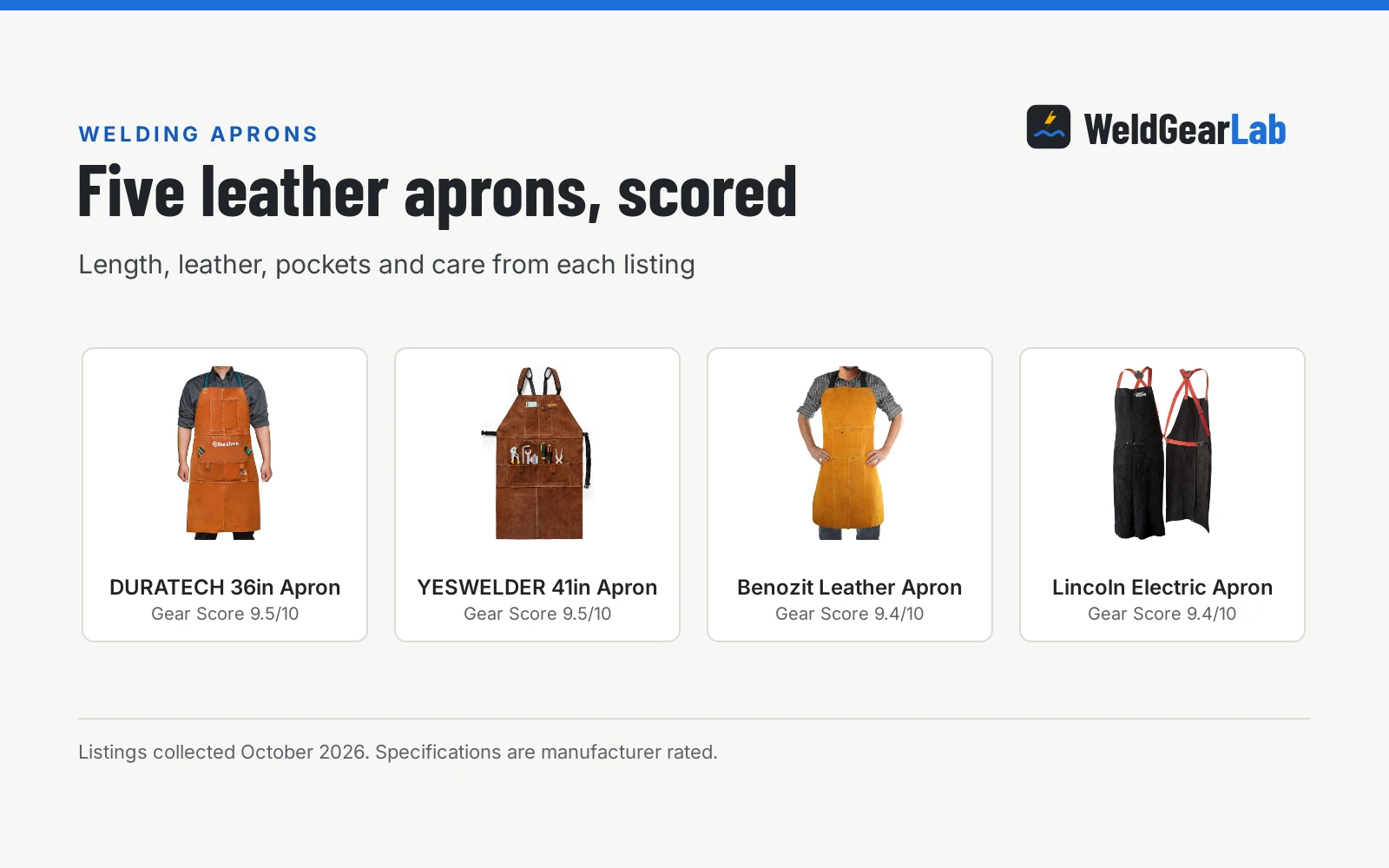
Cowhide is the standard material for anvil and forge work because dense split leather resists hot scale, slag, and sharp stock. Only one pick here, the eletecpro, states its leather thickness: above 2.0 mm. When a listing does not state hide thickness, you cannot verify whether the apron uses thin split leather or heavy stock. Hobart uses flame-retardant cotton weighing 10.08 ounces, which sheds light sparks and runs cooler in summer, but lacks the burn resistance of thick cowhide under hot scale.
Length and body coverage
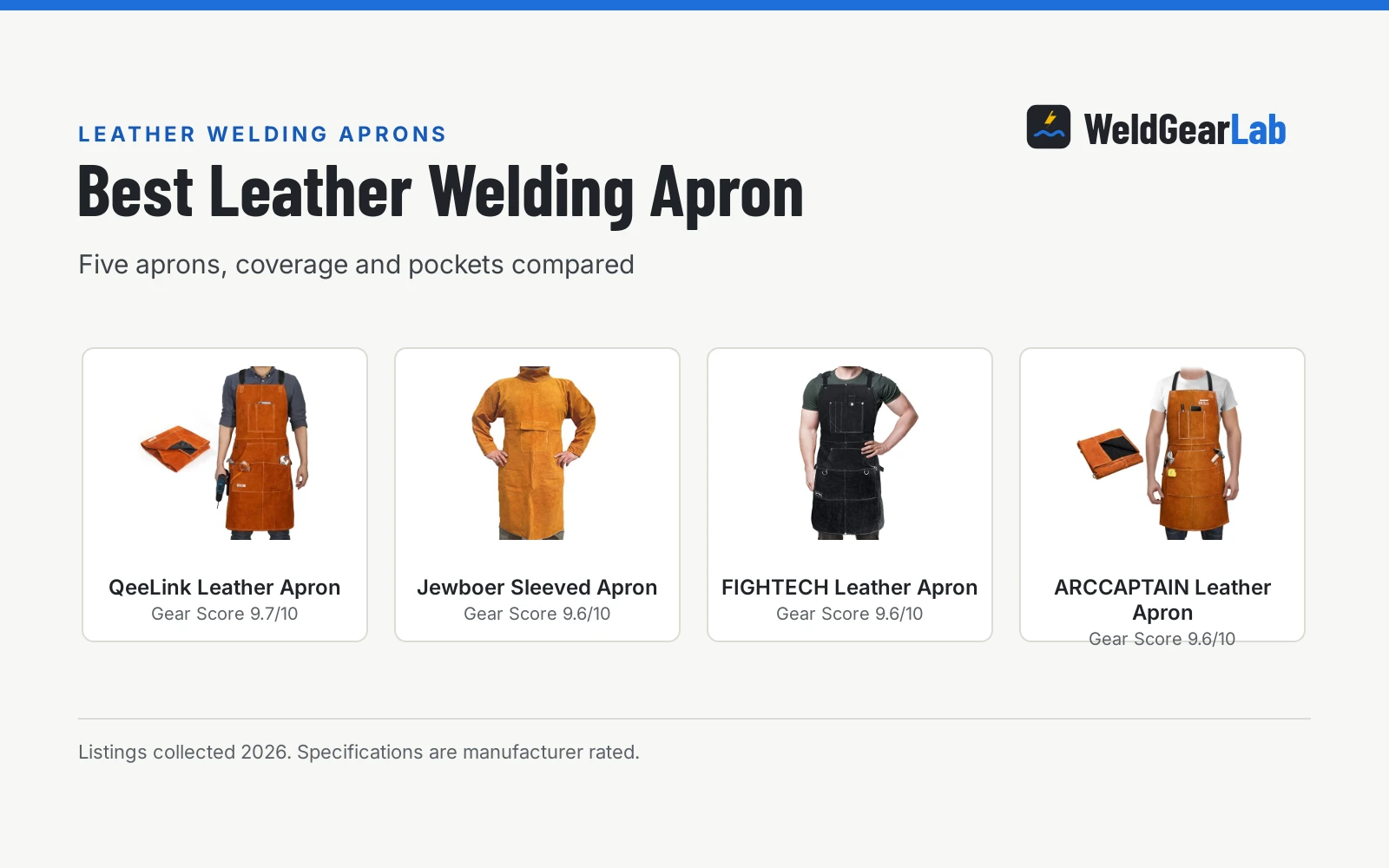
Apron length decides how much of your legs stay covered when you stand at the anvil. The aprons here range from 35 inches to 42 inches in shoulder-to-hem length, with widths of 23 inches to 24 inches. A 42-inch bib covers down past the knees for taller smiths, while a 35-inch or 36-inch apron ends near the knees. QeeLink uses a split-leg chap pattern measuring 42 inches long, wrapping each leg separately so you can straddle a bench or walk between the forge and anvil without the apron binding.
Harness style and weight distribution
A heavy leather bib causes neck fatigue if it hangs from a simple neck strap. Cross-back harnesses, like those on the eletecpro and LeaSeek, cross over your shoulders and lace down the back to distribute weight across your torso. The eletecpro adds removable shoulder pads to soften the straps. Houseables uses traditional tie straps, while Hobart uses an elastic waist strap. Buckles allow quicker release than tied leather thongs when you need to shed gear fast.
Pocket layout and tool loops
Pockets hold soapstone, scribes, pliers, and small measuring tools. Storage varies widely across these listings, from six pockets and four tool loops on the eletecpro down to two pockets on LeaSeek and Houseables, and a single pocket on Hobart. Keep in mind that open, upturned pockets can catch hot sparks and falling scale, so place tools where slag cannot drop inside.
Safety and shop care
None of these five aprons publish an ANSI or EN safety rating, so treat them as secondary shop protection over proper workwear rather than certified safety gear. Never wear synthetic underlayers like polyester or nylon that melt against your skin under heat. For maintenance, wipe cowhide clean with a damp cloth and store it flat away from moisture and direct heat. Never machine wash leather, despite what casual listing bullets claim.
Use as directed. Inspect straps, buckles, and stitching before starting hot work. Keep your work area clear of combustibles, wear eye and face protection, and pair your apron with certified boots and gloves. See our Safety Disclaimer.
Before You Strike an Arc
- Check strap stitching and buckle hardware on arrival: verify that cross-back harness webbing, quick-release buckles, and tie straps are securely fastened to the leather bib before handling hot metal.
- Inspect leather thickness and surface seams: check that split cowhide panels have no thin spots or gaps, and verify double stitching along high-stress tool loops and pocket edges.
- Fit the harness over your work clothing: adjust shoulder straps so the top bib covers your chest and collarbone without pulling against the back of your neck.
- Clear open pocket openings of debris: ensure chest and tool pockets are free of lint and oriented so hot sparks and forge scale cannot fall inside during hammering.
FAQ for welders
Why use a leather apron for blacksmithing instead of cotton?
Cowhide leather provides natural thermal resistance and high cut resistance against sharp edges, hot scale, and flying slag. Lightweight flame-retardant cotton breathes better in a hot shop, but heavy scale from the anvil can scorch or burn through lighter fabrics. For continuous forge work and heavy striking, thick cowhide offers much greater physical protection.
What is the benefit of a split-leg blacksmithing apron?
A split-leg apron wraps each thigh and shin independently with dedicated leg straps. This prevents the leather from bunching up between your knees when you sit at a work station, bend over an anvil, or straddle a forming block. It gives you the mobility of chaps while preserving full bib coverage for your chest.
Why are cross-back straps better than neck straps on a leather apron?
Heavy cowhide aprons weigh several pounds, which exerts constant downward pull on your cervical spine when supported by a simple neck loop. Cross-back harnesses route the straps over both shoulders and cross across your upper back, transferring the weight to your shoulders and core. This setup reduces neck fatigue during long forging and welding sessions.
How should I clean and care for a leather welding apron?
Wipe cowhide clean using a dry cloth or a slightly damp rag to remove soot, metal grinding dust, and shop grime. Never submerge leather in water or wash it in a washing machine, as moisture strips natural oils and causes the hide to stiffen and crack. Store the apron hung up or laid flat in a dry, ventilated area away from direct heat.
What size welding apron do I need for forge work?
Choose an apron length that matches your height and working stance. Aprons measuring 35 or 36 inches in length protect the chest down to the top of the knees, allowing easy stepping around equipment. Taller smiths or those wanting shin protection should look for a 42-inch bib, ensuring the bottom hem sits below the knees without dragging on the floor.
Related: welding aprons for men, best welding gloves for high heat, best boots for welding, and the welding safety gear hub. Also see our welding safety gear checklist for beginners.
Scoring, line by line
Each apron is scored out of 10 on performance, build, value, safety listing and warranty, with the weights published on our How We Pick page. None of the listings in this group state an ANSI or EN safety certification, and none publish a concrete warranty term, so those criteria score zero; the ranking comes from performance, build and value.
| Product | Gear Score | Perf. /35 | Build /25 | Value /25 | Safety /10 | Warranty /5 |
|---|---|---|---|---|---|---|
| eletecpro 42 x 24 | 9.7 | 32 | 22 | 22 | n/a | 0 |
| QeeLink Split Leg | 9.6 | 28 | 20 | 21 | n/a | 0 |
| LeaSeek 24 x 36 | 9.5 | 26 | 19 | 20 | n/a | 0 |
| Houseables 23 x 35 | 9.4 | 23 | 18 | 19 | n/a | 0 |
| Hobart 770686 | 9.2 | 19 | 15 | 16 | n/a | 0 |
Think of 9.2 as the bottom and 9.8 as the top. Totals are placed between them in proportion, which keeps the order intact: more points, higher score. Safety points apply to gear that runs on power or lists safety features. Without either, we score out of 90 instead of 100.